How can local governments operate security cameras more efficiently?
Jan 18, 2024

Local governments often operate security cameras to keep communities safe and prepare for disasters. In practice, however, operating them involves challenges, such as checking that cameras are working and retrieving data. This article introduces a solution that addresses these challenges and makes video management and operation monitoring of security cameras more efficient.
Recommended products

How local governments use security cameras
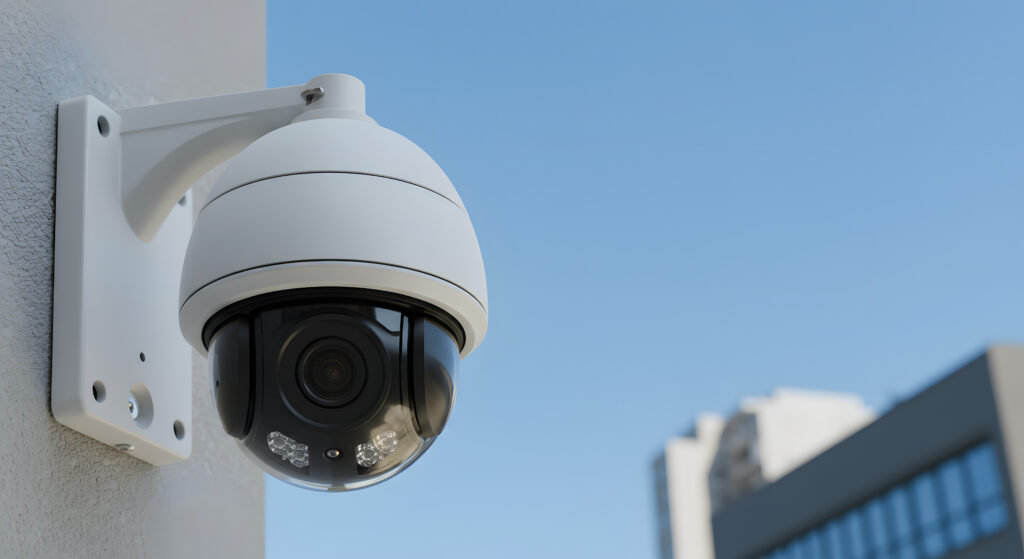
Local governments install security cameras in many places, such as streets (including shopping streets), schools, parks, bicycle parking areas, roads, and rivers. They use them for crime prevention, watching over residents, dealing with illegal parking and illegal dumping, and disaster preparedness and mitigation. In some cases, a different department within the local government manages the cameras at each location. The main departments that operate security cameras include crisis management, park management, community safety, community development, and civil engineering divisions.
Security cameras may be installed and operated by the local government itself. In other cases, community groups such as neighborhood associations, shopping street associations, and school PTAs apply to the local government for subsidies or grants and install and operate the cameras themselves with those funds.
Local governments use security cameras in many places like this, but they often face problems in operating them.
Common problems in operating security cameras at local governments
1. It is hard to check whether cameras are working (no remote check)
Most security cameras introduced by local governments are not connected to a network and store recorded video on an SD card inserted in the camera. Many of these cameras are installed in different places, and staff must go to each site to check whether they are working. As a result, there are efficiency challenges, such as the time and labor costs involved.
2. Retrieving recorded video takes time
To remove the SD card from a security camera, work at height may be needed depending on where the camera is installed. Outdoor cameras are also built to be rugged, so it is often hard to remove the SD card inside the camera.
In addition, unless there is a problem such as the camera stopping because of a failure, long periods are often saved as a single video file, so finding and extracting video for only the time period you need can take time.
3. Cloud-based systems are hard to introduce
Communication fees and the work of laying wired lines tend to raise costs, so local governments often hesitate to introduce such systems. Another challenge is that, from a security standpoint, local governments face a high bar for using cloud-based systems because of the risk of unauthorized access.
Solutions to local governments’ security camera operation problems
Local governments face the problems described above in operating security cameras. Below is a service that can solve them.
Easy video management and operation monitoring
When you connect cameras to an amnimo Edge Gateway installed on site, camera video can be recorded to the SSD built into the gateway. amnimo’s own cloud-based video management system (VMS), the Enhanced Video Management System, lets you manage video from cameras installed in many separate locations centrally. You can retrieve video for the date and time you need from the video recorded on the Edge Gateway’s SSD, and view live video. Using functions such as motion detection, you can also upload video of incidents to the cloud automatically, so you get video of any problem automatically.
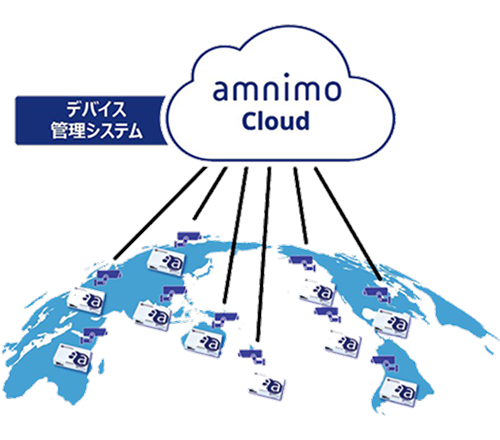
Operation monitoring is provided by the Device Management System (DMS), an amnimo cloud service, which lets you manage the status of on-site equipment such as cameras and communication devices.
These functions solve the inefficiency of checking camera operation and the difficulty of retrieving recorded video. You can also receive alert notifications of motion detection and operating status.
Recorded video is kept on site for a set period, and only the video you need is sent to the cloud, which saves on mobile communication fees. This solves the high cost that holds back cloud-based systems, and lets you operate efficiently from a security center or from staff devices in the field.
The next section introduces a case where amnimo’s video solutions were used to solve these problems.
Video solution case study: Toshima City
Challenges before introduction
Starting in 2018, Toshima City installed security cameras in 38 parks. However, the existing security cameras recorded to SD cards, so checking the data took time, and there was no way to check camera operation remotely. As a result, it also took time to provide video when the police requested information.
Considering amnimo’s video solutions to solve the challenges
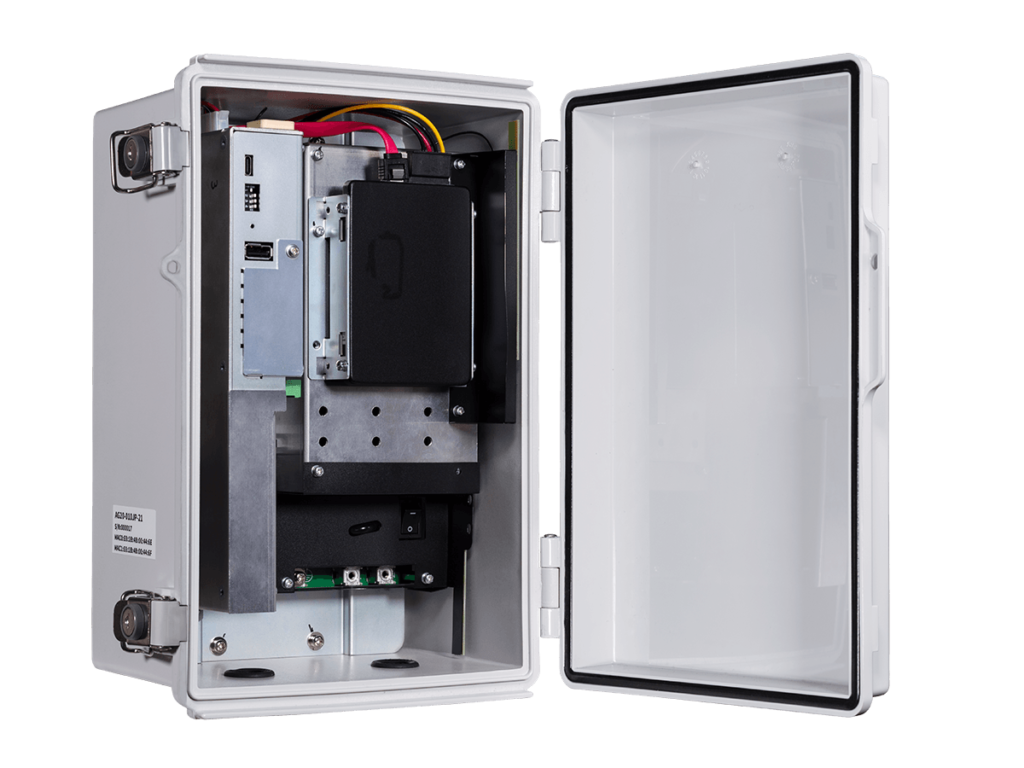
To solve these challenges, the city considered an IoT security camera system using the Enhanced Video Management System (amnimo’s own VMS), the Device Management System (DMS), and the Edge Gateway (Outdoor) AG20. Because this system connects to the cloud, security camera video can be checked easily, even from remote locations. The AG20 also uploads only the necessary data to the cloud automatically from the video recorded on its built-in SSD, triggered by settings such as motion detection, which greatly streamlines the work of checking recorded video.
Decision to introduce, based on a high evaluation of security and usability
When a local government introduces a new cloud-based system, budgeting for it requires a lot of coordination. Toshima City went through many steps before securing the budget, and decided to introduce amnimo’s video solutions after evaluating their security and usability highly.
Results
With these systems, video is monitored centrally in the cloud and checks can be done remotely. This reduced the work of going to sites to check, and made work more efficient. If the system is applied to the security cameras in all parks in the city, the time needed to provide video to the police is expected to fall by about 300 hours a year. The AG20 also made it possible to check the operating status of security cameras remotely, which made security camera operation more efficient.
The Toshima City case study is explained in detail below.
▶ More effective park management and monitoring with IoT security cameras (Japanese)
The next section introduces the service Toshima City used to solve its problems.
Video solutions suited to local government security cameras
amnimo’s video solutions provide safety and peace of mind with flexible, immediate video management. You can build a security camera system that is easy to operate while reducing maintenance effort and costs, as well as the initial and operating costs of the security cameras.
Key features include a hybrid system that lets you manage video centrally, anytime and from anywhere, to make work more efficient, and the use of mobile (wireless) networks, so no line installation work is needed at the site.
Security and surveillance cameras: from “installing and recording” to “putting video data to use”
Security and surveillance cameras are used in many places in our daily lives, and their role is shifting from being installed as a deterrent to having their video data put to use.
Behind this are major advances in camera performance (the eyes), internet, cloud, and wireless communication technologies (the nerves), and AI image analysis technologies (the brain).
amnimo provides video solutions that combine IoT gateways and routers built for harsh environments with cloud services well suited to IoT and camera operation. We provide them to sites in many industries where camera operation must not stop, 24 hours a day, 365 days a year.
If you are considering “a camera system that lets the right people see the video they need, when they need it, in real time” or “a camera system that supports AI image analysis and integration with other systems,” amnimo is well suited to your needs.
Recommended products
Products related to this article
Contact usProduct inquiries and documents
We can help you choose products and put together a package for your application. Consultations are free.