
More effective park management and monitoring with IoT security cameras

- Customer
- Kazuhiro Sakai, Parks and Green Spaces Division, Urban Development Department, Toshima City (as of June 2023)
- Industry
- Local governments
“Now that we can monitor video in one place in the cloud,
our work has become much more efficient.”
— Kazuhiro Sakai, Parks and Green Spaces Division, Urban Development Department, Toshima City (as of June 2023) —
Industry
Local governments
Products
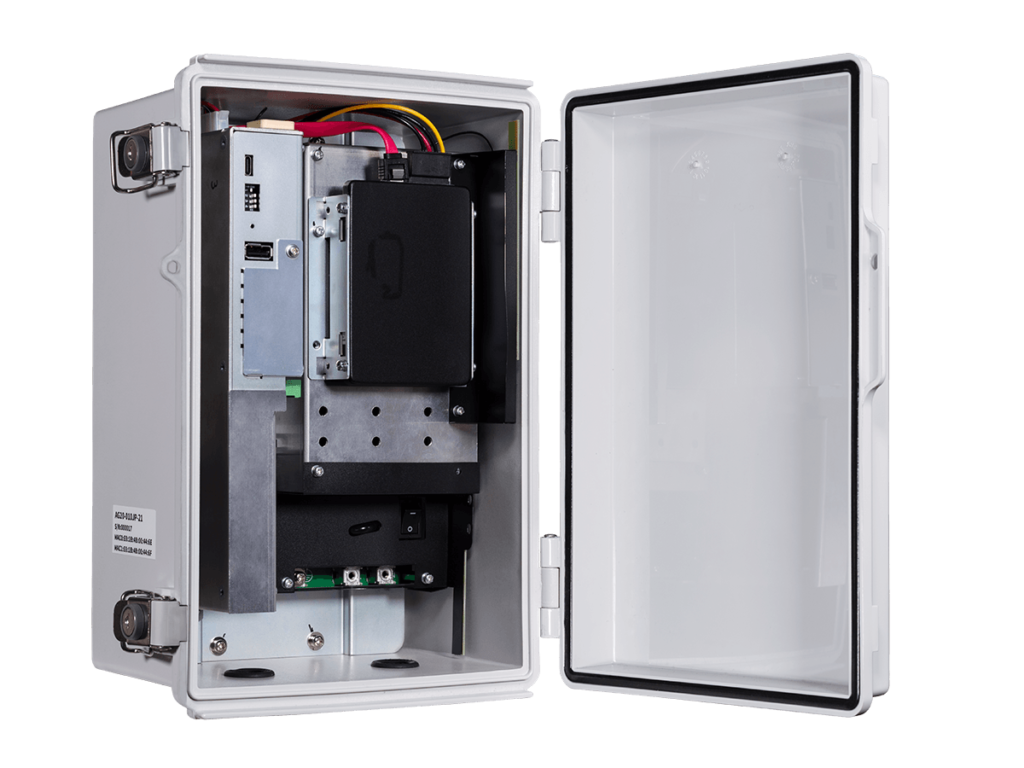
Edge Gateway (Outdoor) AG20, Enhanced Video Management System, and Device Management System
Recommended products


Application
Working more efficiently with an IoT security camera system
Challenges
- The existing security cameras recorded to SD cards, so checking data took time
- There was no way to check remotely whether the cameras were actually working
- Providing video to the police when they requested information took time
- Budgeting for a new cloud-based system required the kind of internal coordination specific to local governments
Application
- Checks can be done remotely, reducing the burden of going to the site
- Monitoring all video in the cloud with the Enhanced Video Management System has made work more efficient
- The time needed to provide video to the police has been reduced by about 300 hours a year
Overview: The Toshima City Parks and Green Spaces Division’s initiatives
Toshima City is in the northwest of Tokyo’s 23 special wards. Many people know it as a center of transportation, business, and government, centered on Ikebukuro. In recent years, the Cabinet Office selected it as an “SDGs Future City,” a local government with outstanding SDGs initiatives. The city is also attracting attention as an area that is building a sustainable community as a new SDGs model for cities in Japan.
We spoke with Mr. Sakai of the Park Management Group in the Parks and Green Spaces Division. The group plans renovations of parks and other facilities, manages them, and maintains streetlights. Mr. Sakai described the maintenance challenges: “Toshima City currently has 163 parks. Besides the city’s parks, there are many small parks, such as small children’s playgrounds, so maintenance costs tend to be high.” As the need for security cameras began to draw public attention, both for safety in the city and for easier maintenance, the city started installing security cameras in 2018. Today, security cameras are installed in 38 parks.
Toshima City has many busy areas, including entertainment districts. In these crowded areas, people can be caught up in incidents or accidents. Toshima City therefore puts effort into being a Safe Community city to deter crime. Since 2012, it has continuously held International Safe Community certification, a certification program recommended by the World Health Organization (WHO) for building safe communities free of accidents, violence, and injuries. The city also works with the police on crime prevention.

“To set priorities for installing security cameras, we analyze the number of petitions. We decide where and how many cameras to install by considering places with a lot of illegal dumping and abandoned bicycles and motorcycles, and how many specific petitions come in each year,” says Mr. Sakai. Toshima City has priority crime prevention districts where it focuses its crime prevention efforts. The city also checks whether an area falls in one of these districts and decides which parks get security cameras first based on an overall assessment. The city has also installed art toilets to change the negative image of public toilets, and it installs security cameras there first to deter graffiti on the artwork.
Goal: Efficient information sharing with IoT security cameras, an edge gateway, and the Enhanced Video Management System
As the city installed more security cameras, the police also requested information whenever an accident, incident, or other problem occurred in the area the division manages. The division needed a system to provide information efficiently. Previously, staff had to go to each camera’s location to get its recorded data. Getting and checking recorded data took a lot of travel time. If the city installed security cameras in more parks, each new camera would add more travel time to retrieve data.

“The main purpose of introducing this IoT security camera system, which includes amnimo products and services such as the Edge Gateway (Outdoor) AG20 and the Enhanced Video Management System, is to make tasks such as checking recorded data more efficient and to reduce the time it takes to provide information to the police,” says Mr. Sakai. He looked back on the work at the time: “Until now, checking recorded data was a lot of work. Two staff members spent half a day removing SD cards, and police officers came along to check the recorded data.” He also described problems with operating the security cameras: “In the past, there were times when we pulled the SD card out of a camera, checked the data, and found that nothing had been recorded. Not being able to check whether the cameras were working was a particularly big problem.”

The SD cards built into the existing security cameras can hold at most one week of data, but for crime prevention and similar uses, data must be kept for at least one week. In the IoT security camera proposal, the division appears to see several major advantages of amnimo’s video solution: long-term data storage with an SSD and the cloud, no more on-site work, and live video with thumbnails that can be checked at any time.
Security is one of the main criteria when introducing a cloud-based camera system. During the evaluation, Mr. Sakai rated amnimo’s video solution highly for security and usability: “It uses relatively new encryption technology, and I think the usability is excellent. Everything can be managed in one place, and I found it very easy to use.”
Background: Budgeting for a new cloud-based system required coordination specific to local governments

Introducing this cloud-based system involved difficulties specific to local governments. “Especially for a new cloud system, preparing for the introduction took a lot of time. We had to present the current problems and a fair comparison, of course. We also had to answer questions from lawyers and others about personal information, because faces appear on camera, and get the system approved as appropriate by the Information Management Division.” He continued: “We had to present the system to the Finance and Planning Division and convince them, then have the mayor make the final decision, and then have it budgeted at a regular session of the city assembly. It was very hard.” Mr. Sakai spoke candidly about the roughly six months it took to secure the budget before the introduction.
Results: About 300 hours of work saved per year with IoT security cameras using amnimo’s video solution

1. Easy checks of live video and security camera status
Previously, staff had to go to the park where each camera was installed and work on site every time they needed to maintain a camera or retrieve data recorded on an SD card. With amnimo’s solution, the division uses the Enhanced Video Management System to monitor all video in the cloud. A thumbnail image from each camera appears automatically on the management screen every 10 minutes, so staff can easily see conditions in each park. This has greatly reduced staff working time, saving about 300 hours of work per year.

– Download by specifying the date and time with a timestamp, saving communication costs

– Thumbnails saved at regular intervals let you check camera status instantly
In addition, laying new wired lines to get video remotely from surveillance cameras in parks takes time and money. With amnimo’s video solution, the division can monitor surveillance camera images in the cloud at low cost, without any wiring work.
2. Cost-effective, efficient operation
A preliminary study comparing the costs of conventional surveillance cameras using SD cards with an IoT security camera system using amnimo’s video solution found that the costs were almost the same. When comparing typical cloud security cameras with amnimo’s video solution, typical cloud cameras impose a double cost, communication charges and cloud usage fees, as the amount of stored data grows.
With amnimo’s solution, on the other hand, only the needed data stored on the SSD is uploaded to the cloud. This makes it very cost-efficient in both communication charges and cloud usage fees. The division believes it has built the most suitable system available at this time for operating IoT security cameras.
For device management as well, the system needs only one device management license per park, even when multiple cameras are installed in that park. The division also finds this cost-effective.


3. More efficient information sharing with the police
The Park Management Group in the Parks and Green Spaces Division receives many petitions about illegal dumping of garbage and abandoned bicycles and motorcycles in the areas it manages. Besides understanding and reducing illegal dumping, the group works with the police on crime prevention. With the IoT security camera system using amnimo’s video solution, the group has made the following three tasks more efficient.
(1) Checking remotely that security cameras are working
(2) Downloading video for the requested date and time at the Park Management Group or a park management office
(3) Converting the downloaded data to MP4 and providing it to the police quickly

Outlook: Analyzing residents’ opinions and requests, and adding IoT cameras in high-priority areas first
In addition to the IoT security cameras with the Enhanced Video Management System, the Park Management Group of the Toshima City Parks and Green Spaces Division now manages the locations and angles of view of the security cameras in Toshima City’s parks in one place with GIS (geographic information systems). By collecting and analyzing this information and residents’ feedback, the group needs to identify the areas in parks where cameras are needed and add IoT cameras there first. The group also hopes to use video solutions like this to deter violations and illegal acts in parks and to promote proper use of parks. In the future, the group would like to bring AI technology to IoT devices for more advanced uses, such as anomaly detection and automatic notifications.
In Toshima City, the Crisis Management Section manages and operates surveillance cameras for street crime prevention, such as watching over the city. If cloud-based surveillance camera solutions spread beyond the Parks and Green Spaces Division to the Crisis Management Section and other divisions, they will be used even more efficiently.


Products used in this case study
Related case studies
-
 Takaoka City: Underpass flooding monitoring solution
Road Maintenance Division, Urban Development Department, Takaoka City; TAKAOKA CABLE NETWORK CO., LTD.; and SANGIKYO CORPORATION Enhanced Video Management SystemAG20
-
 Toshima City: Disaster preparedness and crisis management camera solution
Disaster Prevention Crisis Management Section, General Affairs Department, Toshima City Enhanced Video Management SystemAG20
-
 Revitalizing the whole town with AI foot traffic measurement
Masahiko Yamada, Director for Digital Promotion, Takayama City AG20








Contact usProduct inquiries and documents
We can help you choose products and put together a package for your application. Consultations are free.