Security patrols and how to automate them
Mar 20, 2023
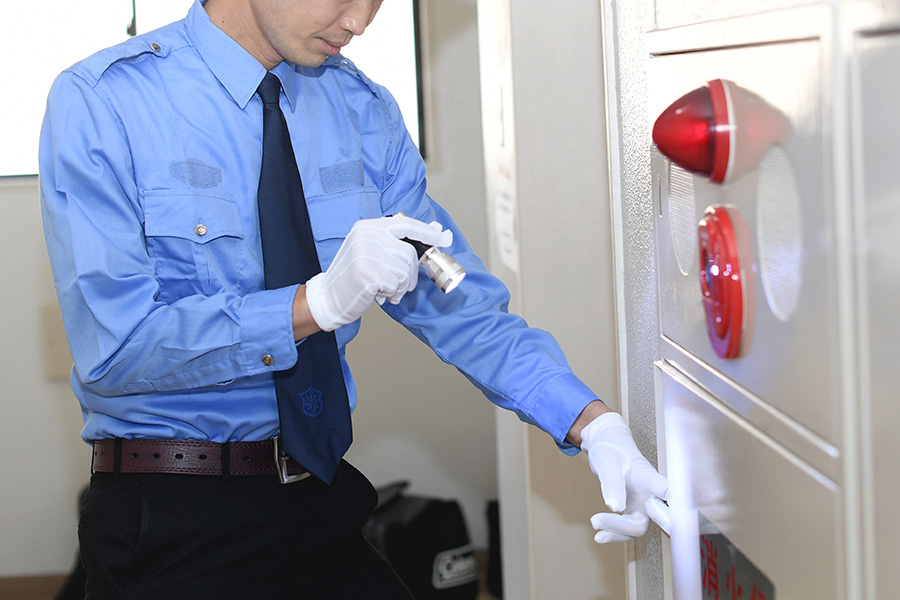
Patrols are an important part of security work. They protect facilities and the people in them. However, labor shortages grow more serious every year, and security companies also find it hard to hire enough guards. This article explains what patrols involve in security work and how automating them can help with labor shortages.
What is a patrol in security work?
In security work, a patrol means going around the inside and outside of offices, factories, commercial facilities, and other sites in order, and checking visually for anything unusual. The usual method is to check a set of fixed points one by one. Patrols take place at night as well as during the day.
Among the categories of security work described below, patrols are mainly part of Category 1 work.
Categories of security work
Japanese law divides security work into four categories. Each category has its own defined duties and security qualification tests.
Category 1
This work guards facilities against incidents and accidents. It covers a wide range of sites, from infrastructure facilities and company premises to private homes. It accounts for about 50% of the demand for security work in Japan. Category 1 work is further divided into the following five types.
- Facility security: Guards are stationed at the client’s facility. They control entry and exit, patrol, and manage the facility’s keys and locking.
- Patrol security: No guards are stationed at the facility. Instead, guards patrol it at regular or irregular intervals, moving between several client facilities.
- Loss prevention: In commercial facilities, guards patrol the store and watch monitors to prevent shoplifting, theft of unattended items, and other crimes.
- Airport security screening: This work stops prohibited items from being carried onto aircraft. It uses X-ray inspection equipment and metal detectors, so it requires specialized knowledge.
- Remote alarm security: The security company uses sensors installed at the facility to watch for incidents and accidents from a central monitoring center. When something unusual happens, guards go to the site right away.
Loss prevention: In commercial facilities, guards patrol the store and watch monitors to prevent shoplifting, theft of unattended items, and other crimes.
- Airport security screening: This work stops prohibited items from being carried onto aircraft. It uses X-ray inspection equipment and metal detectors, so it requires specialized knowledge.
- Remote alarm security: The security company uses sensors installed at the facility to watch for incidents and accidents from a central monitoring center. When something unusual happens, guards go to the site right away.
Patrols come up in many situations in Category 1 work.
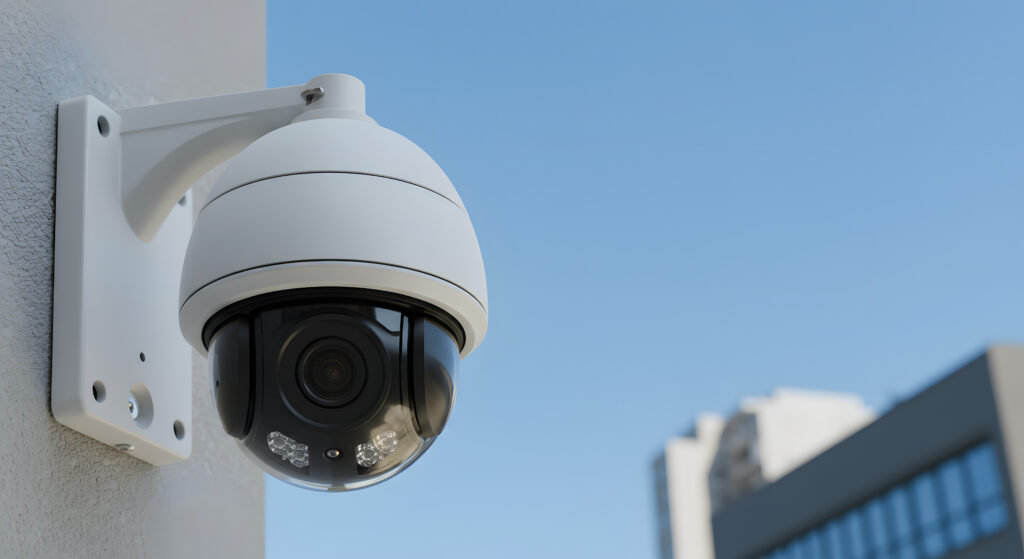
To address this, more and more sites add surveillance cameras and monitor camera video, on top of monitoring with existing operating data and sensor data. This demand arises, for example, at renewable energy power plants and power transmission and substation facilities, which often run unmanned in remote areas, and along railway lines and around airports.
Note that patrols also take place outside of patrol security work. In patrol security work, the word “patrol” is used because guards visit several facilities in turn.
Category 2
This work directs pedestrian and vehicle traffic at events and on roads to prevent accidents.
- Traffic control: Guards direct pedestrians and vehicles at places where traffic hazards are likely, such as road construction sites and parking lots.
- Crowd security: In places crowded with many people, guards direct the flow of people, provide information, make announcements, and give directions to keep people safe.
Category 3
This work guards cash, precious metals, and artwork in transit against theft. These items are easy targets for crime, so security is tight.
- Valuables transport security: Cash, precious metals, artwork, and other property are carried safely to their destination in special vehicles prepared for emergencies. Very advanced security systems are used.
- Nuclear fuel and hazardous material transport security: Nuclear fuel and other hazardous materials are transported after detailed planning with the client and the relevant authorities.
Category 4
This work protects people’s physical safety.
- Personal protection: Guards protect mainly well-known people and keep them physically safe. This is what is commonly called a “bodyguard.” In recent years, the service has expanded to ordinary citizens and even children, and location services that use GPS are also becoming common.
What a patrol involves
The patrol process can differ by facility and situation, but it generally runs as follows.
1. Check the patrol route.
2. Go to each designated checkpoint in turn and check visually for anything unusual.
3. When finished, fill out and submit a report.
The key points of each step are summarized below.
1. Preparation: Check the patrol route
Before a patrol, guards first need to check the route. Some patrols follow a fixed route, and others let the guard choose the route. Either way, the checkpoints are fixed, so guards need to confirm them.
For patrols at night in particular, guards need to confirm who is still in the facility before they start. At a company, for example, they can check overtime requests.
2. Inspection: Check for anything unusual
Guards move to each designated checkpoint in turn and check for anything unusual. They use all five senses to look for anything different from usual and for suspicious people. Checking that doors are locked is also important. Turning off electrical equipment may also be part of the job.
3. Reporting: Fill out the report
Guards must keep a record when they find something unusual, but it is just as important to keep a record when they find nothing. The report includes the time and place of the patrol and who carried it out.
Automating security patrols
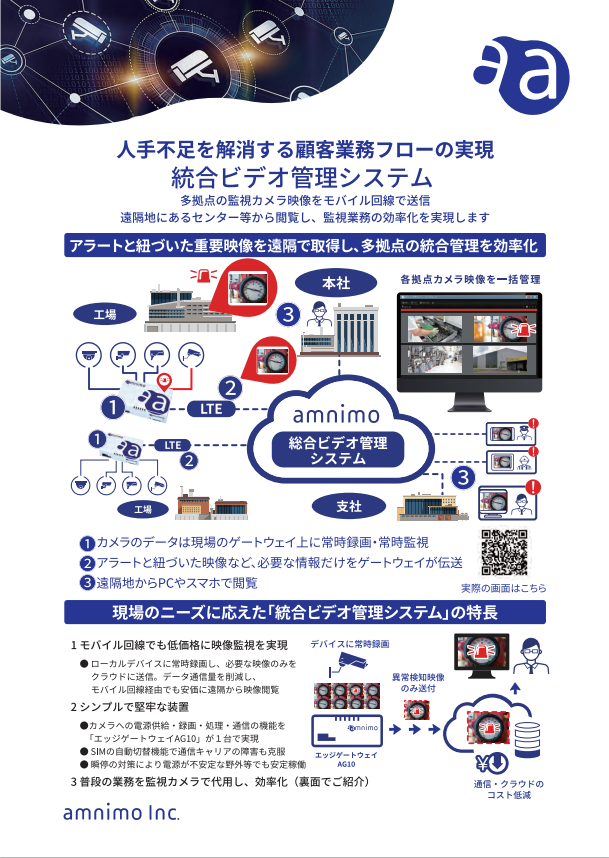
In recent years, companies have been using security cameras and other tools to make patrols more efficient. Let’s look at how the Enhanced Video Management System from amnimo automates this work.
Automated patrols
The automatic patrol feature uses security cameras to make patrols more efficient. Cameras carry out, remotely, the rounds that guards used to make in person. A small team can patrol multiple sites, so this can greatly help with labor shortages.
First, the operator clicks the patrol button. The view then switches from camera to camera in a preset order.

The screen shows a reference image of the normal state next to the current live video. The operator compares the two for each camera location and records whether anything is unusual.

When all designated points have been checked, a “Create report” screen opens automatically. The report already contains the inspector’s name, the points checked, and the date and time of the patrol. Printing it completes the report. If nothing is unusual, the whole process takes little more than one click, which reduces the work of writing reports.

Automated response to alerts
Automating part of the response to alerts, and making the situation visible remotely, is also expected to speed up responses and make work more efficient.
When a typical video system detects an alert, the operator first has to search a database or map to find which camera is related to the alert. The operator then accesses that camera, retrieves the recorded video from before and after the alert, and opens the camera’s live view to check the current situation at that location.
A system can automate these tasks. When an alert is detected, the administrator receives a notification. At the same time, the video screen for the alert location opens automatically on the administrator’s display. That screen shows, side by side, the recorded video from before and after the alert and the live video from the cameras linked to the alert in advance. The whole sequence runs with one click, so operators can understand the situation quickly.

When the response to the alert is finished, a report screen opens automatically. The report already contains timestamps, such as when the alert occurred, and shows the related video clips for selection. The operator selects the clips to attach, adds notes, and the alert report is complete. This makes report writing more efficient as well.
Enhanced Video Management System for more efficient operations
The Enhanced Video Management System from amnimo Inc. includes the automatic patrol and alert notification features described above. It is a video management service that makes security operations more efficient.

For details on the Enhanced Video Management System, one of amnimo’s video solutions, see the link below.
Products related to this article

Contact usProduct inquiries and documents
We can help you choose products and put together a package for your application. Consultations are free.