Solar power maintenance: inspections, costs, and theft prevention
Mar 23, 2023

Under the amended FIT Act (Japan’s feed-in tariff law), in effect from April 2017, maintenance became mandatory for solar power facilities under the FIT scheme and for power generation facilities of 50 kW or more. (Facilities under 50 kW that do not use the FIT scheme are not covered.) If you neglect mandatory maintenance, your certification may be revoked. Even where maintenance is not mandatory, solar facilities stand in harsh outdoor environments for long periods, so neglecting regular maintenance leads to lower output and equipment failures. What does proper maintenance involve, and what should you watch for during inspections? This article explains solar power maintenance in detail, as well as the sharp rise in panel and cable theft and how to deal with it.
Mandatory maintenance for solar power
Previously, high-voltage grid-connected facilities (solar power facilities from 50 kW to under 2,000 kW) and extra-high-voltage grid-connected facilities (power plants of 2,000 kW or more) were required to have maintenance twice a year by a licensed chief electrical engineer. However, residential solar panels also carry risks of damage and fire. At low-voltage grid-connected facilities (10 kW to under 50 kW) installed as business or investment properties, problems such as uncut weeds and scattered panels and parts occurred frequently. For these reasons, mandatory maintenance began with the revision of the FIT scheme that took effect in April 2017.
Solar power facilities that require maintenance
– Solar facilities under the FIT scheme
– Solar facilities of 50 kW or more
Solar power facilities that do not require maintenance
– Solar facilities under 50 kW that consume all power on site
– Solar facilities under 50 kW that do not sell power under the FIT scheme
Maintenance basics for preventing problems
Check power generation
First, check the monthly power generation to confirm that the system is generating normally. Solar power is often thought to be maintenance-free with little upkeep. In fact, about 30% of systems are said to have some kind of failure or problem in roughly the first 10 years after installation. Solar systems handle high voltages of several hundred volts or more, so leaving faults such as current leakage or arc discharge (sparks) unattended is very dangerous. Even without such hazards, failures can reduce power generation. It is important to find and repair failures early and, before that, to pay attention to reliability from the planning, design, and construction stages. The equipment that fails most often is said to be the power conditioner (inverter), followed by the solar modules. Failures often show up as reduced power generation, but they are easy to miss if you are not watching. This is why it is important to measure power generation every month.
Solar power generation varies with solar radiation and from year to year. It is hard to judge whether a system is working normally just by looking at changes in generation. Instead, you can calculate the annual deviation rate against the expected generation calculated from solar radiation and installation conditions. This shows whether generation has fallen below what it should be. You can also get useful reference information by calculating a simple generation index from sunshine-hour data from nearby AMeDAS stations or similar sources. If you see anything unusual in the generation history, consult the installer or manufacturer early. Regular inspections are also recommended. Frequent inspections are especially important in places with heavy snow, frequent lightning, or a risk of salt damage.
Inspection items for panels, junction boxes, and power conditioners
How should you actually carry out inspections? The main points for inspecting each piece of equipment are described below. However, avoid climbing on panels for inspection, because of the risk of falling and, if current is flowing, the risk of electric shock.
Panel inspection
Front
– Is the glass cracked?
– Is the panel firmly fixed?
– Is there rust or burn marks on the internal wiring?
– Is there heavy dirt that rain does not wash off?
– Has rainwater got inside?
– Are surrounding plants or trees casting shadows?
Back and mounting (frame)
– Are there scratches or burn marks on the back of the panels (solar cells) or the wiring?
– Is the frame loose or corroded?
– Is the wiring firmly fixed?
– Are there any roof leaks?
– Have dead leaves built up, or are there bird nests?
Junction box inspection
– Are the wiring covers or the insulating seals at the ends of conduits damaged?
– Is there damage from animals?
– Are any wiring connections loose?
Power conditioner inspection
– Is it switched on?
– Is power generation normal?
– Are any errors or warnings displayed?
– Has dust built up?
– Are there unusual noises or smells?
– Does the self-sustained operation function work correctly?
Power conditioners, which fail often, come with a generation monitoring system. Hourly, daily, and monthly generation is recorded and stored in the power conditioner, but the data is erased after a certain period. The key figure is daily generation. Record it and compare it with the highest daily generation in the same month of the previous year. Monthly averages vary more than you might expect because of weather differences between years, so differences are hard to see. The highest generation in the same month, on the other hand, shows at a glance whether output has dropped because of an equipment fault or because the power conditioner’s voltage suppression function reduced the power sold. Some owners check only the payments from the power company without watching generation, but they may not notice reduced output for a long time and lose a lot of money. Be careful.
Maintenance costs
Industrial solar power requires statutory inspections, and maintenance must be entrusted to a licensed chief electrical engineer. The fee is generally JPY 500,000 to 1 million per year. For residential systems, an inspection costs around JPY 20,000, and regular inspections at least once every four years are recommended.
Solar panels are said to last about 25 to 30 years or more, but regular cleaning is essential. Cleaning solar panels through a specialist contractor typically costs JPY 2,000 to 5,000 per kW. Power conditioners are expected to last 10 to 15 years. Replacing only the circuit board costs about JPY 50,000, and replacing the whole unit costs about JPY 200,000 per unit. On average, a full replacement is expected about once every 20 years.
Storage battery life depends on the type. Lead-acid batteries are said to last about 17 years, nickel-metal hydride batteries 5 to 7 years, lithium-ion batteries 10 years, and NAS batteries 15 years. Replacement costs about JPY 1 million to 1.5 million. However, battery prices are expected to fall, so costs are likely to decrease.
Check the manufacturer’s warranty
Manufacturers’ warranties for solar panels are generally 10 to 15 years, so you can use them for a long time with confidence. However, solar panel efficiency declines with age by about 0.5% to 1% per year. Warranties for power conditioners are generally 5 to 10 years.
Solar panel theft is increasing
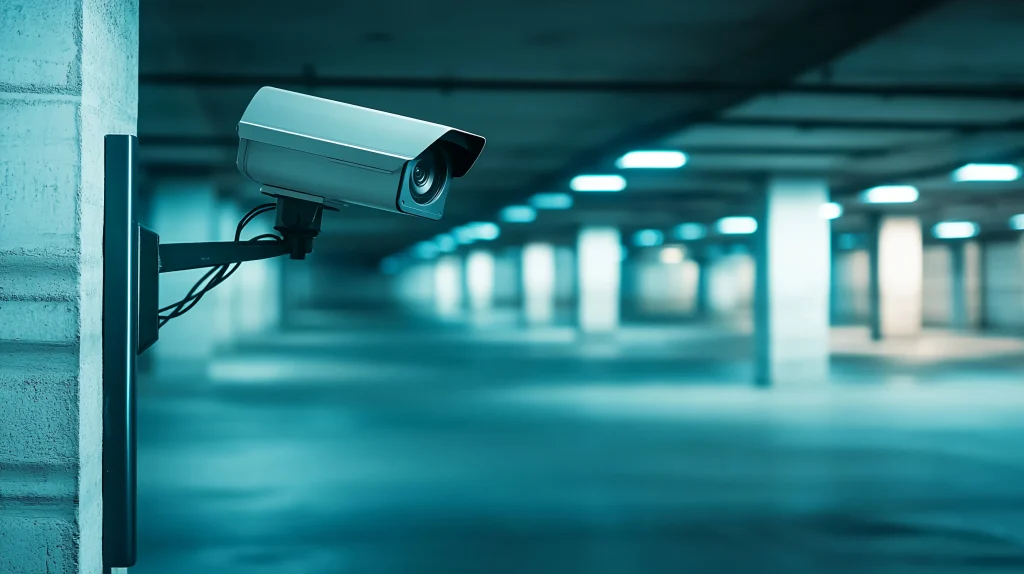
Industrial solar power is installed not only on the roofs of large facilities. Ground-mounted solar power, where frames are built across large areas of idle land and topped with solar panels, is also increasing. However, ground-mounted systems are often installed in remote places with no houses nearby, such as farmland, mountain areas, and coastlines. Intruders can get in easily, and many cases of theft and vandalism have been reported. Solar panels have been stolen from sites during the construction of large-scale solar plants, and cables have been stolen from operating facilities. Theft prevention is becoming important not only during construction but also after installation. More and more operators are therefore considering security cameras to prevent panel theft.
Benefits of a remote monitoring system
Going all the way to remote solar power facilities to check them visually takes people and money. Remote monitoring systems that use wireless networks have therefore become popular. In addition, under the FIT policy revised in January 2015, solar power systems, both high-voltage and low-voltage, will be required to support remote output control in the future. As a result, more operators are introducing remote monitoring systems. Many companies sell them, so compare services and costs before you choose.
Overview of remote systems
1. Remote monitoring with IP cameras (security cameras)
2. Remote control of solar power equipment
3. Remote operation of remote alarm security systems
Benefits of remote systems
– Check power generation from anywhere
– Find animal damage and weeds growing around panels early
– Detect equipment problems as soon as they occur
– Check for dirt on panels (fallen leaves, bird droppings, and so on)
– Check the site remotely in real time during typhoons and other natural disasters
– Watch intruders in real time on video by linking with a security system
– Find the cause of failures by linking with sensors and power generation equipment
This lets you respond fully and with confidence, even from far away.
Points to consider when introducing a remote monitoring system
Operators of industrial solar power systems use remote monitoring systems for as long as 20 years in harsh outdoor environments. It is therefore very important to choose durable equipment designed for outdoor installation. If equipment fails repeatedly over a short period, maintenance costs become enormous. Also, if communication is cut off, you cannot detect drops in power generation in real time, which can lead to compensation issues over electricity sales. So it is very important to use equipment that not only communicates stably but is also designed to switch automatically to another carrier if one connection is cut off.
Take care if your remote monitoring system uses 3G. The carriers’ 3G service end dates are March 31, 2022 for KDDI, late January 2024 for SoftBank, and March 31, 2026 for NTT DOCOMO.
Summary
This article covered both maintenance and security for solar power, with their challenges and solutions. Under the amended FIT Act, operators are now required to inspect and maintain power generation facilities properly and to maintain power output. Theft is also continuing to increase. To deal with these issues, operators need to check and manage the operating status of solar power plants with remote monitoring systems and carry out proper maintenance.
amnimo’s outdoor gateways support solar power systems
amnimo’s Edge Gateway (Outdoor) (Japanese) and IoT Router (Outdoor) (Japanese), released in October 2021, have the environmental durability to be installed outdoors as they are. The circuitry is mounted inside a polycarbonate cover. The devices are dust- and water-resistant (equivalent to IP65) for direct outdoor installation, have an operating temperature range (-20°C to 60°C) that allows installation in direct sunlight, and have built-in cellular communication that supports the networks of the three major carriers in Japan. They also support automatic initial setup and remote maintenance through the cloud. You can therefore connect them directly to peripheral devices installed outdoors and build a remote monitoring solution that keeps running, even at solar power facilities in harsh outdoor environments.
A key feature of the Edge Gateway (Outdoor) is that it combines the following functions needed for a solar power management system (Japanese) in one device.
1. Storage for keeping data on the device side (edge)
2. Server functions for processing that data (a Linux computer)
3. LTE router
4. Hub, communication converters, and more
This makes installation, operation, and maintenance easier. There are no duplicate units, so it costs less than buying separate devices and combining them. You can also use it within the operating conditions guaranteed for the single product. In addition, by linking its functions, it can do many things that are hard to do by simply combining devices, such as rebooting the PoE (Japanese) switch.
Contact usProduct inquiries and documents
We can help you choose products and put together a package for your application. Consultations are free.