What is an LTE gateway? The basics
Mar 25, 2023

An LTE gateway is a network device that is useful in industry, but many people may be hearing the term for the first time. This article covers the basics of LTE gateways, including information about gateways and LTE. If you are wondering whether to introduce an LTE gateway or replace your company’s gateway, read on to the end.
LTE gateway basics
First, let’s look at the basics of LTE gateways. “Gateway” itself is not a common word, so some readers may be hearing it for the first time. This section therefore explains not only the appeal of LTE gateways but also gateways themselves. If you are introducing a gateway for the first time in particular, check this so that you understand it properly before buying a product.
What is a gateway?
A gateway is a device that connects different networks. It relays between the networks, and the term has been used since around the 1970s. It is easily confused with a router, and both are network relay devices, but they differ in the details. A router has the function of deciding the route for data, for example connecting Ethernet used in homes and offices to ADSL. A gateway, on the other hand, is used to mean relay devices in a broader sense that includes such functions.
The appeal of LTE gateways
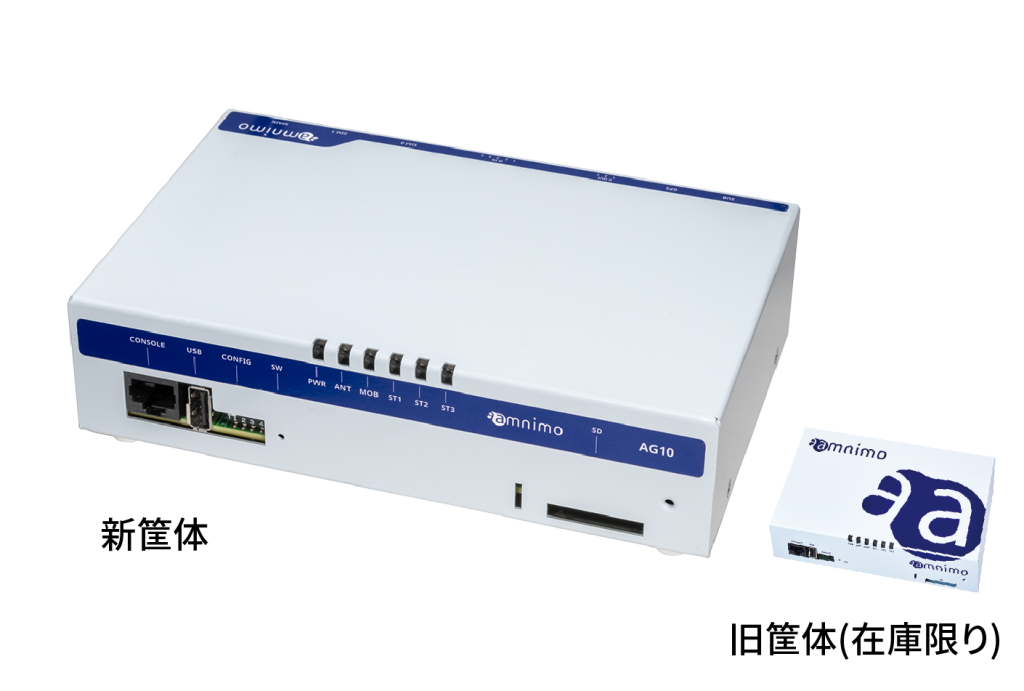
One appeal of LTE gateways is that they are easy to use in many industries. Taking amnimo’s edge gateway as an example, it offers not only general gateway functions but also communication over mobile networks.
What is LTE?
We have covered gateways above, but what is LTE? In short, LTE stands for Long Term Evolution, meaning long-term technological development. LTE was originally considered an intermediate technology for the move from 3G to 4G, so it is also called 3.9G. This section goes a little further into LTE, including how it differs from Wi-Fi and what LTE-M is.
How LTE differs from Wi-Fi
Some people may think LTE and Wi-Fi are similar, but they are different types of wireless communication. LTE is wireless communication for mobile devices, while Wi-Fi is a type of wireless LAN that covers not only mobile devices but also game consoles, PCs, and more. In terms of speed, Wi-Fi is faster than LTE. For use outdoors, however, LTE has the advantage. Because there are many base stations, its coverage is wider than Wi-Fi.
LTE-M is important in the world of IoT
LTE-M is a technology that communicates using unused LTE bandwidth. It is considered a communication technology that supports IoT behind the scenes, with advantages such as not causing radio interference and not losing the signal while moving. In 2018, NB-IoT, a technology similar to LTE-M, also appeared. It is slower and has worse battery life, but it allows lower costs and smaller devices.
How did LTE come about?
We explained LTE gateways above, but what exactly is LTE? LTE is relatively well known because smartphones use it, but few people can explain how it came about. The last sections look at the history that led to LTE.
History before LTE
Before LTE, 2G and 3G were used. 2G, called the second-generation mobile communication standard, was the mobile communication standard used in the 1990s, when mobile phones spread rapidly. In the 2000s, 3G appeared as a step up. It was faster than 2G and came to be used not only for phone calls but also for email and the internet.
3G is a standard still in use today, and phones may switch to 3G where LTE or 4G signals do not reach. This is because 3G has higher population coverage than LTE or 4G. 3G coverage is said to be almost 100%, so where LTE or 4G cannot be used, communication takes place over 3G.
LTE, faster than 3G
LTE is a faster standard than 3G. As described above, it is considered an intermediate technology for a smooth move from 3G to 4G. Technically, however, it is very close to 4G. For this reason, it is fine to call LTE 4G, and this is officially accepted.
Toward even faster 4G and 5G
After LTE come 4G and 5G, even faster standards. 4G enables high-speed communication of 100 Mbps or more and is also called the mobile network technology for smartphones. Besides speed, another appeal is that it can carry more data than LTE.
5G was developed not as technology for smartphones like 4G but for all devices and applications. Specifically, 5G is expected to be used for autonomous driving and remote surgery, which will drive IoT further. 5G is not yet very widespread, but it will spread further as more base stations are built.
A better network environment with an LTE gateway
This article covered the basics of LTE gateways, including information about gateways and LTE. LTE gateways can be used in many industries and can use mobile networks. If you want to improve your network environment, consider introducing an LTE gateway.
Recommended products
Contact usProduct inquiries and documents
We can help you choose products and put together a package for your application. Consultations are free.