Preparing for mandatory customer harassment measures, expected to take effect in 2026: Three pillars to start on now, and technology-based solutions
Apr 15, 2026
Chapter 1. Introduction: Why customer harassment measures matter now
Today, many companies face a serious threat from extremely disruptive behavior by customers, known as “customer harassment” (kasuhara in Japanese).
According to surveys by the Ministry of Health, Labour and Welfare (MHLW) from 2022 to 2024, awareness of power harassment and sexual harassment has grown, and the number of consultations about them has fallen or stayed flat. Customer harassment is the only category that is “trending upward.”
When employees suffer customer harassment, it can harm their mental health and lower their performance. It also leads directly to leaves of absence and resignations. For companies, the losses are enormous: more time spent dealing with incidents, damage to the brand image, and higher hiring costs to secure staff. One private-sector estimate puts the annual loss in Japan at JPY 5 trillion to 8 trillion.
In response, the government decided in December 2024 on a policy to make customer harassment measures mandatory. Legislation is expected to progress in 2026. Companies’ “duty to consider safety” to protect their employees is shifting from an obligation to make efforts to a legal obligation.
Pillar 1: Prevention: Make “rejection by the organization” visible
The first step is to show clearly that the company does not tolerate harassment. Setting rules in advance, instead of responding case by case, is a strong deterrent against abusive customers.
1-1. Basic policy
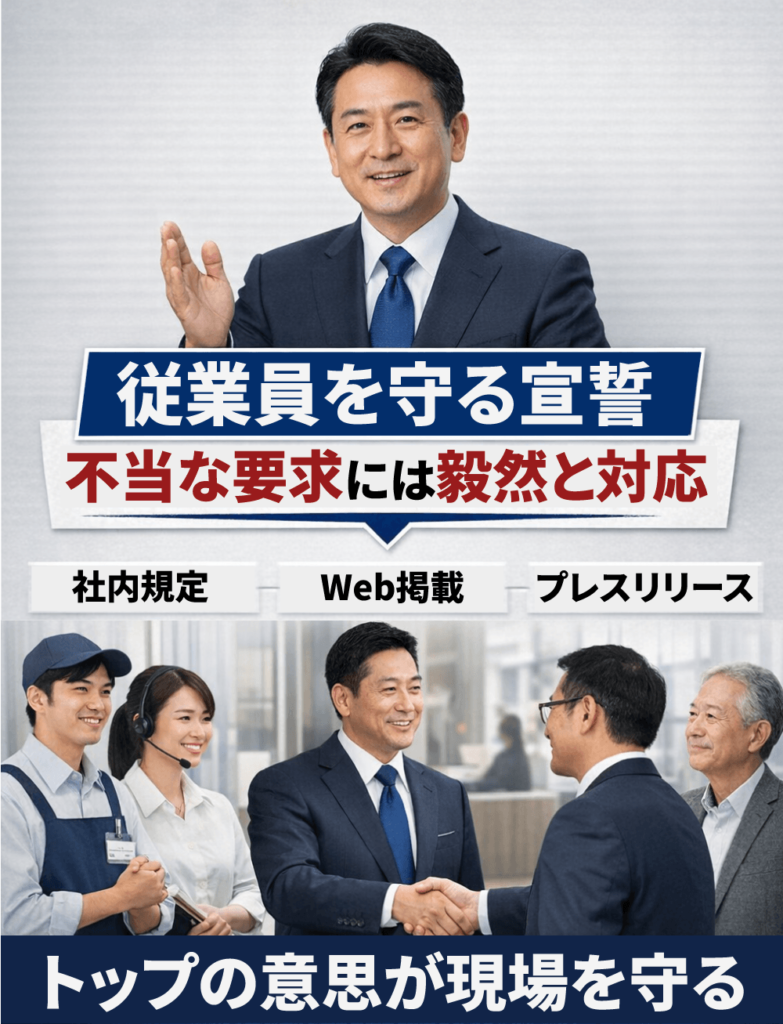
First, set a clear basic policy on customer harassment. It is important for top management to send the message: “To protect our employees, we respond firmly to unreasonable demands.” State this in internal rules, publish it on your website and in press releases, and make it known to all stakeholders.
1-2. Advance notice to customers and “visibility”
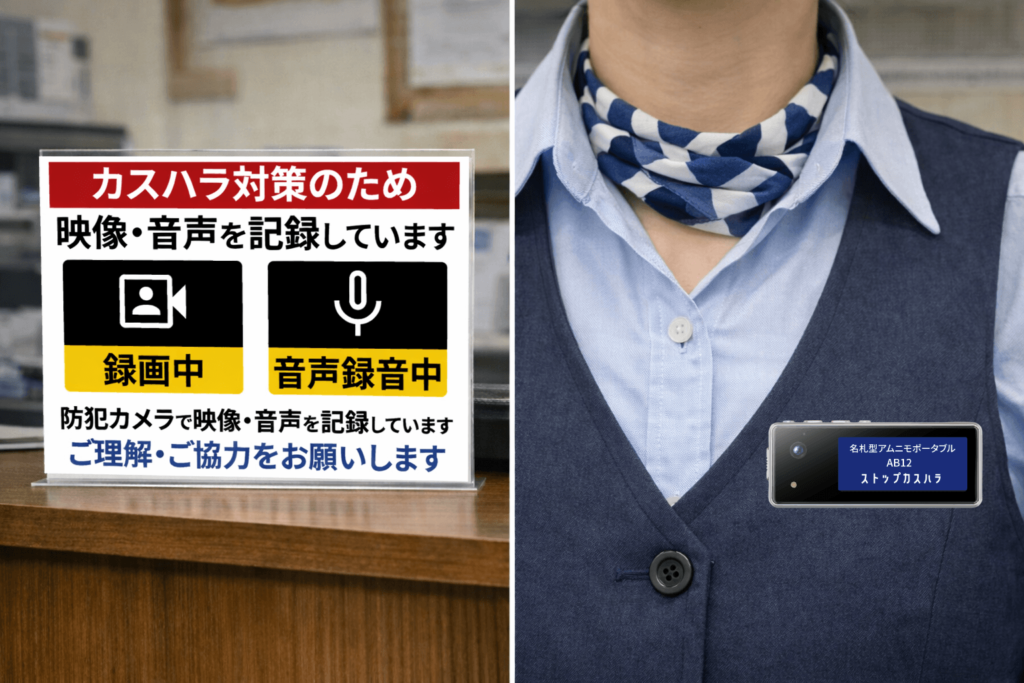
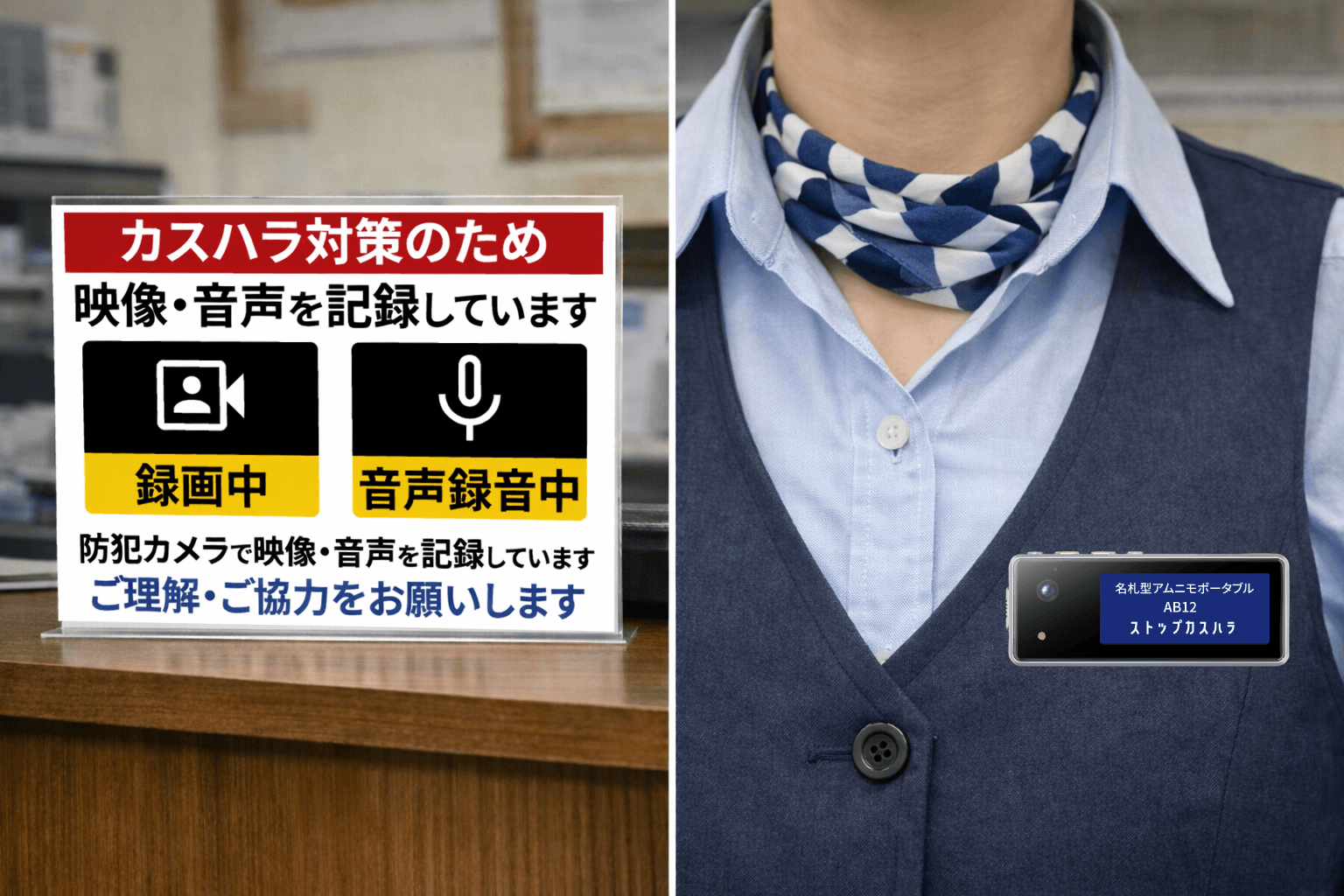
Recording audio and video of customer interactions is an effective way to address customer harassment. MHLW recommends it in documents such as its “Customer Harassment Countermeasures Manual for Companies (PDF, Japanese).” When you record, it is important to put up posters or stickers at storefronts and service counters, such as “Video and audio are recorded to prevent customer harassment,” and make this widely known. The amnimo Portable (Name Badge) AB12 portable camera is effective here.
- Psychological deterrence: Customers can see at a glance that staff are wearing it, which helps restrain their behavior
- A less intimidating design: The name badge shape feels less imposing, so staff can serve customers naturally
1-3. Revising work rules
It is important to tell employees clearly that the purpose of these measures is “protection,” not “monitoring.” We recommend adding wording such as “The company may require employees to wear cameras to ensure their safety” to the sections on health and safety or workplace discipline, to establish a legal basis.
Pillar 2: Consultation and response system: Do not leave frontline staff isolated
When customer harassment occurs, what puts the most pressure on employees is “being isolated on the front line.” A system in which the organization backs them up is essential.
2-1. Drawing the line between “legitimate complaints” and “customer harassment”
Share decision criteria based on MHLW guidelines across the company, so frontline staff know what to do.
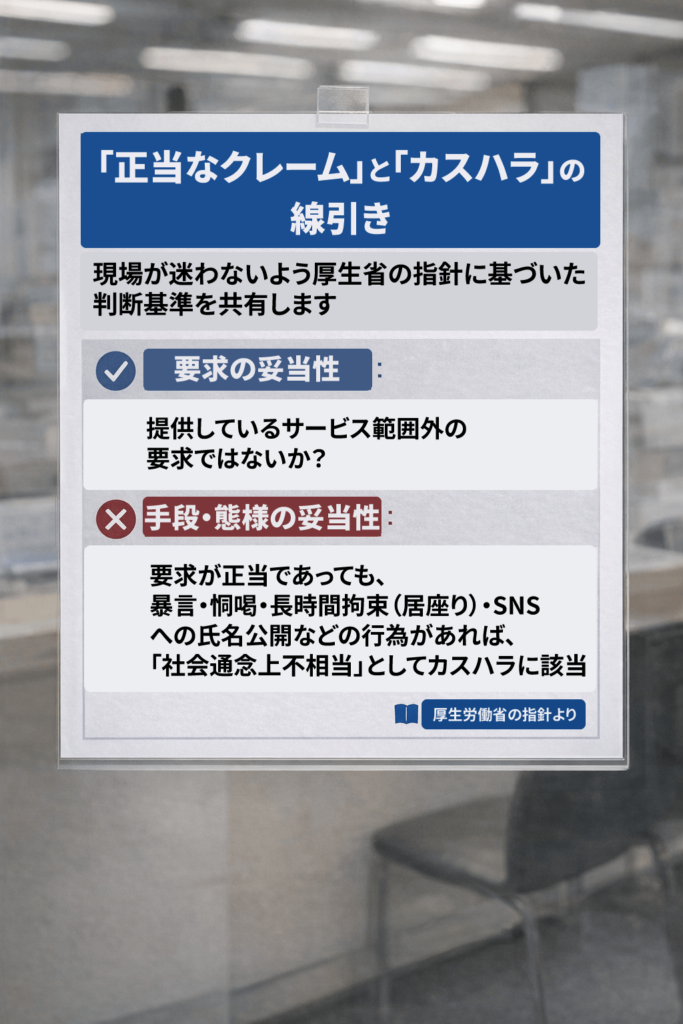
- Is the demand reasonable? Check whether it falls outside the scope of the services you provide.
- Are the means and manner reasonable? Even if the demand is legitimate, verbal abuse, intimidation, holding staff for long periods (refusing to leave), or posting staff names on social media is “socially inappropriate” and counts as customer harassment.
2-2. Building an escalation flow
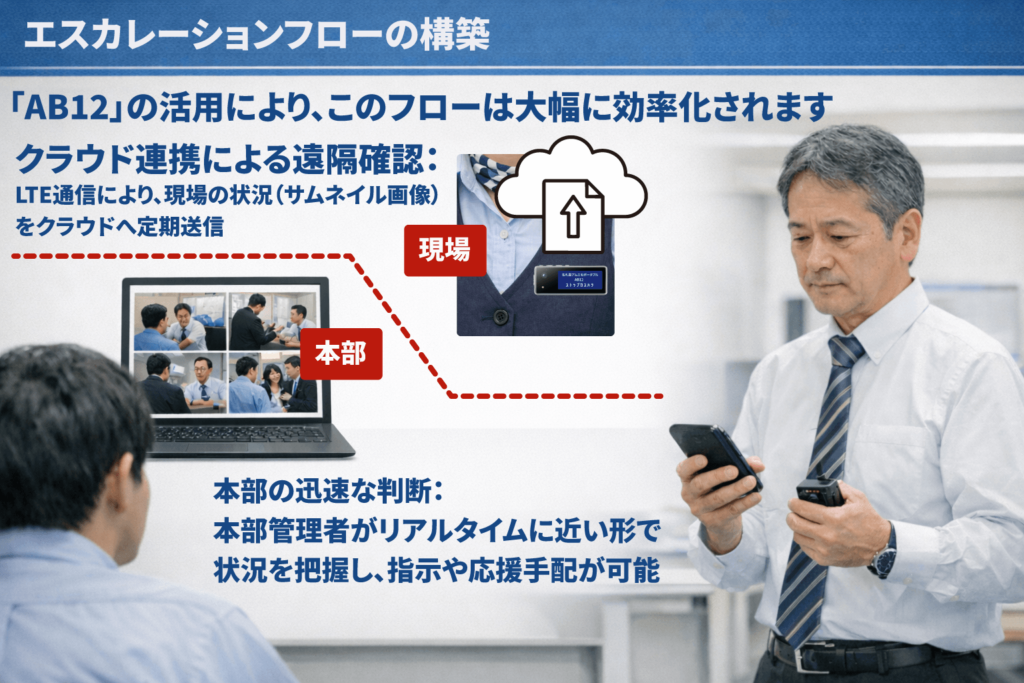
Define the reporting route when the first response does not resolve the issue, when to hand over to a supervisor, and the criteria for calling the police. The AB12 makes this flow much more efficient.
- Remote checks through the cloud: The camera sends images of the situation on site (thumbnails) to the cloud at regular intervals over LTE
- Quick decisions at headquarters: Managers at headquarters can see the situation in near real time, give instructions, and arrange backup
2-3. Education and training
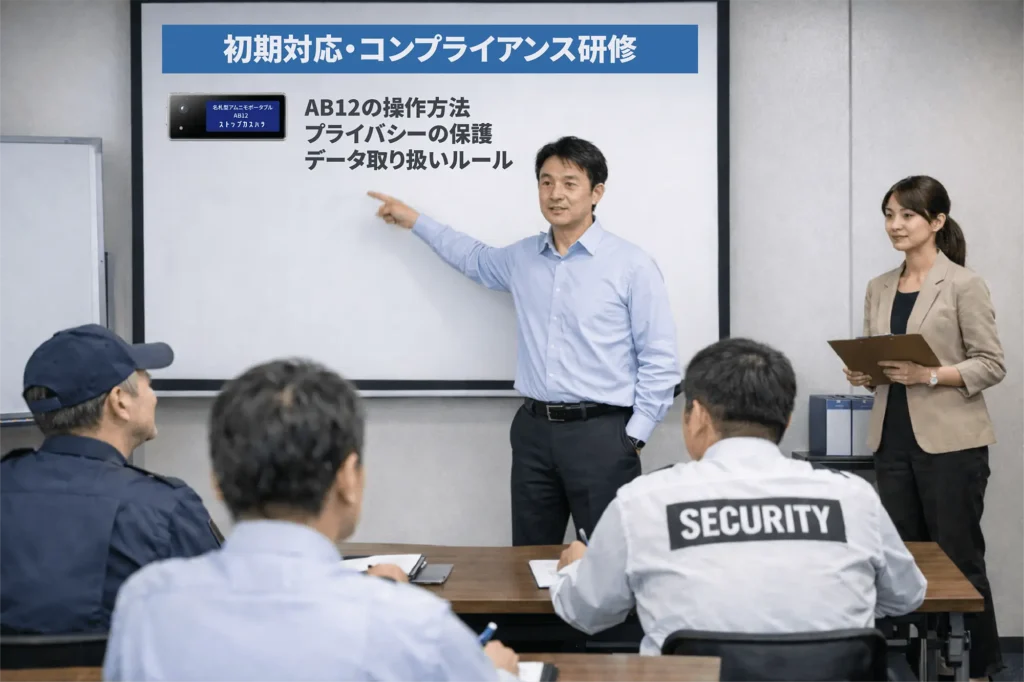
Provide all employees with training on the initial response, based on the manual. Along with camera operation, also provide compliance training on privacy protection and data handling.
Pillar 3: Quick follow-up: Evidence-based resolution and care
How you respond after an incident ends has a large effect on later legal risk and on employee turnover.
3-1. Confirming the facts with an objective “record”
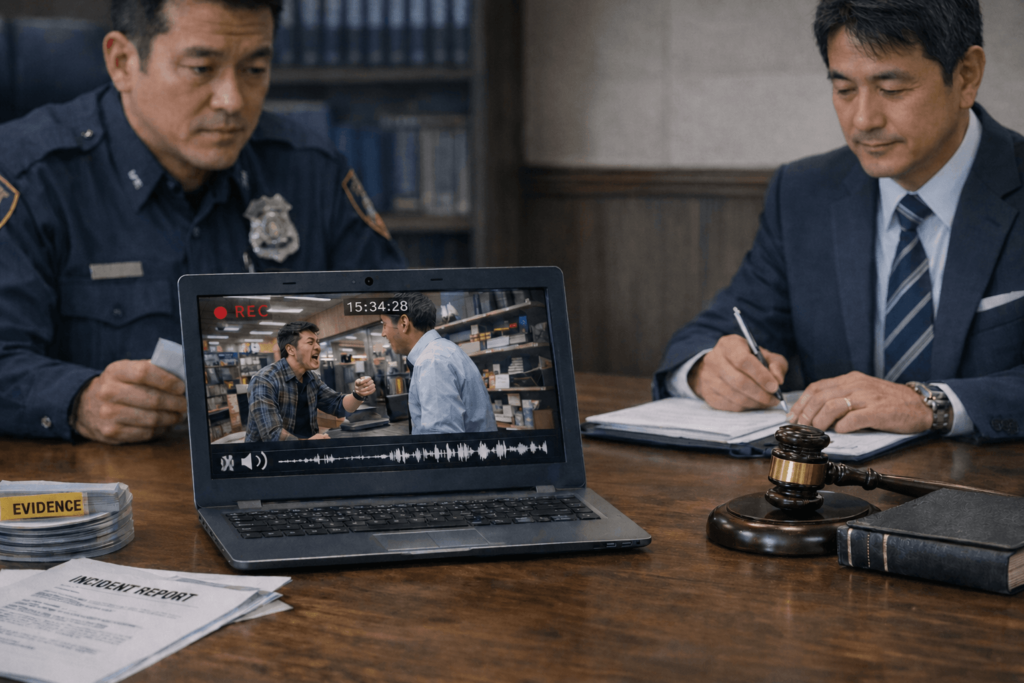
Customer harassment often turns into a “he said, she said” dispute. When there are no witnesses, employees are often put at a disadvantage.
Data recorded with the AB12 serves the following purposes.
- Preserving conclusive evidence: If a criminal offense is involved, the data can be submitted to the police or lawyers
- Proving that the duty to consider safety was met: The data shows that the company responded appropriately, which reduces risk
3-2. Mental health care for affected employees

Give employees who have suffered psychological harm the chance to meet with an occupational physician or a counselor. Feeling protected by the organization leads to higher engagement.
3-3. Using records to prevent recurrence

Analyze the recorded data to improve the manual and identify high-risk times and areas. Reflect the findings in training to strengthen the response capability of the whole organization.
4. Summary: Why the AB12 is well suited to addressing customer harassment
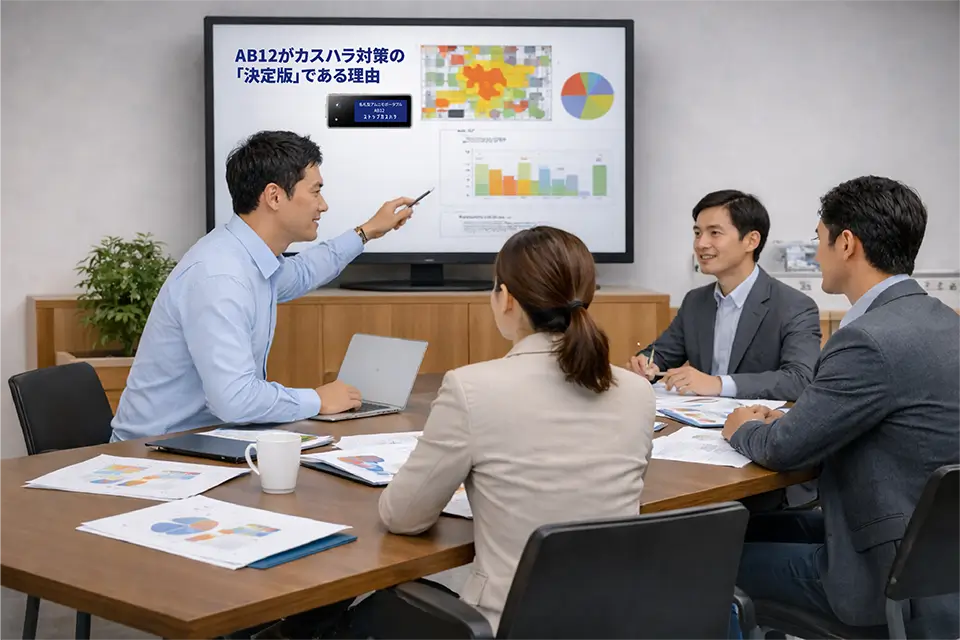
amnimo’s AB12 is more than a camera. It is an “integrated risk-hedging solution” for the era of mandatory customer harassment measures, including communications (LTE), the cloud, and operational design.
- Worn and recording on site: Lightweight (about 77 g) and long operating time (about 6 to 8 hours), so it does not get in the way of work
- Secure management: Data is encrypted and managed in a highly secure cloud
- Easy to introduce: In some cases, local government subsidy programs are available, which makes now a good time to introduce it
Customer harassment measures are currently an “obligation to make efforts,” but from October 2026 they will become a “legal obligation.” To create a workplace where employees can work with peace of mind, consider new measures that use technology.
See also the following.
Our earlier article
Our earlier webinar on this topic
Note: The images in this article were generated with AI technology and retouched by people.
Products related to this article

Contact usProduct inquiries and documents
We can help you choose products and put together a package for your application. Consultations are free.