
Trial of a thermal camera intrusion detection system around an airport perimeter shows results: More efficient security and monitoring, and higher security quality

- Customer
- A regional airport
- Industry
- Airports
“For remote monitoring with cameras, the challenge was the capital investment needed to lay power and communication cables. amnimo’s solution needs no cabling, installation is completed in a short time, and we can carry out high-quality monitoring efficiently. We find that very attractive.”
— A regional airport —
Industry
Airports
Products
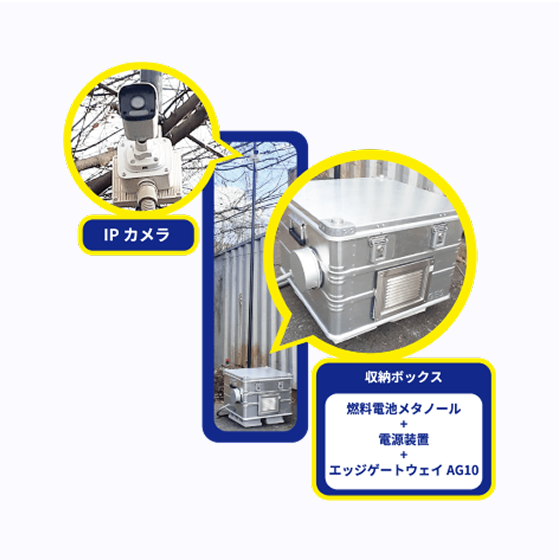
Fuel Cell Surveillance Camera Solution, Enhanced Video Management System, and dual-lens thermal and visible-light camera
Recommended products

Application
Security operations using cameras
Challenges
- Security relied on a combined process of intrusion detection sensors, double fences, and patrols by security guards
- When an intrusion was detected on the perimeter, the situation could be checked only after staff arrived on site, causing a time lag after the event
- Because staff checked the site after every detection, the airport needed to make scheduled perimeter patrols more efficient and secure enough security staff

Results
- Intrusion detection with thermal cameras integrated with video monitoring
- Surveillance video from sites spread around the perimeter managed in one place in a web browser
- Remote, real-time checks of the perimeter with video
- No power or communication cabling work required, so operation can start at low cost and with a short lead time
- Efficient, high-quality security operations with a solution that combines thermal cameras and fuel cells

Overview: The airport’s initiatives

Japan has about 100 airports, including those called airfields. In 2013, Japan enacted the Act on the Operation of National Airports Utilizing Private Sector Capabilities (commonly called the “Private Sector Airport Operation Act”). Since then, national government–managed airports and similar airports have been moving to a concession model. The national government or other airport administrator keeps ownership of the runways and other basic facilities and grants operating rights, and a private operator runs the aviation and non-aviation businesses together.
At the airport we interviewed, the national government previously built and operated the runways and other facilities. The passenger terminal building was run by a joint public-private company funded by local private companies, the prefecture, the city, and others. The airport has now switched to a concession model. A new private operator runs the airport as a single business using its own ideas, working to expand the air network and revitalize the region by increasing the number of visitors from within Japan and abroad.
Airport operations fall into three broad areas. The first is maintaining and managing runways and other facilities, which are huge infrastructure. The second is airport operations, which covers safety management of the runways and other airside areas and management of the aprons. The third is security and disaster prevention. Air travel connects airports with the rest of the world, and airports welcome people from overseas. To keep passengers safe and secure, airports must strengthen safety management and security, and security and disaster prevention play a very important role.
Labor shortages in Japan will also become a challenge, so the airport aims to run its business using the latest technology. In strengthening its security operations, it focused on the system used in this trial: amnimo’s Fuel Cell Surveillance Camera Solution, the Enhanced Video Management System, and a dual-lens thermal and visible-light camera.
Goal: Efficient security operations with the Fuel Cell Surveillance Camera Solution, Enhanced Video Management System, and dual-lens thermal and visible-light camera
The airport’s perimeter was protected by intrusion detection sensors, double fences, and regular inspections by security guards. The airport currently maintains its security level without any particular problems. However, several years after the COVID-19 pandemic, passenger numbers are gradually increasing, and security risks are expected to keep rising across Japan. The airport needed to secure its perimeter efficiently with limited staff. “The airport is very large, with a perimeter of about 7 to 8 kilometers. When an intrusion detection sensor was triggered, staff went to check, but it took time to reach the site. So the challenge was that we could not see what was happening right after the detection,” said the general manager in charge at the airport.
To address this, amnimo, understanding the current state of airport security, proposed an intrusion detection and video monitoring solution using the Fuel Cell Surveillance Camera Solution, the Enhanced Video Management System, and a dual-lens thermal and visible-light camera. A trial at the airport began in June 2023.
The manager responsible for security and disaster prevention at the airport, who watched the start of the trial, gave positive feedback: “With our current system, installing new surveillance cameras around the airport perimeter means laying power and communication cables, which takes people, time, and money. In this trial, it took about two days for the concrete to set (for the poles that hold the cameras), and the installation itself took just one day. That was very attractive in terms of time and cost.”
The actual intrusion detection and video monitoring functions also received positive feedback: “I was surprised that we could freely set the intrusion detection areas remotely on a device. amnimo made various suggestions, such as how to set monitoring areas based on likely intrusions, and we changed settings flexibly. We learned a lot as we went along.”
Background: Stronger security and a foundation for growth as passenger numbers rise
The airport has long had various routes, mainly to other parts of Asia, and many tourists visited. However, because of the COVID-19 pandemic, which spread rapidly from 2020, all international flights were suspended and passenger numbers fell sharply. Passengers have been gradually returning in recent years, and the airport now appears to be building a foundation for growth, with the goal of exceeding pre-pandemic passenger numbers.
While expectations are rising that passengers will return, the airport must run its operations with a limited number of staff, so it needs to work even more efficiently. For this reason, it carried out a trial of monitoring operations using the latest technology.
Results: Less time spent on on-site checks with cameras and amnimo’s monitoring solution
1. Video analysis detects intrusions, and thermal cameras allow immediate checks even at night
At the airport, perimeter patrols took time. The general manager in charge described the actual results: “Until now, after a sensor detected something, it took time to go and check because we had to go around the runway strip to reach the site. With the system amnimo proposed, we can check the site right after a detection. I think that is the biggest benefit this time.”
Detections currently occur about 13 times a month, and staff check the site each time. On the results of the trial, the general manager said: “In terms of efficiency, I think the quality of our security operations has definitely improved a great deal. For organizations like ours that aim to raise the quality of their work, I felt it is a very effective system.”
The airport also commented: “Until now, we had to patrol to check the perimeter. By using dual-lens thermal and visible-light cameras as intrusion detection sensors, we can monitor the perimeter day and night without any problems.”

2. Immediate checks on animal and human intrusions: From patrols by people to monitoring by cameras
Various animals live around the airport grounds. Until now, to identify what the system had detected, staff first had to confirm where on the large perimeter the detection occurred and then go there. When the object was an animal, however, it moved, and by the time staff arrived, they had lost track of it.
In airport operations, animals entering the perimeter are a major risk. For example, if an animal such as a cat gets in and crosses an area where aircraft take off and land, it could cause a serious accident. The surveillance cameras introduced this time are also used to prevent this. “Wild animals entering the airport is itself not acceptable for safe aircraft operations, so we think it is very good that we can now visually check whether an intruder is a person or an animal,” the airport said.
3. Cost-effective security enhancements proposed by amnimo
The airport industry faces various challenges. amnimo interviewed airport staff and surveyed the airport perimeter on site, and made a high-quality proposal based on a deep understanding of the current situation. This led to the trial at the airport.
For example, operating surveillance cameras on the airport perimeter required a system that could be used where there is no power. The fuel cell solution, which runs stably for a long time without a power supply, needs no power or wired network infrastructure. Compared with detection systems using conventional sensors, it greatly reduces costs and provides cost-effective security enhancements.


Outlook: Further growth for the airport, including the use of the latest technology
We talked with the airport from various angles. Looking ahead, they said: “We aim to be an airport that keeps growing into the future, but first we need to get back to pre-pandemic levels.” Their goal appears to be to grow passenger numbers steadily.
At the same time, as passenger numbers grow, various risks also rise, and the airport expects that national security standards may be raised. For this reason, it is focusing on and considering investment in the latest technology, including this solution. In closing, they spoke confidently about a bright future: “By testing this in concrete terms, we as an airport have gained experience. With amnimo’s thermal camera intrusion detection system, we could feel that the quality of our security operations can definitely be raised in terms of efficiency. I think it is a very effective system for organizations like ours that aim to raise the quality of their work. The pandemic is over and passenger numbers are recovering, so we intend to accelerate our efforts with an eye on the future.”


Products used in this case study
Related case studies
-
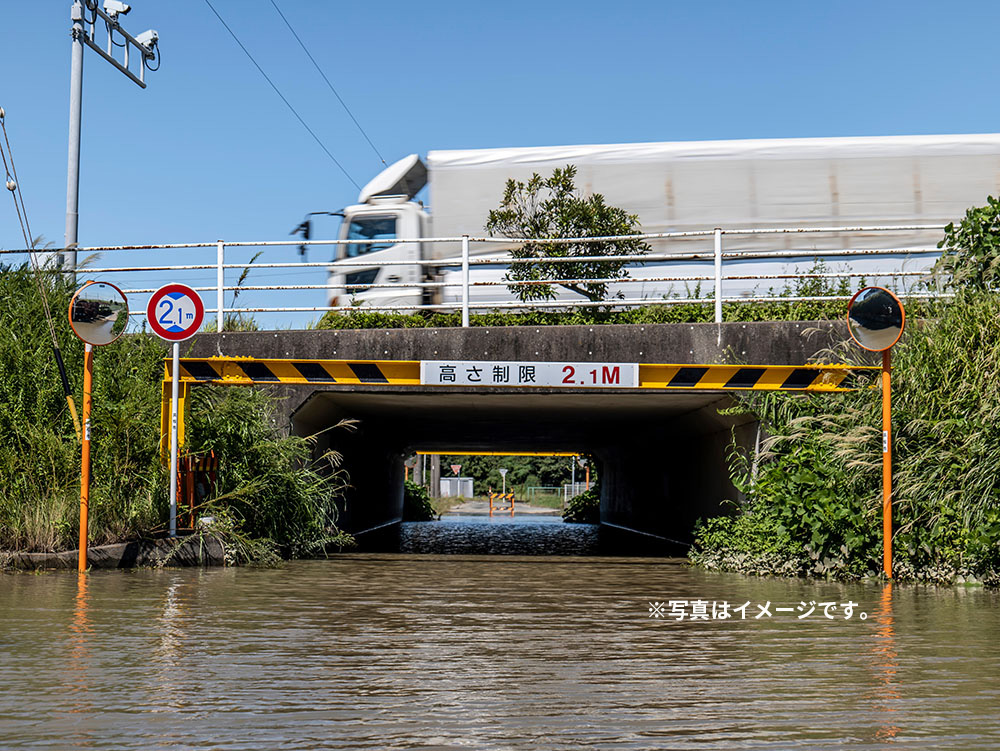 Takaoka City: Underpass flooding monitoring solution
Road Maintenance Division, Urban Development Department, Takaoka City; TAKAOKA CABLE NETWORK CO., LTD.; and SANGIKYO CORPORATION Enhanced Video Management SystemAG20
-
 Toshima City: Disaster preparedness and crisis management camera solution
Disaster Prevention Crisis Management Section, General Affairs Department, Toshima City Enhanced Video Management SystemAG20
-
 More effective park management and monitoring with IoT security cameras
Kazuhiro Sakai, Parks and Green Spaces Division, Urban Development Department, Toshima City (as of June 2023) Device Management SystemEnhanced Video Management SystemAG20










Contact usProduct inquiries and documents
We can help you choose products and put together a package for your application. Consultations are free.