
Takaoka City: Underpass flooding monitoring solution
- Customer
- Road Maintenance Division, Urban Development Department, Takaoka City; TAKAOKA CABLE NETWORK CO., LTD.; and SANGIKYO CORPORATION
- Industry
- Local governments
- Products used
- Enhanced Video Management System, Edge Gateway (Outdoor) AG20
Making the community safer with a cost-effective video solution
— Road Maintenance Division, Urban Development Department, Takaoka City; TAKAOKA CABLE NETWORK CO., LTD.; and SANGIKYO CORPORATION —
Industry
Local governments
Products
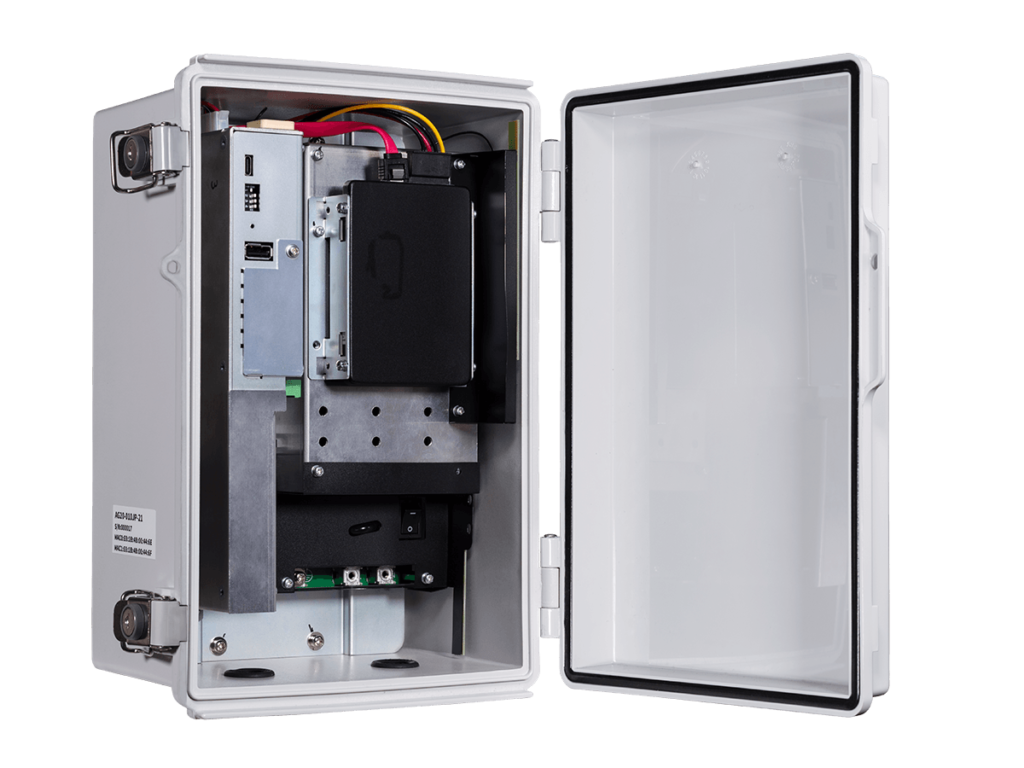
Edge Gateway (Outdoor) AG20 and Enhanced Video Management System
Recommended products
Application
Keeping residents safe and working more efficiently with a surveillance camera system
Challenges
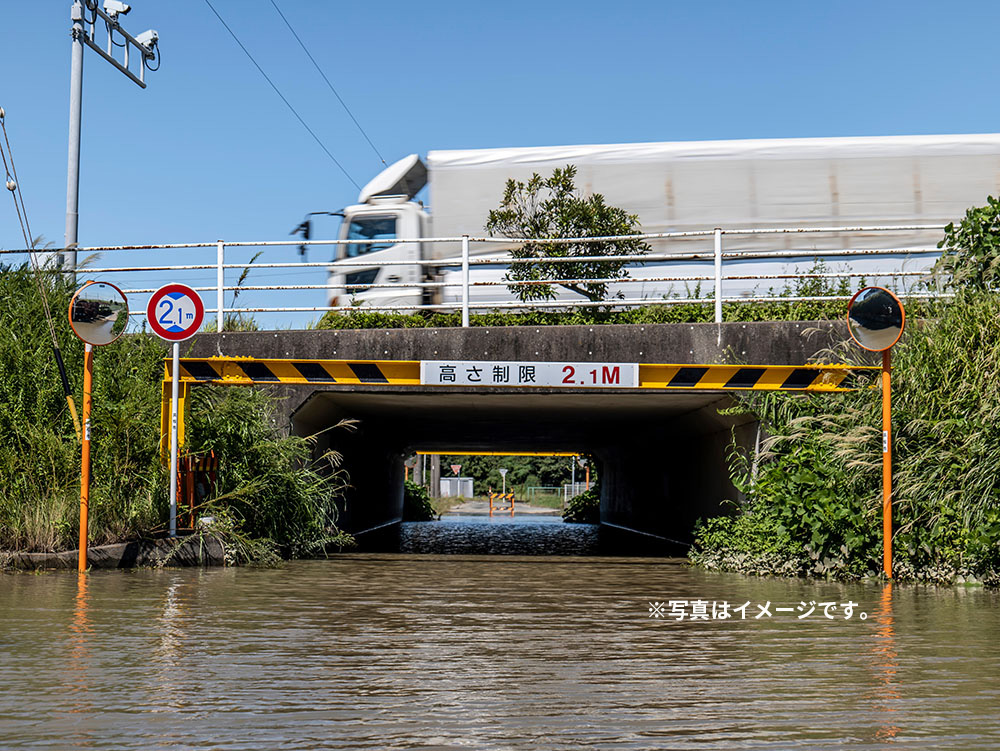
- Underpass flooding had a serious impact on residents’ lives. In heavy rain in particular, there were accidents in which vehicles drove into flooded underpasses. Staff often had to go to the site and check visually, which made a quick response difficult. Patrols also had their limits, and the city often could not respond to sudden torrential downpours or sudden changes in the weather.
Application
- Results from three perspectives: staff, residents, and the system
- Less burden on staff: Staff can monitor underpasses remotely, so they need to go to the site less often and can focus on other emergencies.
- Faster response: Staff can check video in real time, which strengthens measures to reduce the risk of vehicles driving into flooded underpasses.
- Better service for residents: Complaints from residents are handled more smoothly, and flooding on major roads is now visible, which gives residents greater peace of mind.
Overview
Takaoka City in Toyama Prefecture is a city in the Hokuriku region, surrounded by rich nature that changes with the seasons. It gets heavy snow in winter, and rivers often rise and roads flood during the spring snowmelt and the rainy season. Under these conditions, Takaoka has many underpasses where rainwater tends to collect. In sudden torrential downpours and heavy rain at night, flooding caused cars to be submerged and disrupted traffic, and city staff had to respond quickly.
Previously, city staff went to the site, checked the flooding visually, and then took action. This made a quick response difficult and increased the burden on staff. At night and on holidays especially, it often took time for staff to reach the site, and there was a risk of accidents in the meantime. Vehicles also frequently entered underpasses that were already flooded.
Against this background, Takaoka City introduced Wi-Fi HaLow (802.11ah) and surveillance cameras to solve these problems with new technology. The system was built in cooperation with SANGIKYO CORPORATION and TAKAOKA CABLE NETWORK CO., LTD. Cameras installed at multiple underpasses let the city monitor flooding in real time. The city also used subsidies to keep initial costs down, so it could build an efficient system within a limited budget.
With this solution, staff can check flooding remotely without going to the site, prioritize the locations that need attention, and respond early. This makes residents safer and helps staff work more efficiently.
The current monitoring setup, with two IoT cameras for near and far views

Project members

(From left: Atsuo Omoteno, Senior Engineer, SANGIKYO CORPORATION; Shigehide Shimizu, Section Chief, Road Maintenance Division, Urban Development Department, Takaoka City; Hiroshi Fukazawa, Director and General Manager of Business Operations Headquarters, TAKAOKA CABLE NETWORK CO., LTD.; and Kiichi Kumada, Engineer, Engineering Department, TAKAOKA CABLE NETWORK CO., LTD.)
Building and introducing the system
The solution uses the following technologies.
1. Camera monitoring system: A system that monitors flooded locations remotely to prevent vehicles from driving in.
2. Cloud integration: Data is gathered in the cloud, and related departments and city staff can check snapshots taken every 15 minutes as well as live video.
3. Data use: Images of past flooding are stored and combined with weather data to help predict flooding.
4. Under consideration: an additional system that sends alerts when water levels rise rapidly, for example in a sudden torrential downpour, to prompt a quick response.
Solution configuration

Conclusion
This case is a success in which technology suited to local conditions both keeps residents safe and reduces the burden on staff. It showed that cloud-based surveillance cameras could become a standard model for disaster preparedness. Takaoka City will roll this system out across Japan and actively promote its adoption by other local governments.
Looking ahead
Building on the results of the underpass monitoring system, Takaoka City plans to further strengthen disaster preparedness and mitigation by introducing more sensor-based IoT solutions. Following the success of underpass flood monitoring, the city is also considering real-time monitoring systems for traffic disruption caused by snow and for road safety. In winter, heavy snow falls across the whole city and has a large impact on traffic, so a system to monitor snowfall is important. The goal is to use cameras to track snow depth in real time and share road conditions widely with residents, so that people can travel safely.
The city also expects to improve the accuracy of its disaster response by accumulating data from surveillance cameras and water level sensors. Based on this data, the city can analyze which areas are at particularly high risk and take efficient measures. The data is also expected to be useful for future urban planning and infrastructure development. In particular, linking it with weather data should enable more accurate flood prediction and snow measures, improving the disaster response capability of the whole city.
Integration with weather data (lower left) and planned additional IoT solutions (lower right)


The city also plans to focus on providing information to residents. It is currently considering a system that shares the flooding and snow conditions that staff monitor in real time with residents through the community channel, the city’s official website, LINE, and other channels. The aim is to let older people and others with limited mobility know in advance where roads are flooded or snow is severe, so they can choose safer routes. Real-time information lets each resident take appropriate action, which is expected to reduce damage in a disaster.
Takaoka City is also considering sharing this underpass monitoring case with other local governments. Nearby cities such as Imizu and Tonami face similar challenges, and cooperation is already in place in some areas. Going forward, the city plans to run trials, centered on the Hokuriku region, to roll the technology out across Japan, so that it can be applied widely to disaster preparedness not only in cities but also in suburban and mountain areas. The city is also considering publicizing this as a success story so that other local governments can use subsidies to introduce it.
Through these efforts, Takaoka City aims to become a “disaster-resilient city” and plans to keep protecting residents with technology. In this way, it will strengthen the disaster response capability of the whole city and build a sustainable city for the future.
Recommended documents

Edge Gateway (Outdoor) AG20

Local government use case: Operating outdoor security and surveillance cameras

Takayama City: Revitalizing the whole town with AI foot traffic measurement
AI Edge Gateway (Outdoor) AX21
Enhanced Video Management System

Toshima City: Efficient park management and monitoring with IoT security cameras
50+ related documents
Free download (Japanese)
Products used in this case study
Related case studies
-
 Toshima City: Disaster preparedness and crisis management camera solution
Disaster Prevention Crisis Management Section, General Affairs Department, Toshima City Enhanced Video Management SystemAG20
-
 More effective park management and monitoring with IoT security cameras
Kazuhiro Sakai, Parks and Green Spaces Division, Urban Development Department, Toshima City (as of June 2023) Device Management SystemEnhanced Video Management SystemAG20
-
 Revitalizing the whole town with AI foot traffic measurement
Masahiko Yamada, Director for Digital Promotion, Takayama City AX21AG20





Contact usProduct inquiries and documents
We can help you choose products and put together a package for your application. Consultations are free.