Illegal dumping in Japan today and how to prevent it: Using security cameras
Jan 18, 2024

Illegal dumping cases in Japan have dropped sharply since the late 1990s and early 2000s, but the number has leveled off in recent years. Illegal dumping is still a problem on both private and public land. Fences and chains help prevent it, but security cameras are especially effective. A system that lets you monitor sites remotely at all times makes security cameras even more effective. This article looks at where illegal dumping tends to happen and explains how to use security cameras to prevent it.
Recommended documents

50+ related documents
Free download (Japanese)
Illegal dumping in Japan today
Illegal dumping means disposing of waste in violation of the law. Any unlawful disposal of waste counts as illegal dumping, regardless of scale. It ranges from an individual who ignores local government rules and leaves furniture or appliances in a park, to a demolition contractor who dumps tons of demolition materials in the mountains.
Looking at the current situation, 139 cases of large-scale illegal dumping (10 tons or more) were discovered in FY2020 (15 fewer than the previous year). The amount dumped was 51,000 tons (25,000 tons less than the previous year). Of these, 4 cases were very large (5,000 tons or more), totaling 32,000 tons (according to a Ministry of the Environment survey).
This is far lower than the peak in the late 1990s and early 2000s, when there were more than 1,000 cases a year. However, malicious dumping still continues.
There are no accurate figures for small-scale dumping. Still, malicious cases, such as people throwing trash onto private property, keep occurring and have become a social problem.
Where illegal dumping tends to happen
Illegal dumping is prohibited under the Waste Management and Public Cleansing Act and is subject to penalties. As a result, it tends to happen in places where dumping is unlikely to be noticed or where it is easy to do.
Examples include places with poor visibility that are out of sight, places without fences or barriers, roadsides, places that are clearly poorly maintained (for example, with overgrown weeds), and places where trash has already been dumped.
So how can you prevent illegal dumping?
How to prevent illegal dumping
To prevent small-scale dumping, start with basic measures: put up “No entry” signs and enclose restricted areas with chains or fences so that vehicles cannot enter.
If a site has no fence or has overgrown weeds, it looks poorly maintained. Individuals or unscrupulous operators looking for a place to dump may think, “No one will notice if we dump here,” which can lead to illegal dumping.
However, even these measures cannot eliminate illegal dumping completely. Cutting weeds, cleaning up, and installing fences and signs do not let you know what is happening on site at all times. Also, it is not practical to put up signs or build fences around an entire large site where tons of waste may be dumped.
This is why you should consider installing security cameras as a preventive measure.
Installing security cameras
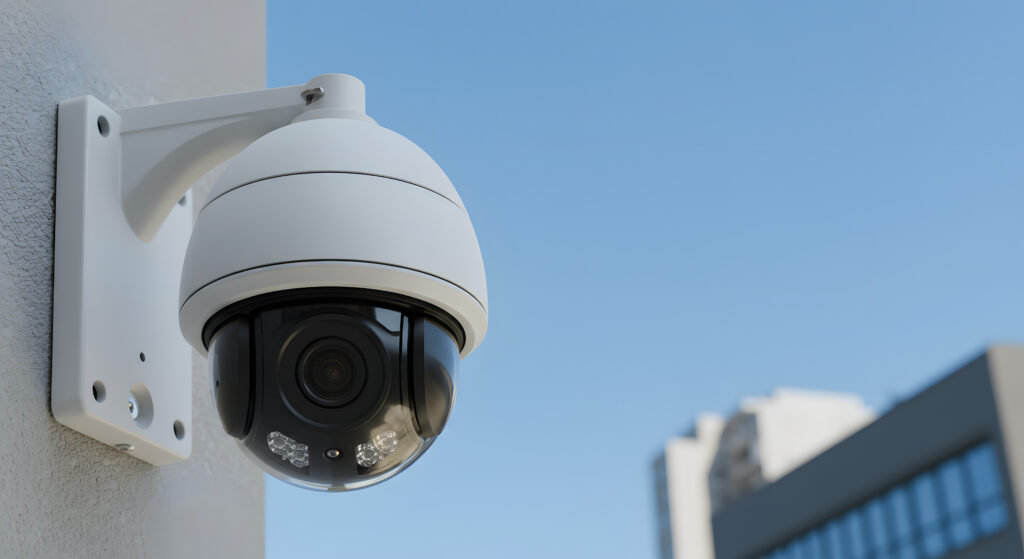
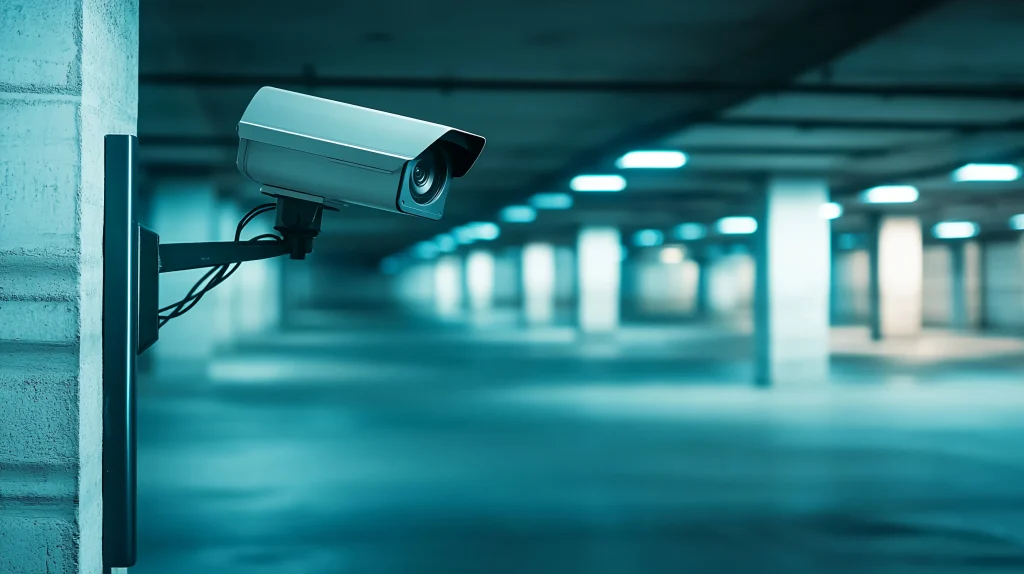
There are many types of security cameras for monitoring dumping sites. Choosing the right camera is important for efficient operation.
For example, the key is to introduce cameras that can detect intrusions, such as thermal cameras and AI cameras, and to choose a video management system. There are many types and methods of video management systems. With the spread of IoT, more and more surveillance camera systems are connected to the internet. Within this trend toward networked cameras, one key point is the choice between “edge recording” and “cloud recording.”
In the past, most surveillance cameras were not connected to the internet. They used “edge recording,” which saves video and image data to local storage, either inside the camera or in a recorder in a nearby control room. To check the video, you had to go to the site and bring back the data stored on the SD card, or view the video where the recorder, called an NVR (network video recorder) or DVR (digital video recorder), was located.
As networked cameras have spread, more cameras are now connected to the internet through routers and gateways. This makes it possible to check video, detect camera failures, restart cameras that have stopped, and change settings remotely.
Along with this trend, “cloud recording,” which stores all video captured by the cameras in the cloud, has also spread in recent years.
Both edge recording and cloud recording have advantages and disadvantages. Solutions that combine both have also appeared in recent years, so it is important to choose a system with operations in mind.
The following article explains edge recording and cloud recording in detail.
What security cameras need to prevent illegal dumping
Security cameras are effective for preventing illegal dumping and identifying offenders. When you introduce security cameras, take measures that meet certain conditions, such as having clear evidence when you consult the police and being able to prove that the dumping was intentional.
To capture evidence of illegal dumping on video, security cameras need the following functions.
Recording in the dark, such as at night
Illegal dumping often happens at night when few people are around. It is important to choose products that can record clearly even in the dark. There are two types of night vision: low-light cameras, which pick up faint light to capture clear images, and infrared night vision cameras, which use infrared to record even in complete darkness. Thermal cameras (thermographic cameras) with these capabilities have also become cheaper in recent years. They used to be practical only for airport security and border security, but now they can be used for more general purposes.
Resistance to vandalism and theft
Some offenders break or steal security cameras when they find them, to avoid being recorded. You can reduce the risk of vandalism and theft to some extent by mounting cameras high out of reach and by planning the wiring carefully. Another effective measure is to put a dummy camera in a visible spot and install the real camera somewhere else.
Ready to record when it matters
At places where dumping is likely, which few people usually visit, staff often cannot go on site frequently to check the video. In that case, a lack of maintenance could mean that the camera was not recording when dumping actually happened.
It is important to choose products whose operating status you can always check remotely, so that they are ready to record when it matters.
AI image analysis
Going a step beyond the conditions above, AI image analysis is also an important factor.
If AI analyzes the recorded video and captures the act of dumping in more detail, you can respond more directly and closer to real time, for example by issuing a voice warning on the spot. Camera systems with AI functions can detect events in more detail, so they are also effective at sites where small-scale dumping occurs.
Examples of security cameras that helped prevent illegal dumping
Here are some examples of how security cameras can be used.
- Cameras were installed at a site with frequent dumping, along with stickers showing that the cameras were in operation. The deterrent effect stopped the dumping.
- Network cameras were installed at a site with frequent dumping. Staff can now check the site remotely at any time, 24 hours a day.
In addition, a VMS (video management system), software for managing and viewing security camera video, enables real-time detection of and notification about abnormal events by combining camera motion detection with other sensors. Besides deterrence, this lets you respond immediately when an incident occurs. The system can also issue warnings directly to suspicious people on site from a remote location through a speaker built into the camera.
amnimo’s video solutions
amnimo provides video solutions for managing security cameras spread across many sites in a unified way. For example, our video solutions use edge recording: the gateway on site records and monitors camera video continuously. Recorded video is managed with the Enhanced Video Management System, amnimo’s own cloud-based VMS, so you can check video at any time from remote locations or on smart devices. You can also download only the recorded data you need to the local environment of video managers and viewers through the cloud. Motion detection and alert notifications let you check the video you need right away when it matters.
amnimo’s video solutions do not lock you in to specific camera hardware, so you can choose the cameras that suit your needs, such as cameras that record in the dark. Our gateways are rugged, have the functions you need, and run reliably even outdoors. amnimo has also developed the AI Edge Gateway, a gateway designed for “edge AI.” It analyzes video from ordinary IP cameras on site in real time, without relying on camera functions or cloud resources. With it, you can build and operate an advanced AI-based surveillance camera system flexibly and at a reasonable cost, without relying on expensive AI cameras or cloud analysis and storage resources.
See the links below for details of our video solutions.
The document below explains the challenges of outdoor monitoring across large areas and multiple locations, and how to solve them.
Recommended documents
50+ related documents
Free download (Japanese)
Security and surveillance cameras: From “install and record” to “use the video data”
Security and surveillance cameras are used in many places in our daily lives. Their role is shifting: they are no longer installed only as a deterrent, but as a source of video data to put to use.
Behind this shift are major advances in camera performance (the eyes), internet, cloud, and wireless communication technology (the nerves), and AI image analysis (the brain).
amnimo provides IoT gateways and routers that withstand harsh environments, together with cloud services designed for IoT and camera operations. We offer video solutions that bring together the latest “eyes, nerves, and brain” technology of camera systems to sites in many industries where cameras must run 24 hours a day, 365 days a year.
If you are looking for “a camera system where the right people can see the video they need, when they need it, in real time” or “a camera system that supports AI image analysis and integration with other systems,” amnimo is well suited to your needs.
If you are interested in amnimo’s video solutions, contact us through our inquiry form.
Recommended products

Recommended documents
50+ related documents
Free download (Japanese)
Products related to this article
Contact usProduct inquiries and documents
We can help you choose products and put together a package for your application. Consultations are free.