What is AI image analysis for security cameras? Why it is needed, use cases, and pros and cons
Jan 17, 2024

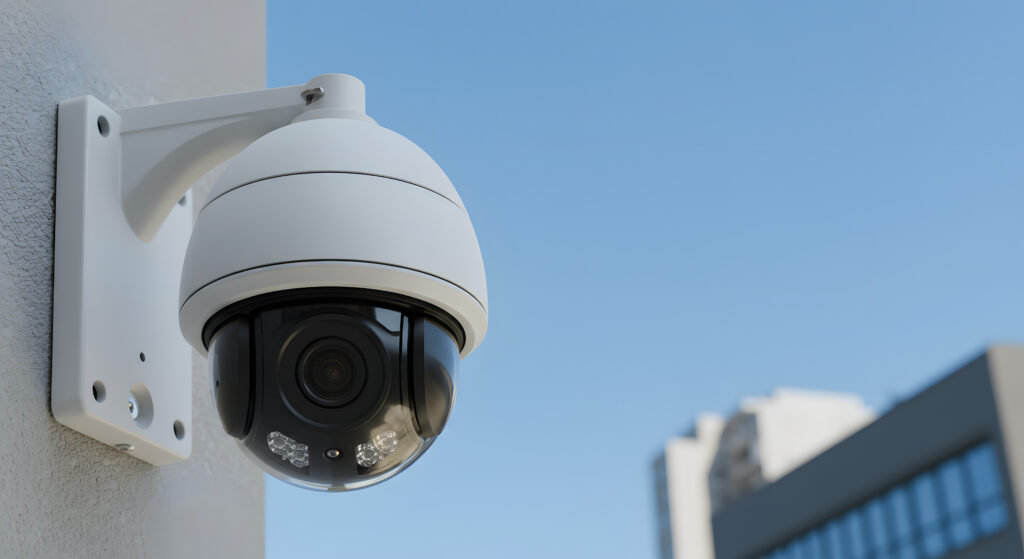
AI image analysis for security cameras has been attracting attention in recent years. Adding AI image analysis to security cameras can make security and monitoring work more efficient in many places, potentially reducing labor costs and speeding up responses to incidents. This article explains why AI image analysis is needed for security cameras and where it can be used.
Recommended products
What is AI image analysis?
AI image analysis is AI that analyzes images. AI technology makes it possible to process images efficiently.
One AI technology attracting attention is a machine learning method called deep learning. It gained attention in 2012, when a machine learning model using deep learning won an international image analysis competition with far higher accuracy than the other models.
Deep learning has more layers of data processing than conventional machine learning models, and it can shorten processing time. It can make complex decisions and handle subtle processing. Because it automatically finds features and patterns in a certain amount of data, it reduces the work of designing training instructions, which people used to do by hand.
As the phrase “automatically finds features and patterns in a certain amount of data” suggests, deep learning can find what the things you want to classify have in common and how they differ in large amounts of image data, and discover patterns. Once it discovers a pattern, it can classify new images according to that pattern. This makes it well suited to feature extraction in image analysis.
Today, deep learning–based image analysis is starting to be used for many kinds of security image analysis, such as face authentication, intrusion detection, and license plate recognition. Using AI logic optimized for each application can be expected to improve performance.
Demand for AI image analysis in security cameras
Installing security cameras is one crime prevention measure. In recent years, image analysis that brings AI technology into security cameras has been attracting attention.
Conventional security cameras are typically used after an event has occurred, for example to identify a car’s license plate in a specific traffic accident or to track an intruder in a building.
Recently, however, several types of AI logic for image analysis have emerged. Combined with better camera performance, better image analysis technology and processing power, and the spread of the internet and wireless communication, these now make it possible to detect events in real time. The potential of AI image analysis for security and surveillance cameras has grown greatly.
Most video from security cameras shows “normal” conditions, so in a sense it is unnecessary data for security and monitoring purposes. On the other hand, as the number of cameras grows, the work of “monitoring” the video by eye inevitably increases. In security work, you want to keep dispatching guards to a site as little as possible when you cannot tell whether something is normal or abnormal. In this situation, if AI image analysis on cameras can determine in advance whether someone needs to go to the site, security work can become more efficient and better in quality. This should also enable a more advanced use of cameras: “from checking after the fact to real-time detection as events happen.”
Use cases for surveillance cameras with AI beyond security
Below are use cases outside security work where surveillance cameras with AI image analysis are likely to be effective.
Construction sites
The first is construction sites. For example, cameras with AI can be used for “equipment checks” to confirm that workers are wearing the required gear, and for “fall detection.”
Stations and along railway lines
The second is stations and areas along railway lines. Examples include applications that improve passenger safety, such as “detecting people who may need assistance” (for example, wheelchair users or people with white canes), “detecting people walking while looking at smartphones,” and “monitoring people and vehicles at railroad crossings.”
Mountain areas
The third is mountain areas. Possible uses include “river monitoring” to track rising water levels and “wildlife intrusion detection” to watch for wild animals entering fields and homes.
Towns and cities
The fourth is towns and cities. It is difficult to patrol every corner of a town by hand, but “violence detection” and “fire and smoke detection” make it possible to constantly watch for situations that threaten public safety. Tasks that used to require many people, such as “traffic counting” and “occupancy counting,” can also be automated.
Social infrastructure facilities
The fifth is social infrastructure facilities such as ports, airports, dams, and water and sewer facilities. These facilities are directly tied to public safety. For example, “intrusion detection” for suspicious people or vehicles entering restricted areas is one important use case. “Meter reading” and “license plate recognition” are also useful for management work.
Marketing
The sixth is marketing. Analyzing camera video with AI lets you understand visitor patterns at stores and commercial facilities and use this for marketing. For example, AI image analysis can classify people by gender and age group, and also measure dwell time and crowd levels. By analyzing the behavior patterns of target customers based on these factors, you can run effective marketing, such as holding events at busy times and in busy areas.
However, because of privacy concerns, you need to be careful about using security camera video for purposes other than security, such as marketing. Handling only attribute data estimated by AI, such as age group and gender, and not sending or storing the actual video, makes marketing use more feasible.
Benefits of AI image analysis for security cameras
AI image analysis for security cameras has the following benefits.
Better quality of security work
As the number of security cameras grows, it is not realistic for people to manage and watch all of them around the clock. When AI image analysis catches abnormal events, it reduces the amount of video that people need to check in the end and judge. You also learn about events sooner and can decide on and dispatch an on-site response sooner. As a result, security work can become more efficient and better in quality.
Addressing the shortage of monitoring staff
If building AI image analysis into cameras makes security work more efficient and better in quality, as described above, it can also help address the labor shortages that have become a problem in the security industry in recent years. Using AI image analysis to detect abnormal events, instead of having people watch security cameras constantly, can contribute greatly to more efficient security work overall and to reassigning and making better use of staff.
Faster, more efficient video analysis and decisions
With conventional camera operations, when an incident occurred, people checked the recorded video by eye after the fact to analyze the situation and make decisions. Adding AI image analysis lets people use AI judgments as support, making their analysis and decisions faster and more efficient.
This can make security work more efficient and better in quality, and should enable a more advanced use of cameras: “from checking after the fact to real-time detection as events happen.”
Drawbacks of AI image analysis for security cameras
Along with these benefits, AI image analysis also has the following drawbacks to keep in mind.
Higher costs
Adding AI image analysis to security cameras makes them more expensive to introduce than ordinary cameras. AI image analysis also involves more than the initial cost of cameras and other equipment. You need to check its operation regularly so that the AI functions do not malfunction, which adds maintenance costs.
Privacy and personal information protection require care
When you use AI image analysis with cameras, the first point is training data. If you use video to train AI logic and the images can identify the people in them, you must use images obtained properly under the Act on the Protection of Personal Information.
The second point is the difficulty of handling personal information linked to events that the AI actually detects. For example, AI logic that detects shoplifting already exists. When a store’s security camera detects shoplifting, some stores keep the video for a long time and alert staff when the same person visits again, or share the information with other stores to protect themselves. From the standpoint of personal information protection, these practices are controversial. Standards based on the public interest, balancing crime deterrence and personal information protection, are needed.
Talk to amnimo about AI image analysis for security and surveillance camera solutions
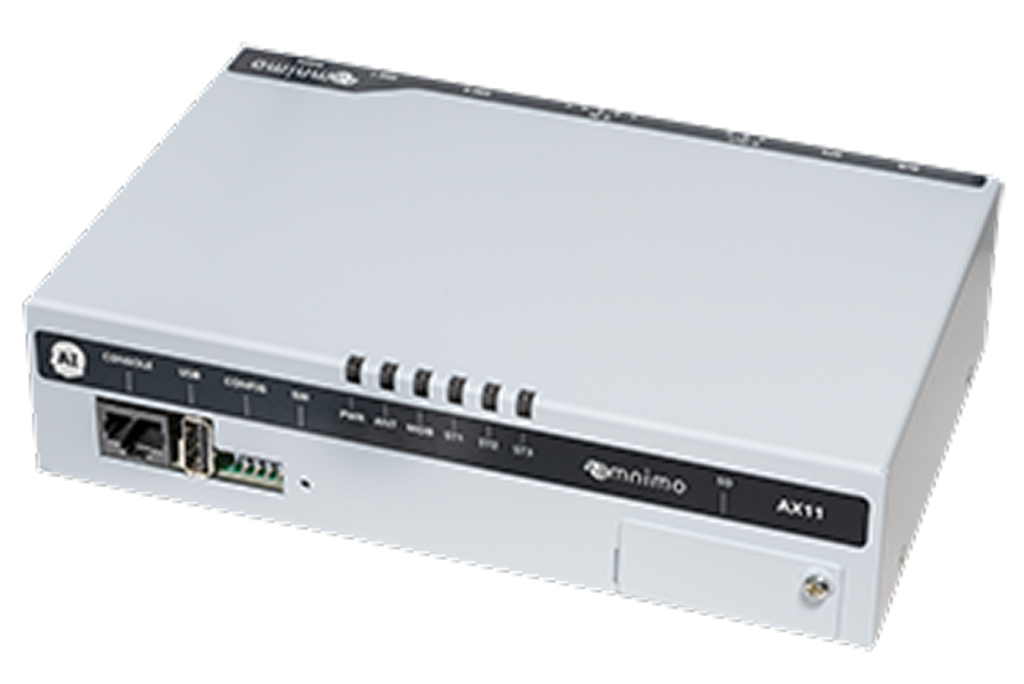
For AI image analysis with security and surveillance cameras, amnimo has developed the AI Edge Gateway, an IoT gateway that runs recording and AI image analysis smoothly on site (at the edge). We also provide video solutions that combine it with the Enhanced Video Management System, a cloud-based video management system (VMS: Video Management System/Software) for managing and operating surveillance video from multiple sites in one place, anytime and anywhere.
The AI Edge Gateway runs AI processing smoothly at the edge. It responds with lower latency than conventional cloud AI and can also reduce communication costs. With this solution, you can run practical image analysis that supports security and monitoring in the use cases described above.
Together with our AI technology partners and AI service integrators, we can also propose AI image analysis systems that fit your needs, such as authentication and people counting.
To learn more about the AI Edge Gateway, video solutions, and edge AI solutions from amnimo, contact us below.
Recommended products
Products related to this article

Contact usProduct inquiries and documents
We can help you choose products and put together a package for your application. Consultations are free.