What is an industrial gateway? An overview and points to watch, including security
Mar 23, 2023

IoT (Internet of Things) is increasingly used in many applications and industries, from home use to industrial use. In industrial use in particular, adoption is accelerating to make work that is hard for people more efficient, starting with smart factories and including equipment management at large facilities and remote monitoring in dangerous areas.
IoT requires several elements, and one of them is the gateway. To use and operate IoT industrially, you must use a gateway with performance that can withstand industrial use. This article gives an overview of industrial gateways and explains points to watch, such as security measures.
What is an industrial gateway?
A company needs several elements to build an IoT system. The first is devices that collect data and provide feedback. These include sensors mounted on machine tools, conveyors, and robots, surveillance cameras attached to equipment, and control panels for entering information.
The second is a cloud environment that stores and analyzes data. In IoT, large amounts of data arrive from devices over the network. The data can be used as is, but storing and analyzing it makes it more useful. It is also hard for people alone to process and judge the huge amounts of data that arrive 24 hours a day, 365 days a year. You need a cloud environment that stores data and processes, analyzes, and acts on it automatically.
The third element is the gateway (router). A gateway relays data obtained by devices to the cloud and also manages and controls the devices. Devices usually cannot connect to the internet on their own, so as they are, they cannot send data to the cloud. When devices are installed at multiple sites, there are many of them, so sending data to the cloud individually puts a heavy load on the system.
A gateway collects data obtained by devices, sorts it by destination, and sends it to the cloud. In the other direction, data and commands sent from the cloud go to devices through the IoT gateway. By relaying data through the gateway, devices can exchange data with the cloud.
Industrial gateways are used in situations such as factory IoT, equipment management at large facilities, and remote monitoring in dangerous areas. To connect sensors and cameras mounted on machine tools, conveyors, and robots to the internet, you need an industrial gateway. To check and manage surveillance cameras remotely, the cameras must be connected to a network, and industrial gateways are used for this as well. They are essential for using data in harsh environments.
What an industrial gateway needs
An industrial gateway collects data from devices such as sensors on machine tools and surveillance cameras at facilities and relays it to the cloud. It also manages and controls devices. Because it is for industrial use, it needs high basic performance, such as fast data processing, support for many communication standards, many ports for connecting devices, and many types of connection interfaces.
Industrial gateways used in harsh environments also need ruggedness. For example, when installed inside or near running equipment, they may be exposed to high temperatures and humidity for long periods, and they may be subject to vibration and impact. Near power supplies, motors, or communication equipment, they may be affected by strong electromagnetic waves. When connected to outdoor surveillance cameras, they may be hit by lightning surges. They need high ruggedness, such as good heat resistance, impact resistance, and electrical resistance, and treatment against water and moisture.
On production sites, momentary power interruptions can also occur when other equipment starts up or when power supply equipment fails. To collect data and manage and control devices stably, industrial gateways also need a power backup mechanism. For communication, it is also important to have backup functions: multiple communication methods and quick switching when problems occur, so that data can be sent without interruption.
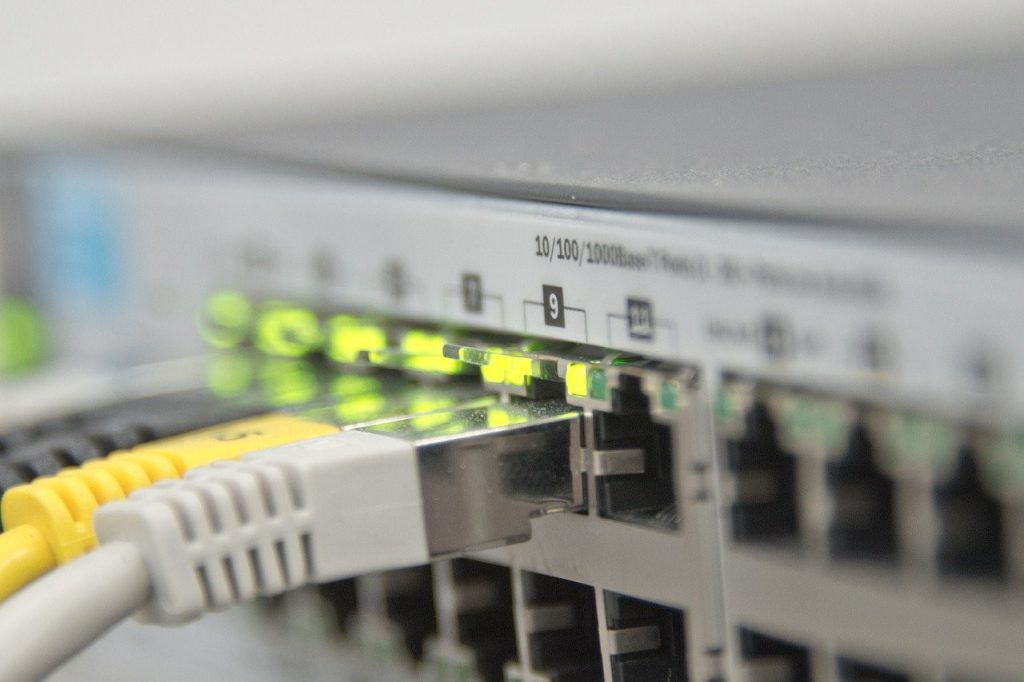
Another important point for industrial gateways is having PoE (Power over Ethernet) (Japanese) ports to supply power to devices installed where power is hard to obtain. To meet these challenges, industrial gateways need high performance that differs from consumer IoT.
Pay attention to security
There is one more point to watch when introducing an industrial gateway: security that protects the system from unauthorized access and cyberattacks that target vulnerabilities. In IoT, devices are connected to the outside over networks, so they are exposed to the threat of intrusion from outside. In industrial IoT, highly confidential data, such as important information about manufacturing and company operations and crime prevention information, is stored on devices and in the cloud that allows access to devices. You must therefore strengthen security measures for devices and networks.
In addition, IoT devices are attached to things, so many are made as small and inconspicuous as possible. This means the devices themselves may be stolen. There are also many devices, so a theft may not be noticed right away. As one security measure, it is desirable to have a management system that regularly checks from the industrial gateway whether devices are working correctly and automatically reports any problems it detects.
There is also the risk that, after a device is stolen, its internals are analyzed to create a path into the system or to attack it with malicious programs. Industrial gateways also need processors with enhanced security. For example, Arm’s Cortex-A series processors use a technology called TrustZone, which separates a normal environment from a secure environment. The secure environment can access all data in the normal environment, but access in the other direction is restricted and not easy. As a result, malicious programs that get into the normal environment cannot see data stored in the secure environment, which improves security.
Summary
Industrial gateways must not only have high basic performance but also be resistant to various kinds of unauthorized access from outside. To run IoT-enabled factories safely and securely and to keep surveillance cameras from stopping because of failures, it is important to choose an industrial gateway with enough performance and solid security measures. Check the purpose and location of use, and choose equipment that suits the environment and situation.
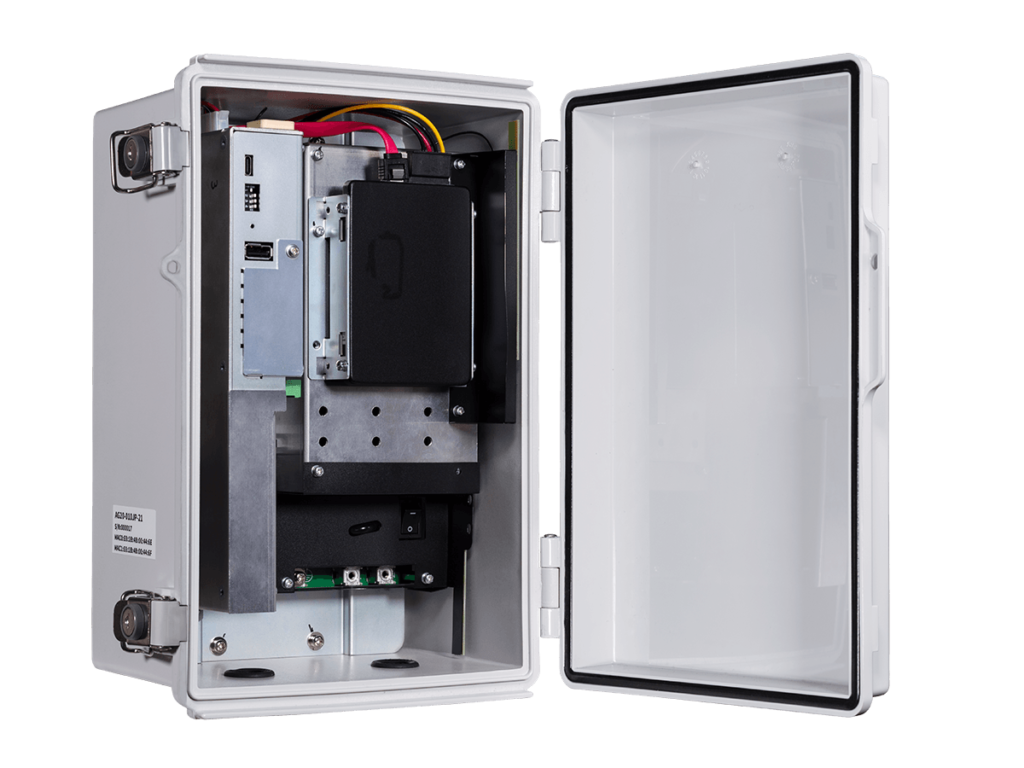
The following brochure explains the Edge Gateway (Outdoor) for industrial use in detail.
Recommended products
Contact usProduct inquiries and documents
We can help you choose products and put together a package for your application. Consultations are free.