Wearable cameras for on-site DX
Jun 9, 2026

From “making work visible” to “making work verifiable”
Introduction
Work sites are at a major turning point.
In manufacturing, infrastructure maintenance, equipment inspection, and similar fields, labor shortages are worsening, skilled engineers are aging, and work is becoming more complex, all at the same time. As a result, “digital transformation (DX) on site” is now a topic no one can avoid.
One of the most important parts of this is “making on-site work visible.”
At actual sites, however, many issues like these remain.
- Work can be checked only through written reports
- There is no way to verify that work procedures were followed correctly
- It is hard to ensure quality when a worker is sent alone
- Record keeping takes a lot of time
The structural problem behind all of these is that “the site has become a black box.”

This article focuses on wearable cameras, which are drawing attention as a way to solve this problem, and explains in plain terms “how on-site DX actually happens.”
Why sites become black boxes
Conventional on-site work follows this flow:
“Work → Record → Report”
But this approach has a fundamental limitation.
On-site work is finished on the spot, so nothing remains unless someone records it. And most of those records depend on what workers write by hand or type in.
In other words, the company can check only the “result,”
and important information like the following stays hidden.
- What steps the worker followed
- Whether anything unusual happened along the way
- Whether the worker’s judgments were appropriate
In this situation, when a problem occurs, no one can identify the cause or make improvements. Work also becomes “dependent on individuals,” relying on how each site happens to do things.

👉 In short, sites are run “out of sight,” and this is the barrier to on-site DX.
What wearable cameras change
Wearable cameras are drawing attention as a way to solve these problems.
A wearable camera captures video of the site from the worker’s point of view and records it continuously. But its value is not just “recording.”
Its real value is that
👉 it turns the work itself into data
amnimo Portable AB11 | amnimo Portable (Name Badge) AB12
Specifically, it sets up a system like this.
- Capture video of the work in real time
- Store it in the cloud
- Check it from a remote location
- Play it back and analyze it later
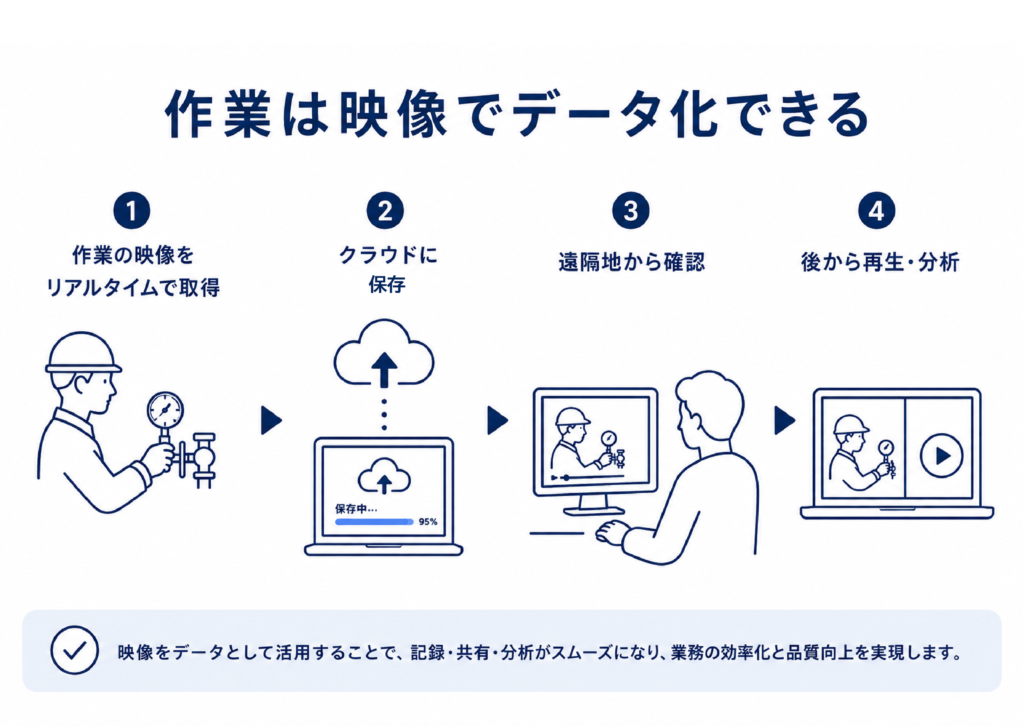
This makes the previously hidden “work process” clear. In other words, the concept of on-site DX can be put into practice in actual inspection work.
From “visible” to “verifiable”
The important point here is not to stop at “making work visible.”
The true value of a wearable camera is that
👉 it makes the site “verifiable”
amnimo Portable AB11 | amnimo Portable (Name Badge) AB12
For example, suppose a problem occurs during an equipment inspection.
In the past, the only options were:
- Interviewing the worker
- Reviewing the report
That was all you could do.
But if video has been kept, you can:
- Pinpoint the moment the problem occurred
- Confirm errors in the work procedure
- Consider improvements
These responses become possible.
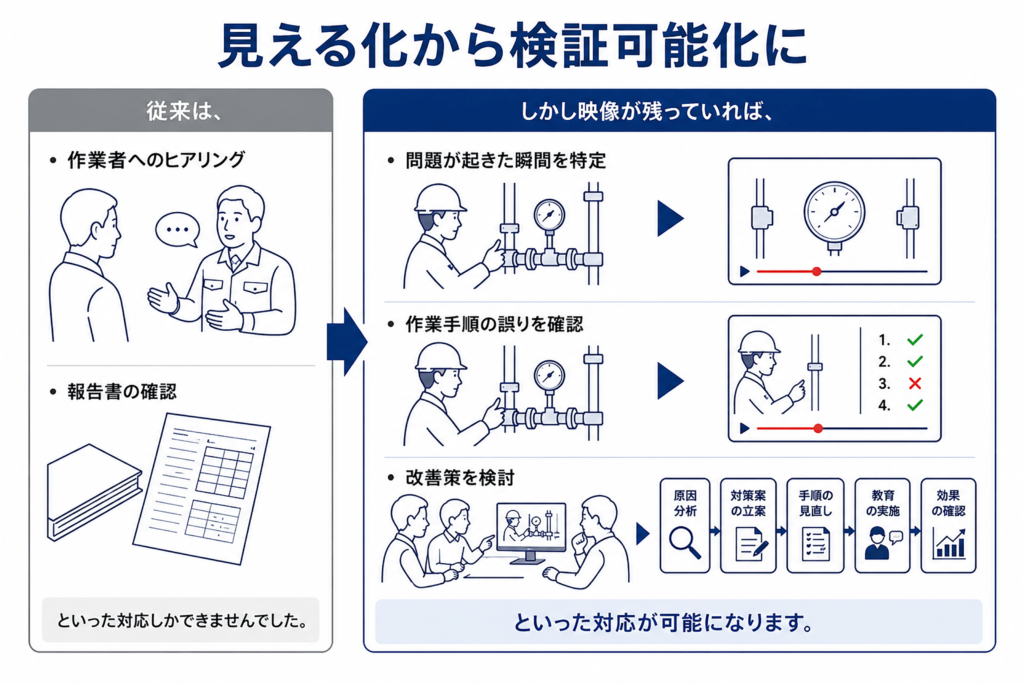
👉 Discussions can be “based on facts,” not “impressions and memory.”
This is the big change.
Three benefits of introducing wearable cameras
1. Stronger quality assurance
Being able to “prove later” that work was done correctly greatly raises the level of quality control.
- Work procedures can be checked
- The causes of mistakes are easy to identify
- Video can serve as evidence when complaints arise
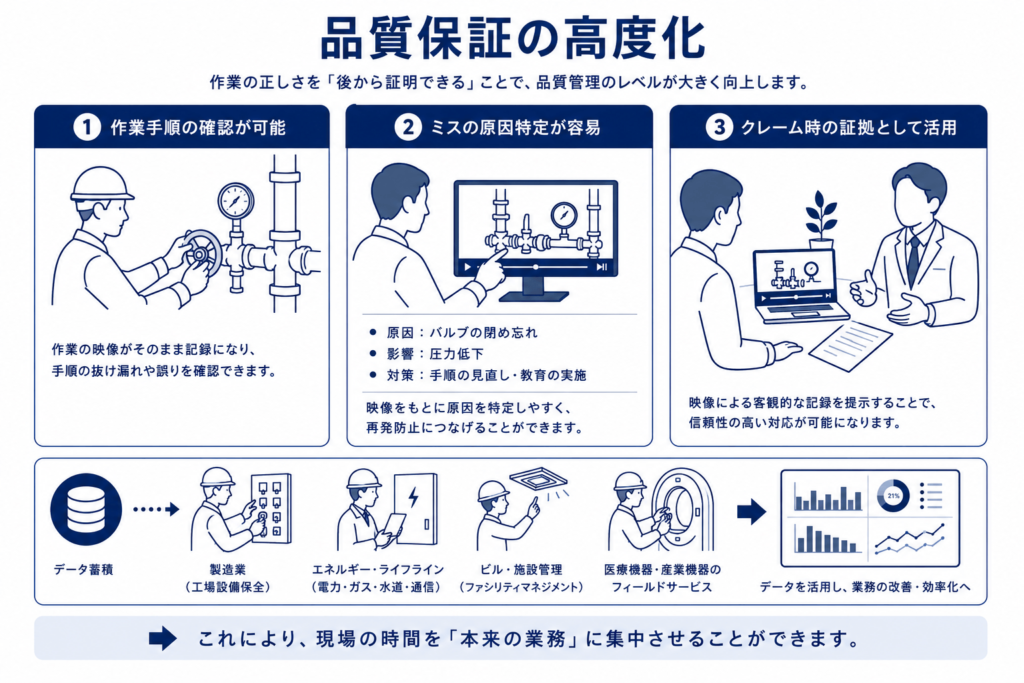
Most importantly,
👉 quality can be assured even for solo work
2. Better work efficiency
Wearable cameras change record keeping. amnimo Portable AB11 | amnimo Portable (Name Badge) AB12
- Video of the work becomes the record as is
- Less time spent writing reports
- Less travel and fewer on-site inspections by supervisors
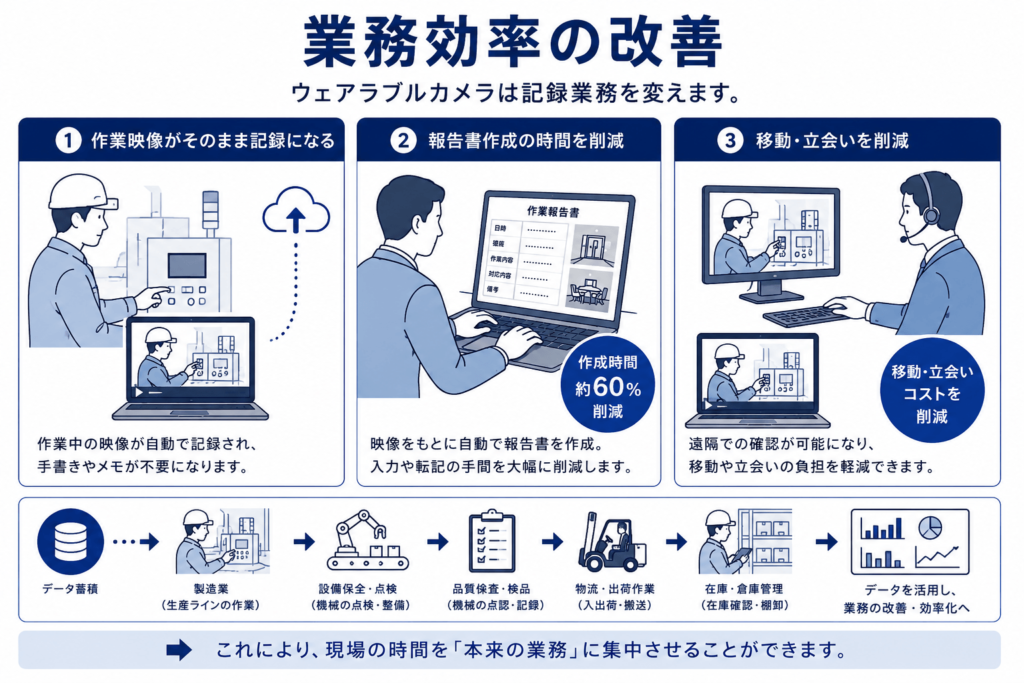
This lets site staff spend their time on “the work that really matters.”
3. Turning knowledge into assets
On-site know-how can become an asset of the organization.
- Capture skills on video
- Establish work standards
- Use the video as training content
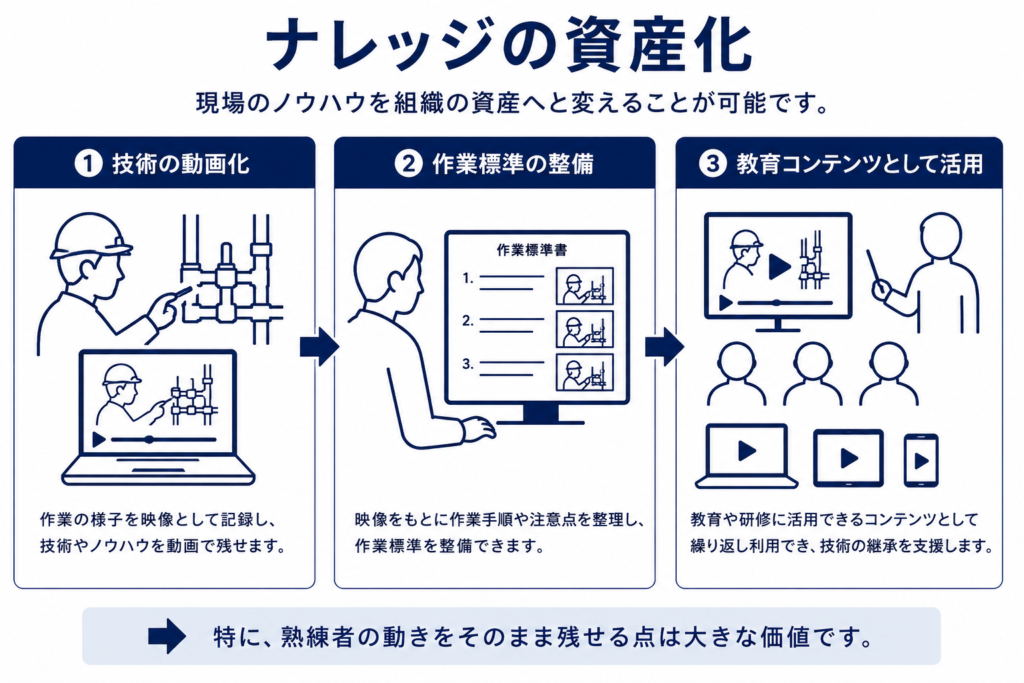
Being able to preserve exactly how skilled workers move is especially valuable.
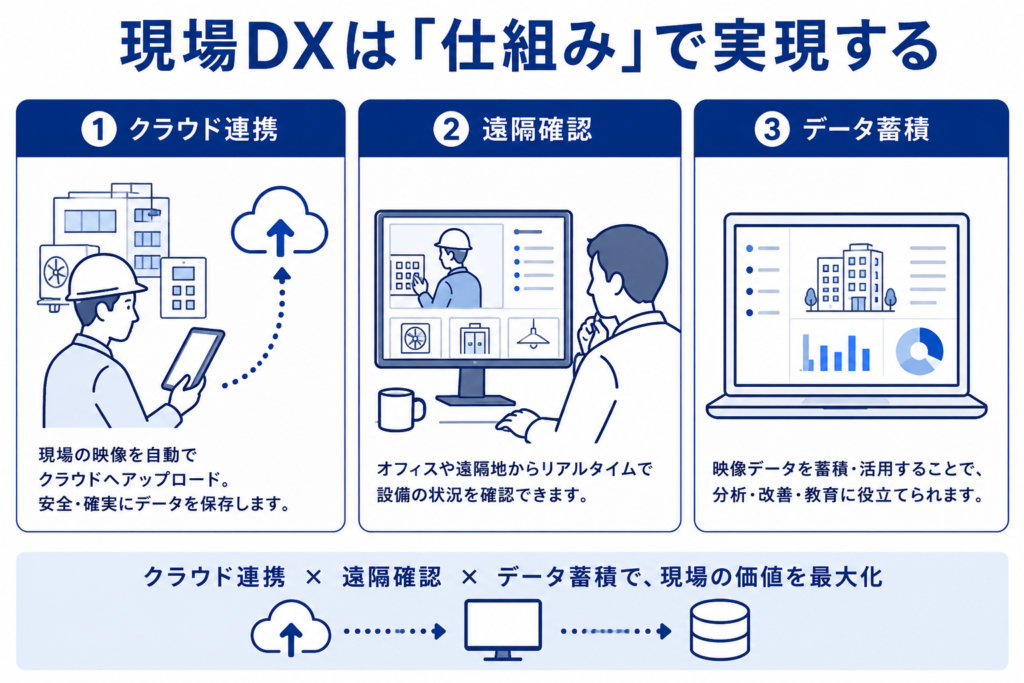
On-site DX comes from “systems,” not devices
To get the most from wearable cameras, it is important to introduce them as a “system,” not as stand-alone devices.
For example, amnimo sells the amnimo Portable (Name Badge) AB12 as a wearable camera. This camera does not work on its own. amnimo Portable AB11 | amnimo Portable (Name Badge) AB12 | Enhanced Video Management System
- Cloud integration
- Remote checks
- Data storage
It is used as a solution that combines these functions. Used this way, the camera is no longer just a video recorder. It becomes a tool that transforms operations across the whole site.
👉 The point is not to “install cameras,”
👉 but to change how on-site work is done.
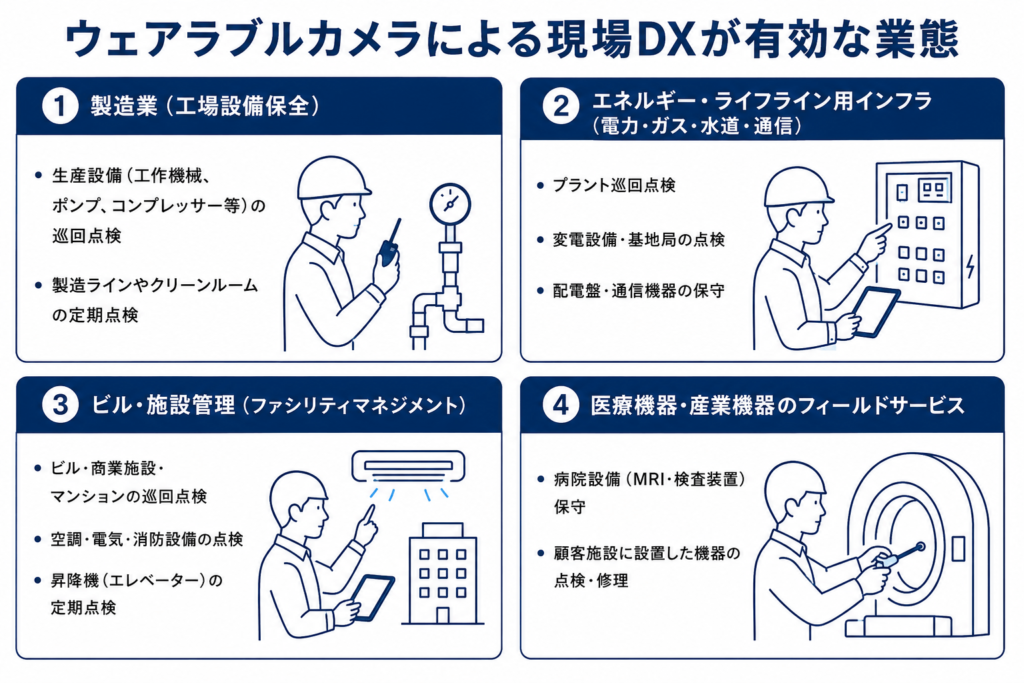
Industries where on-site DX with wearable cameras works well
On-site DX with wearable cameras works well in a wide range of industries where engineers are often sent alone to carry out inspections on site.
They share these conditions:
👉 sites are spread out / equipment is fixed on site / specialists are limited
Typical industries and tasks include the following.
- Manufacturing (factory equipment maintenance)
- Inspection rounds of production equipment (machine tools, pumps, compressors, and so on)
- Periodic inspection of production lines and clean rooms
2. Energy and utility infrastructure (electricity, gas, water, and telecommunications)
- Plant inspection rounds
- Inspection of substation equipment and base stations
- Maintenance of switchboards and telecommunications equipment
3. Building and facility management
- Inspection rounds of office buildings, commercial facilities, and condominiums
- Inspection of HVAC, electrical, and fire protection equipment
- Periodic inspection of elevators
4. Field service for medical and industrial equipment
– Maintenance of hospital equipment (MRI and diagnostic equipment)
– Inspection and repair of equipment installed at customer facilities
Summary
A wearable camera is more than a recording tool. It brings a fundamental change:
- Store work as data
- Make processes visible
- Make improvement possible
These are the changes it makes possible.
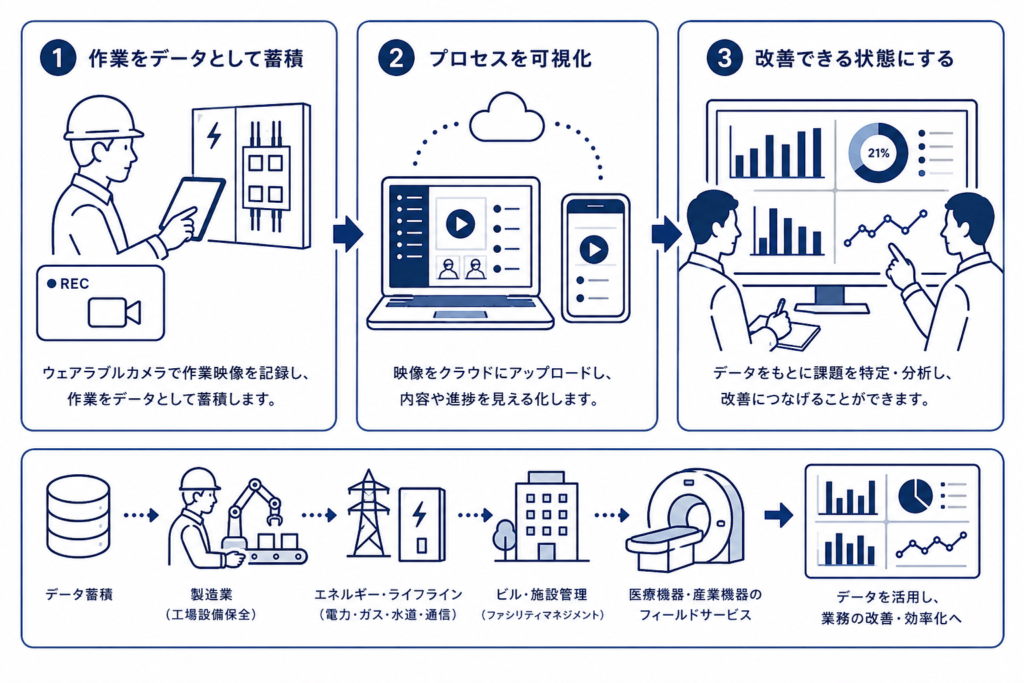
Sites that were black boxes evolve
👉 from sites you can see to sites you can improve
amnimo Portable AB11 | amnimo Portable (Name Badge) AB12 | Enhanced Video Management System | On-site DX feature page
With labor shortages and the passing on of skills now major issues,
wearable cameras are likely to become one of the core technologies of on-site DX.
Note: The images in this article were generated with AI technology and retouched by people.
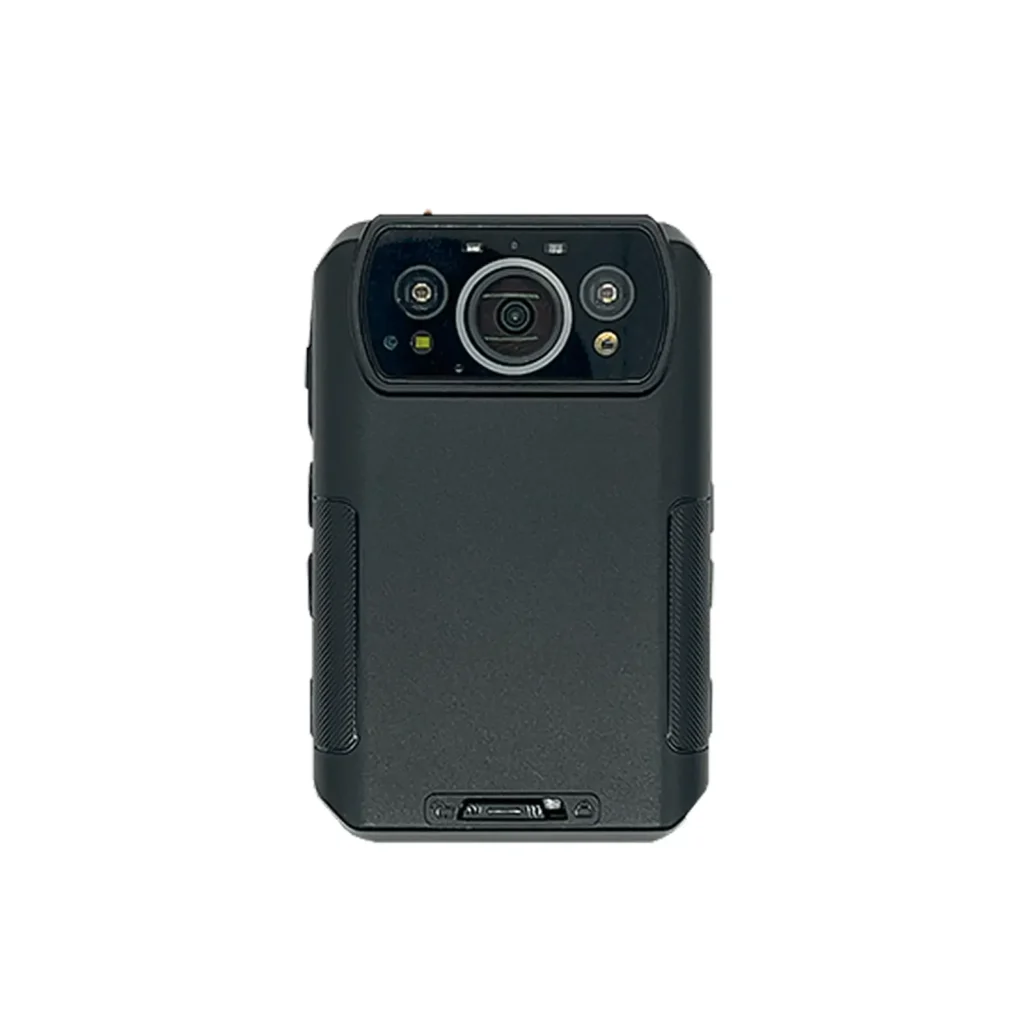
Products related to this article
-
 IoT devicesCloud applicationsPackage solutions
amnimo Portable AB11
View this product
-
 IoT devicesCloud applicationsPackage solutions
amnimo Portable (Name Badge) AB12
View this product
-
IoT devicesCloud applicationsPackage solutions
amnimo Portable (Name Badge) AB12
View this product
-
 Cloud applications
Enhanced Video Management System
View this product
Contact usProduct inquiries and documents
We can help you choose products and put together a package for your application. Consultations are free.