Mandatory from 2026: Corporate measures against customer harassment and how cameras can help
Jul 11, 2025
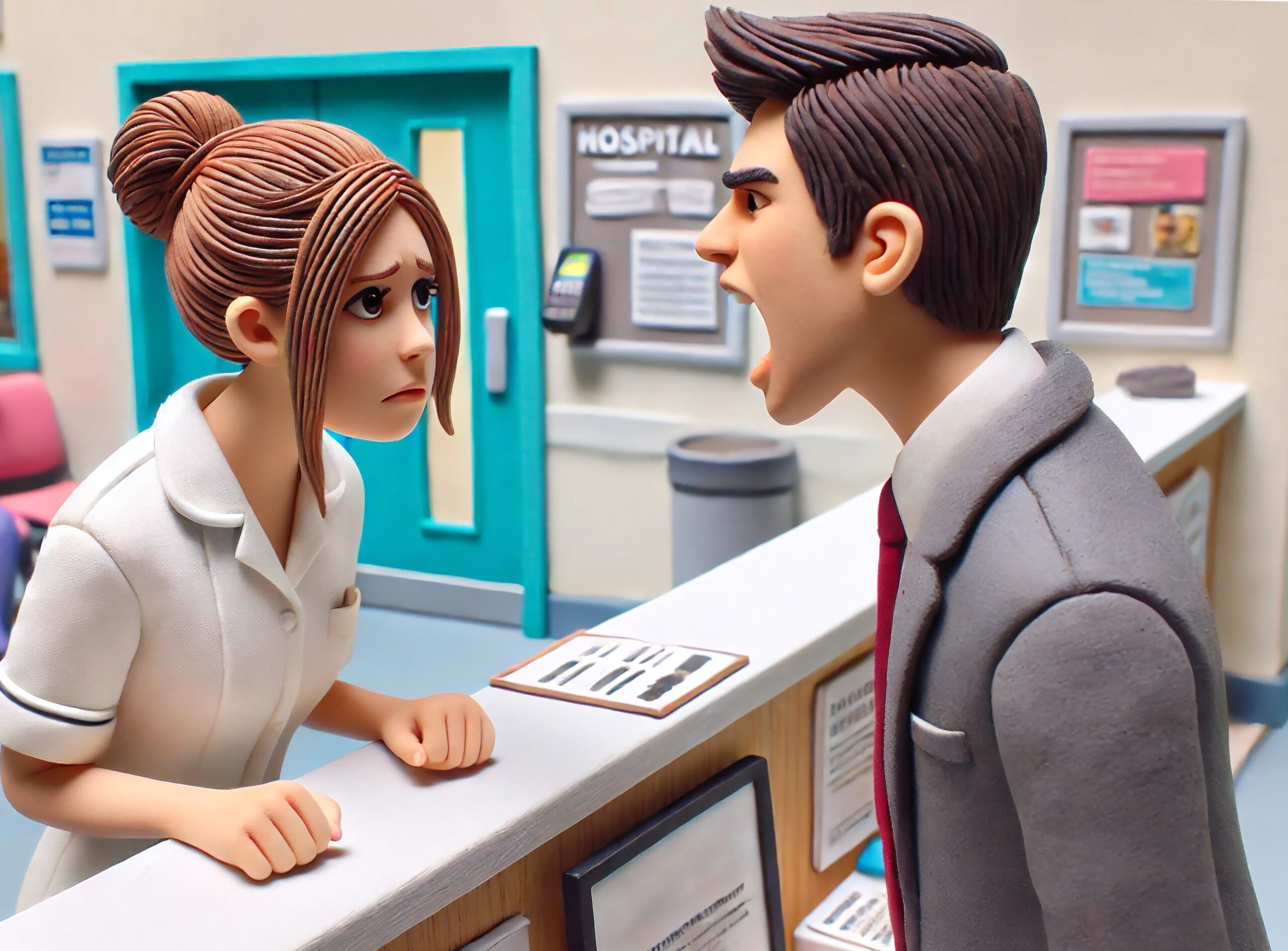
Did you know that measures against customer harassment will become mandatory for all companies during 2026 at the latest?
This article gives a comprehensive explanation of the definition of customer harassment, what companies need to do, the latest legal and regulatory developments, and specific measures against customer harassment that use cameras.
Chapter 1. Definition of customer harassment and why it has become a social problem
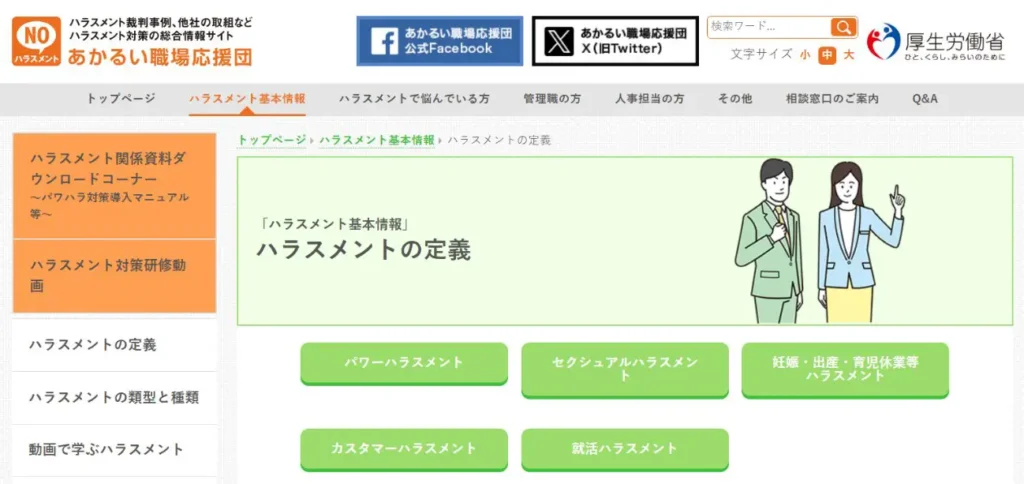
Addressing customer harassment starts with an accurate understanding of what it is. This chapter uses the national government’s definition to explain why it has become a serious social problem and how it affects companies.
Definition of customer harassment and how it differs from legitimate complaints
The Ministry of Health, Labour and Welfare (MHLW) defines customer harassment as follows:
“ Complaints, words, or actions by customers and others in which, in light of the validity of what is demanded, the means or manner used to achieve the demand is inappropriate by generally accepted social standards, and in which that means or manner harms the working environment of workers ”
Source: “Customer Harassment Countermeasures Manual for Companies” (MHLW)
https://www.no-harassment.mhlw.go.jp/pdf/cusuhara_manual.pdf (Japanese)
In summary, an act is customer harassment when it meets all three of the following conditions.
Three elements of customer harassment
- It is done by a customer, business partner, facility user, or other stakeholder
- The words or actions go beyond what is acceptable by generally accepted social standards
- It harms the working environment of workers
Source: 76th meeting of the Employment Environment and Equal Employment Subcommittee, Labour Policy Council, Nov 26, 2024 (MHLW)
https://www.mhlw.go.jp/content/11909500/001372498.pdf
(Japanese)Relevant pages: pp. 4–5
Reference: MHLW defines “customer harassment” and will require companies to take measures (NHK)
https://www3.nhk.or.jp/news/html/20241126/k10014649791000.html
The key difference between customer harassment and an ordinary complaint is not whether the customer’s demand is legitimate. It is whether the way the demand is made and the customer’s attitude “go beyond what society accepts.” The table below gives specific examples.
| Likely to be considered inappropriate regardless of whether the demand is valid | May be considered inappropriate in light of whether the demand is valid |
| Physical attacks (assault, injury); psychological attacks (threats, slander, defamation, insults, abusive language); intimidating words or actions; demanding that an employee kneel and bow (dogeza); continuous (repeated) or persistent words or actions; restrictive behavior (refusing to leave, staying put, confinement); discriminatory words or actions; sexual words or actions; attacks on or demands of individual employees | Demands for product exchange; demands for monetary compensation; demands for an apology (excluding kneeling and bowing) |
Quoted from: “Customer Harassment Countermeasures Manual for Companies” (MHLW)
https://www.mhlw.go.jp/content/11900000/000915233.pdf
(Japanese)Relevant page: p. 10, examples of “words or actions in which the means or manner used to achieve a demand is inappropriate by generally accepted social standards”
The current situation and why customer harassment is getting worse
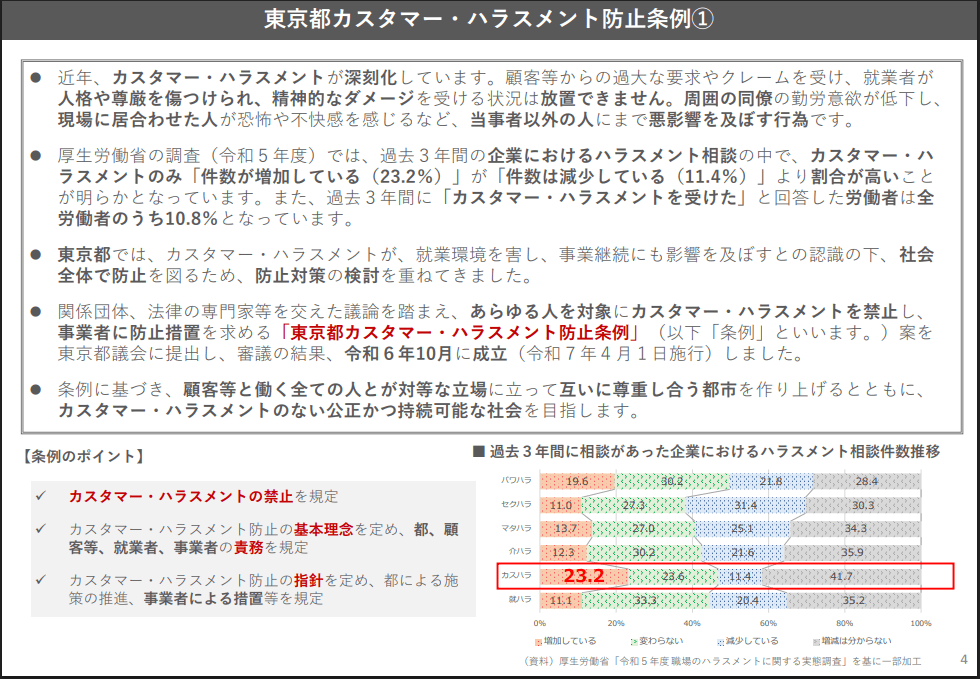
An MHLW survey (FY2023) looked at harassment consultations at companies over the past three years. Customer harassment was the only type for which more people thought the number of cases had increased (23.2%) than thought it had decreased (11.4%).
In addition, 10.8% of all workers said they had “experienced customer harassment” in the past three years.
Customer harassment is getting worse for three reasons:
- The idea that “the customer is god” is still deeply rooted
- Excessive competition between companies has raised the level of customer demands
- Social media makes it easier for bad reviews and slander to spread
The risk of customer harassment is highest in industries with a lot of direct contact with customers, such as restaurants, retail stores, call centers, and government offices. These industries deal with customers every day and are prone to customer harassment, so companies in them need thorough measures against it.
How customer harassment affects companies (employees, brand, and legal risk)
Leaving customer harassment unaddressed has serious effects on a company’s business:
- Employee exhaustion and turnover
Unreasonable words and actions cause serious mental and physical harm to employees. This lowers motivation and productivity, and it often leads to leaves of absence or resignations. As a result, companies bear large costs for hiring and training new staff.
- Damage to brand image and loss of trust
When one-sided claims or bad reviews by customers spread on social media, a company’s reputation can fall quickly, to a level that is hard to recover from. This leads directly to lost customers and difficulty winning new ones, and the company may lose the trust of society. Loss of trust also affects the hiring of talented people and holds back the company’s sustainable growth.
- Increased legal risk
Companies have a “duty of care for employee safety.” If a company does not take appropriate measures against customer harassment, it may be considered to have breached this duty. As a result, employees may claim damages from the company.
The national government decides to make measures mandatory, and several local governments enforce prevention ordinances
Given the serious effects on companies, legal and regulatory moves to prevent customer harassment across society are now well under way. This section explains the latest developments: mandatory measures at the national level, and ordinances that local governments have enacted ahead of it.
1. Revision of national law
On Dec 26, 2024, MHLW decided on a policy of making measures against customer harassment mandatory.
The law will take effect during 2026 at the latest, and all companies will be required to take measures against customer harassment.
Under this requirement, companies will need to set up a consultation desk, clarify their response policy, put an organizational structure in place, and educate and train employees.
2. Local government ordinances to prevent customer harassment
Ahead of the national government, the Tokyo Metropolitan Government put the “Tokyo Customer Harassment Prevention Ordinance” into effect on Apr 1, 2025. At present, there are no penalties for violating the ordinance, but violators may be punished under other laws.
On the same day, Hokkaido, Gunma Prefecture, and Kuwana City in Mie Prefecture also put customer harassment prevention ordinances into effect. Kuwana City’s ordinance notably includes publishing the names of people who commit serious customer harassment.
Going forward, companies will be expected not only to meet their legal obligations but also to take effective measures against customer harassment.
Chapter 2. Measures companies should take against customer harassment
Mandatory measures against customer harassment are close at hand (during 2026 at the latest), and companies need to address customer harassment across the whole organization.
This chapter gives an overview of the measures companies should start now, along with specific methods.
Setting a basic policy and making sure everyone in the company knows it
The first step is to make clear that the company firmly does not tolerate customer harassment.
To do this, top management should set a clear basic policy and communicate it inside and outside the company.
The MHLW manual gives the following examples of what this basic policy should include:
- The definition of customer harassment
- What customer harassment involves
- That customer harassment is a serious problem for the company
- That the company will not ignore customer harassment
- That the company will protect employees from customer harassment
- That the company respects employees’ human rights
- That employees should talk to others around them if they face demands, words, or actions beyond common sense
- That the company will respond firmly to customer harassment as an organization
Source: “Customer Harassment Countermeasures Manual for Companies” (MHLW) https://www.mhlw.go.jp/content/11921000/000894063.pdf (Japanese)
Creating customer service rules and providing training
Effective measures against customer harassment need both “specific customer service rules” and “ongoing education and training for employees.” MHLW also stresses the importance of training and gives the following examples.
Examples of training content suggested by MHLW:
- What abusive complaints (customer harassment) are (definition, examples of applicable acts, and differences from legitimate complaints)
- Examples of judging customer harassment (criteria and cases)
- How to respond to each pattern
- The basic flow of handling complaints
- Key points in dealing with customers (apologizing, listening, points to note when checking facts, etc.)
- How to keep records
- Points to note in customer service for each case
- Case studies
Source: “Customer Harassment Countermeasures Manual for Companies” (MHLW) https://www.mhlw.go.jp/content/11921000/000894063.pdf (Japanese)
MHLW also stresses that “it is important for as many employees as possible to receive education and training, and to hold it regularly.”
Setting up a consultation desk (mental health care)
A consultation desk is essential to reduce the number of employees whose mental or physical health suffers because of customer harassment.
So that employees can use it with confidence, companies should consider using an occupational physician who specializes in mental health, not only internal staff.
It is important to fully protect the privacy of those who seek help and to create an environment where they can talk about their concerns safely.
Initial response and follow-up when customer harassment occurs
The initial response is very important for resolving the problem early and protecting employees.
To support affected employees emotionally, companies should always have more than one person provide follow-up.
Leaving the affected employee to deal with it alone may breach the company’s duty of care for employee safety under the national Act on Comprehensive Promotion of Labor Policies.
In Tokyo, it may also breach the company’s duty to make efforts under the customer harassment prevention ordinance.
Chapter 3. Measures that are working against customer harassment
The previous chapter covered organizational measures such as setting policies and training. This chapter takes a different view and introduces measures that improve the physical environment. We look at how automated payment machines and cameras help deter customer harassment and keep objective evidence if it does occur.
Automated payment machines and self-checkout
Stores that have expanded automated payment machines and self-checkout generally see fewer unreasonable demands from customers (customer harassment).
This is because there are clearly fewer disputes caused by mistakes or misunderstandings on either side, such as miscounting money or “I gave it to you” versus “I didn’t get it.”
This lightens the psychological burden on employees and helps create a workplace where they can work with peace of mind.
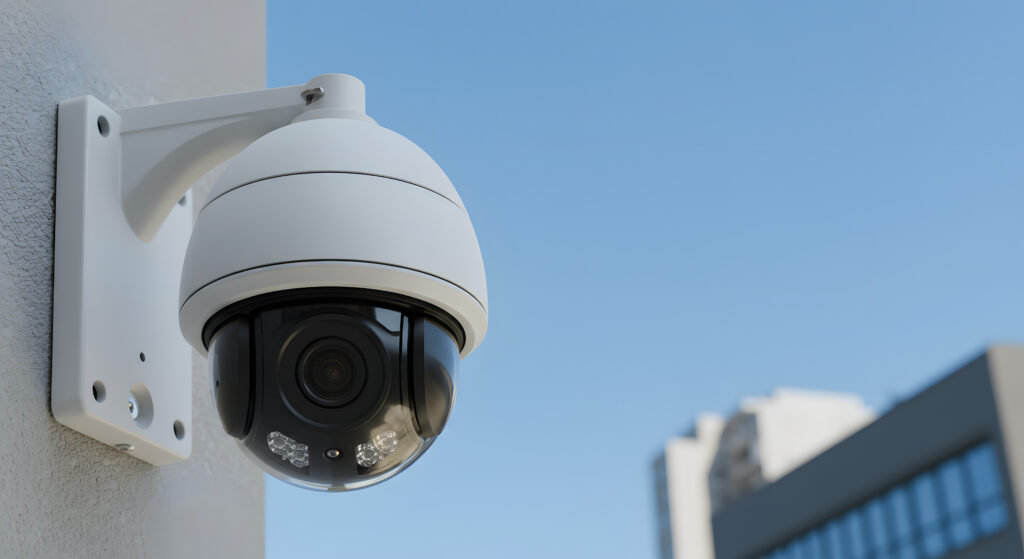
Fixed surveillance cameras
Fixed surveillance cameras have the following results as a measure against customer harassment.
Effects of fixed surveillance cameras:
- The presence of a camera itself is a deterrent (dummy cameras are also said to have some effect)
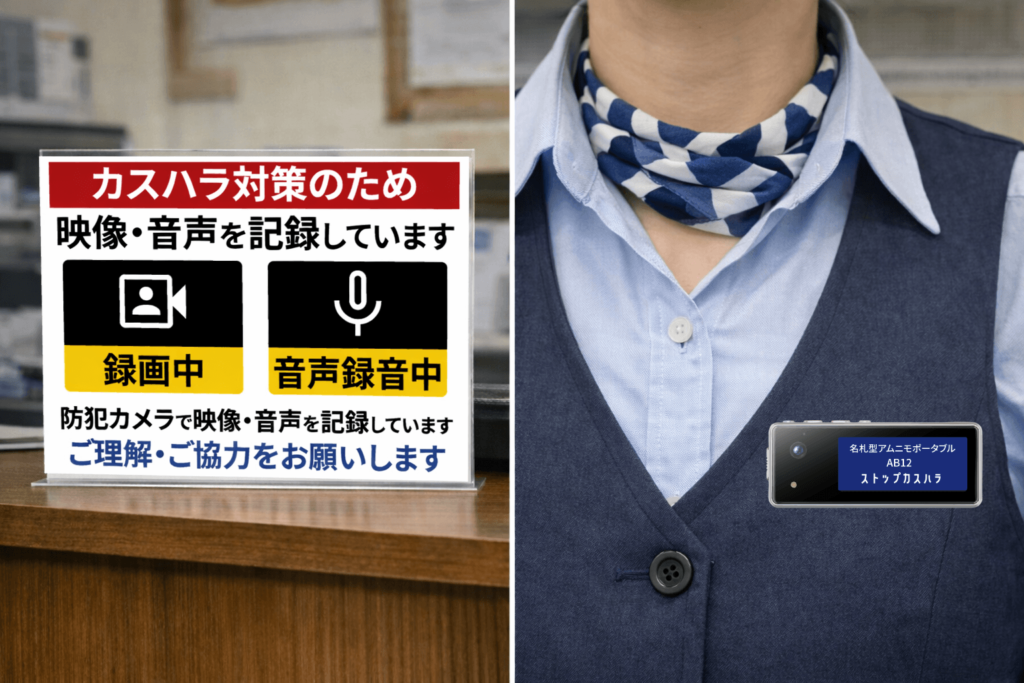
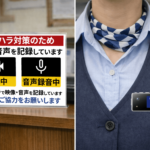
- The fact of being recorded is itself a deterrent (stickers such as “Recording in progress” are also effective)
- Recorded video is objective evidence when customer harassment occurs
Wearable cameras
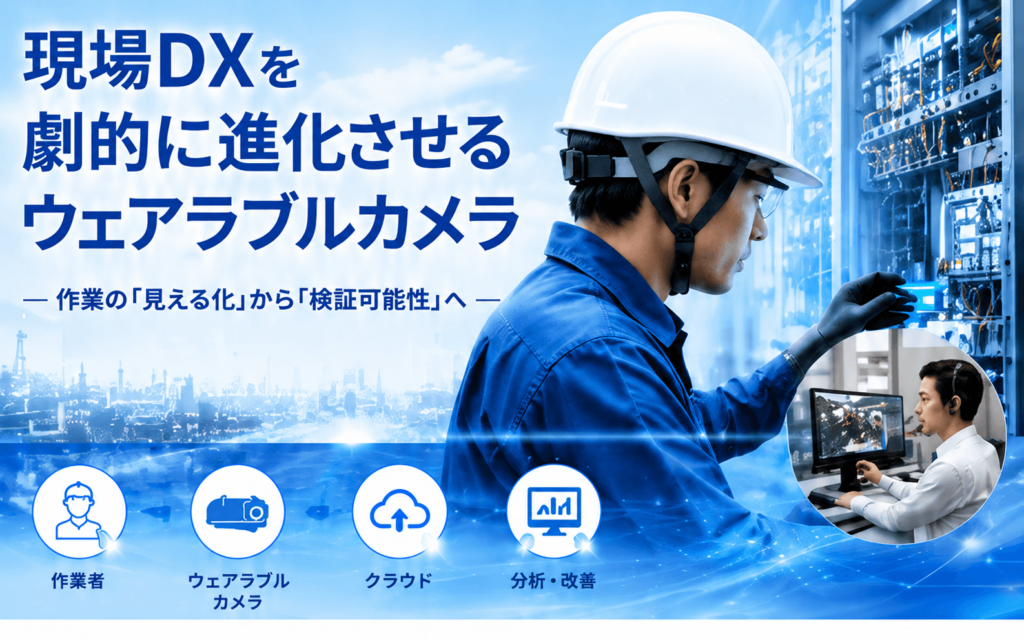
Wearable cameras are small cameras that employees wear. They are proving effective especially at sites with a lot of direct conversation with customers. (The term “wearable camera” is sometimes used to mean the same thing as the “body camera” worn by police officers.)
Main effects of wearable cameras:
- Records from the employee’s point of view: The camera captures the customer from the front, so it can identify the person and record facial expressions
- Records audio clearly: The built-in microphone also faces the customer at close range, so it records the conversation clearly
- Deterrent effect and evidential value: Like fixed cameras, it deters customer harassment, and recorded video can be used as evidence
Another major advantage of wearable cameras is a shape that does not look like a camera.
Chapter 4. Legal handling of video and audio recordings and privacy measures
The previous chapter explained the effects of automated payment machines and cameras.
This chapter explains points to note about the legal validity of video and audio recordings (data) and privacy protection.
Legal handling of video and audio recordings and privacy measures
Civil litigation in Japan is based on the idea of “broadly accepting the value of submitted evidence and judging it case by case.” For this reason, in many cases courts accept video and audio recordings as evidence. (Judgments also take into account factors other than the recordings.)
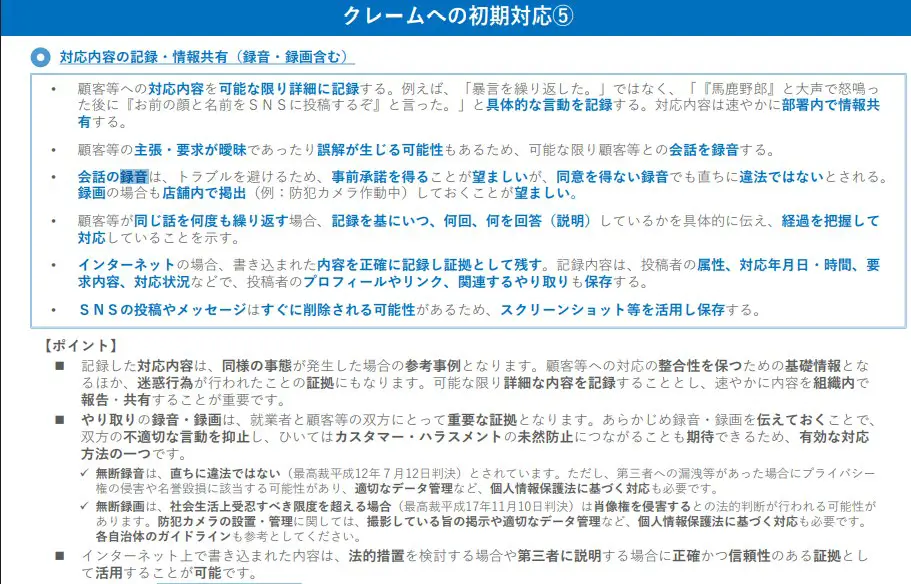
Recording audio or video without a customer’s permission is not automatically illegal. The Tokyo Metropolitan Government’s “Common Manual for Organizations under the Customer Harassment Prevention Promotion Program” (PDF, Japanese) states this clearly, as follows.
| To avoid disputes, it is desirable to obtain prior consent before recording a conversation, but recording without consent is not considered automatically illegal. For video recording, it is also desirable to post a notice in the store (for example, “Security cameras in operation”). |
Privacy protection of recordings and the Act on the Protection of Personal Information
Data recorded by surveillance cameras and wearable cameras contains personal information such as the faces, appearance, and voices of employees and customers. Improper management or operation can violate privacy, lead to legal problems, and damage the company’s credibility.
Under the Act on the Protection of Personal Information, you therefore need to take measures such as the following:
- Limit the purpose of use to addressing customer harassment
- Avoid unnecessary long-term storage
- Restrict access
- Blur images where necessary
The Tokyo Metropolitan Government’s “Common Manual for Organizations under the Customer Harassment Prevention Promotion Program” says the following about handling recorded data.
Reference: What the “Common Manual for Organizations under the Customer Harassment Prevention Promotion Program” (Tokyo Metropolitan Government) (PDF, Japanese) states
| Recording audio without permission is not considered automatically illegal (Supreme Court judgment of July 12, 2000). However, if the recording is leaked to third parties, it may infringe the right to privacy or constitute defamation, and measures based on the Act on the Protection of Personal Information, such as proper data management, are also required. Recording video without permission may be judged to infringe portrait rights if it exceeds the limits that must be tolerated in social life (Supreme Court judgment of November 10, 2005). When installing and managing security cameras, measures based on the Act on the Protection of Personal Information, such as posting a notice that recording is in progress and proper data management, are also required. Also refer to the guidelines of each local government. |
Chapter 5. amnimo products and services you can use against customer harassment
A portable camera that is easy to install
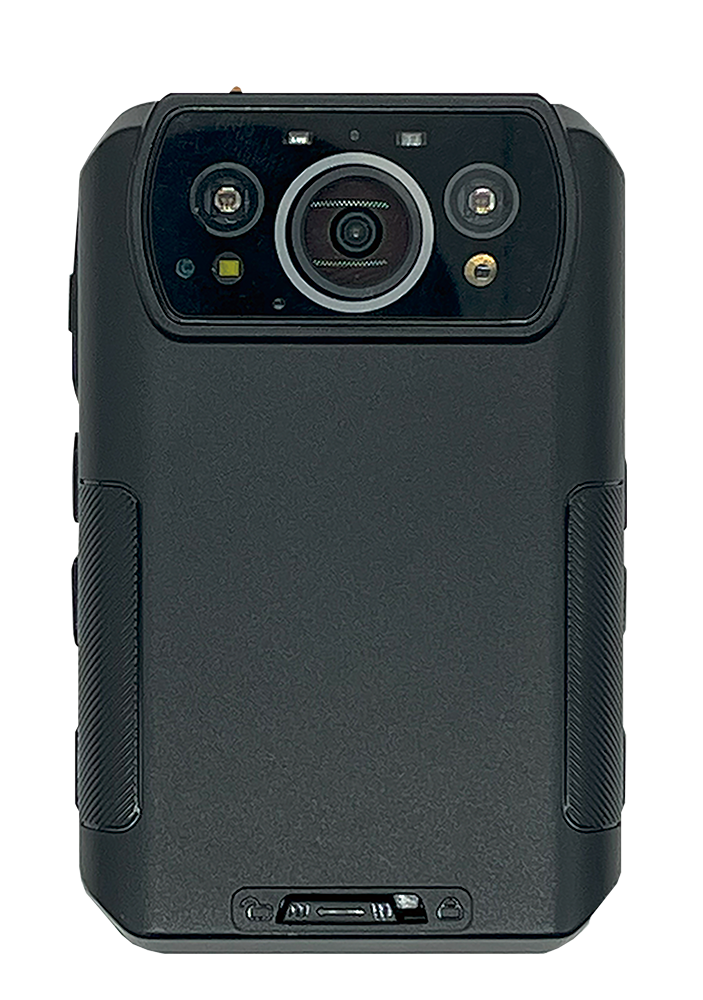
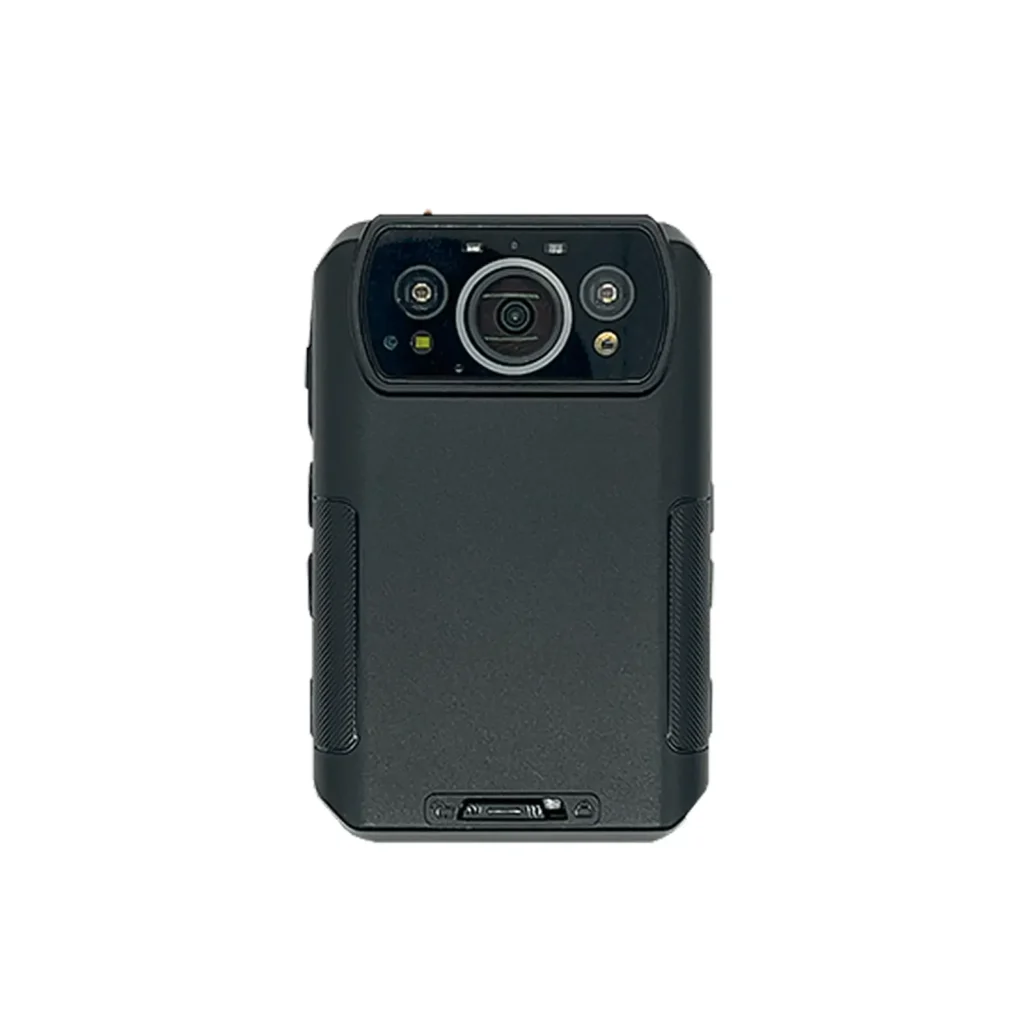
In August 2025, amnimo Inc. will launch the amnimo Portable AB11, which is easy to install and starts monitoring right away. You can place this camera where customer harassment is likely to occur or attach it to an employee’s body to record video and audio of customer harassment incidents and play them back later.
View the amnimo Portable AB11 product page
A name badge camera in development
amnimo is currently previewing (in development) a name badge camera designed for addressing customer harassment.
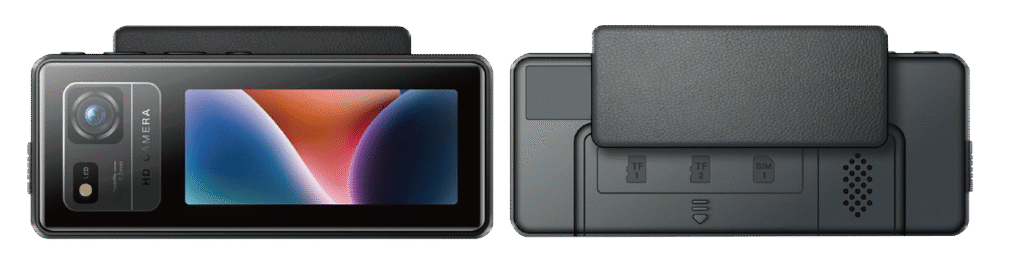
View the amnimo Portable (Name Badge) AB12 product page (Japanese)
Cloud services for viewing and managing video remotely
amnimo offers services that bring together video from cameras installed in stores, public facilities, and other locations in the cloud, so you can manage it all remotely. With these services, you can easily view and retrieve recorded video from your cameras.
View the Enhanced Video Management System page
View the Cloud Video Recorder page
Chapter 6. Summary
Customer harassment has drawn wide attention as a social problem, and laws making measures mandatory are moving forward. Companies are required to put organizational measures in place, such as training employees and preparing response manuals. Guidelines also point out that recording the situation where customer harassment occurs is important. Saving video is a very effective way to record the situation, so we expect that companies will not only use video from existing surveillance cameras but also increasingly use cameras suited to addressing customer harassment.
Products related to this article
-
 IoT devicesCloud applicationsPackage solutions
amnimo Portable AB11
View this product
-
 IoT devicesCloud applicationsPackage solutions
amnimo Portable (Name Badge) AB12
View this product
-
IoT devicesCloud applicationsPackage solutions
amnimo Portable (Name Badge) AB12
View this product
-
 Cloud applications
Enhanced Video Management System
View this product
Contact usProduct inquiries and documents
We can help you choose products and put together a package for your application. Consultations are free.