
Use cases with regional BWA

- Products used
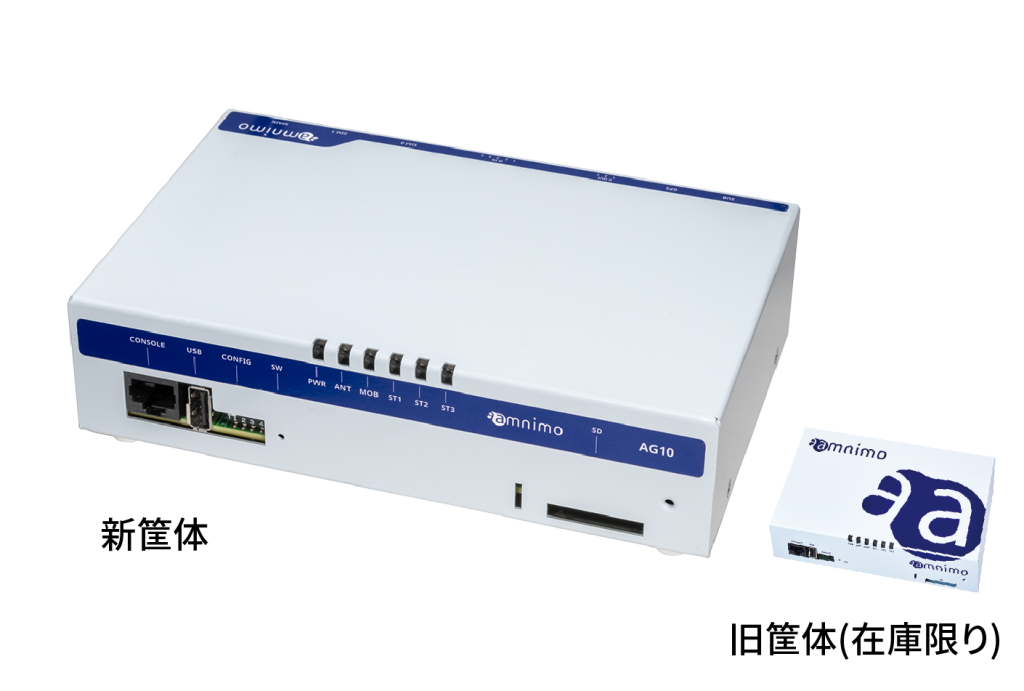
- Edge Gateway (Indoor) AG10
Security camera and digital signage systems that watch over the town
Overview
1. What is regional BWA?
Regional BWA (Broadband Wireless Access) is a Japanese broadband wireless access system for local areas. It was introduced to close the “digital divide,” the information gap caused by unequal access to ICT, and to improve public welfare in local communities. It uses the 2.5 GHz band (2,575 MHz to 2,595 MHz). With support from the Ministry of Internal Affairs and Communications (MIC), regional BWA is spreading: as of 2021, about 100 local governments and other organizations had opened regional BWA radio stations. Going forward, 5G base station equipment and 5G devices that support the 2.5 GHz band are expected to reach the market, and regional BWA is expected to gradually move to 5G equipment.
2. Installing security cameras that use regional BWA
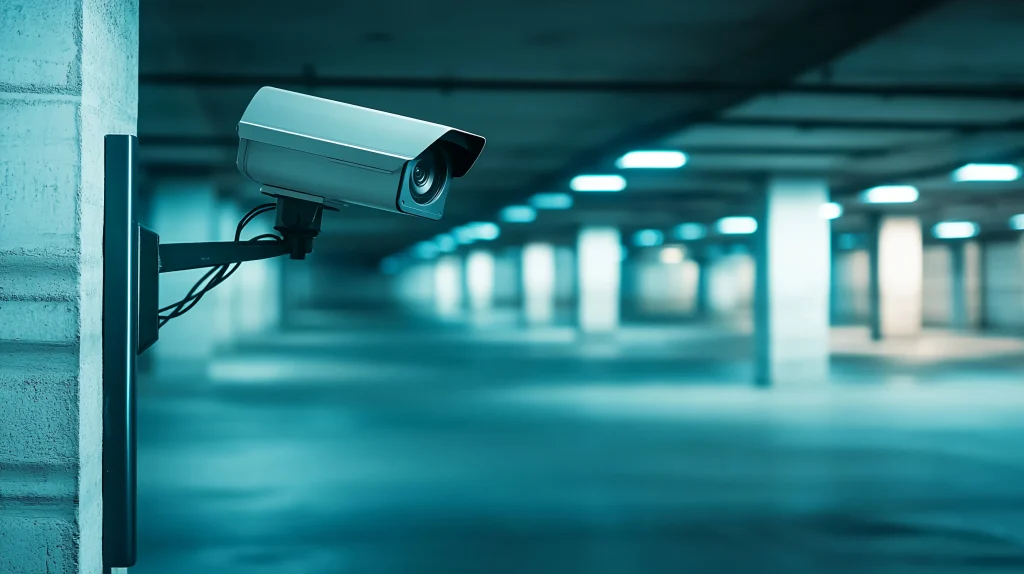
One growing use of regional BWA is in security camera systems. A single local government may manage hundreds or thousands of cameras. Standalone cameras that do not use a network can be hard to maintain and operate. To reduce these maintenance and management costs, more and more local governments are installing cameras connected to a regional BWA network.

3. Operating digital signage over regional BWA
Digital signage installed around a municipality sometimes also uses the regional BWA wireless network. Digital signage normally provides information to residents, but during a disaster it becomes an important channel for disaster information. To check remotely that the signage is reliably showing the latest information, it must be connected to a network, or a network camera must capture the screen. The regional BWA wireless network is used both to download video content and to monitor the equipment.

Challenge: Operating costs and stable system operation
Local governments are making more use of regional BWA, but there are many challenges in operating these systems reliably.
1. Maintenance work that takes time and money
Staff sometimes have to go to where the equipment is installed to retrieve data or change settings. Outdoor security cameras are often mounted high up or in other hard-to-reach places, and maintenance may require an aerial work platform. If the equipment is sealed against water, the seal has to be removed for maintenance and then reapplied.
2. Continuous operation in harsh environments
Security cameras and digital signage are often installed outdoors. Outdoors, however, direct sunlight can make equipment unstable, and momentary power interruptions (Japanese) can stop it. Equipment problems occur frequently, which can make stable operation difficult.
3. The risk of not being able to view data when it matters
Especially where power is unstable, such as outdoors, an unexpected momentary power interruption (Japanese) can prevent data from being written safely and can even corrupt existing data. Data is also sometimes stored on SD cards. SD cards have a limited number of write cycles, so there is a risk that the memory fails and you cannot view the video data you need.
4. Uncertainty about whether digital signage shows the latest content
Digital signage carries important information such as disaster information. But there was no reliable way to check remotely whether it was showing the latest information, especially during a disaster.
amnimo’s solution: An edge gateway that supports regional BWA for efficient operation and a safer town
Equipment that keeps a town safe must not stop. The Edge Gateway (Indoor) AG10 (Japanese) runs reliably 24 hours a day, 365 days a year, so you can depend on it as a regional BWA terminal for downloading video content, monitoring equipment, and similar uses.

1. Remote monitoring reduces site visits
You can check video recorded on the hardware remotely over the regional BWA network, which reduces data retrieval work. Device health monitoring and system configuration changes can also be done remotely. Where needed, data can also be saved to the cloud at the right time.
2. A system that keeps running 24 hours a day, 365 days a year
The device has a built-in PoE (Japanese) switch. When it detects that a connected camera has stopped unexpectedly, it restarts the camera automatically so the camera recovers on its own. The various devices that a camera system needs (a PoE (Japanese) switch, an SSD, an LTE router, and a Linux gateway) are combined in one compact unit, so you can use them within a supported operating environment.
3. Prevents data corruption
Even if power is lost, for example in a momentary power interruption (Japanese), a large internal capacitor lets the device safely finish writing data to memory before power runs out (Japanese Patent No. 6954423). This prevents data corruption. Instead of SD cards, the device uses an SSD, a high-capacity storage device with no write-cycle limit. This reduces the risk of data corruption and saves the work of replacing SD cards.
4. Keeps digital signage content up to date, even during disasters
During a disaster, problems at base stations can cut off communication. However, when communication is lost, the amnimo Edge Gateway (Japanese) automatically switches to another connection, such as local LTE, and reconnects to the network. As a result, digital signage content stays up to date even during a disaster, and you can monitor the signage’s status.
5. LTE communication with Band 41 support
amnimo offers industrial gateways (Japanese) built for regional BWA. The communication module in these products supports Band 41, so you can use them with confidence on regional BWA wireless networks.

Products used in this case study





Contact usProduct inquiries and documents
We can help you choose products and put together a package for your application. Consultations are free.