
Remote monitoring of railroad crossings

- Products used
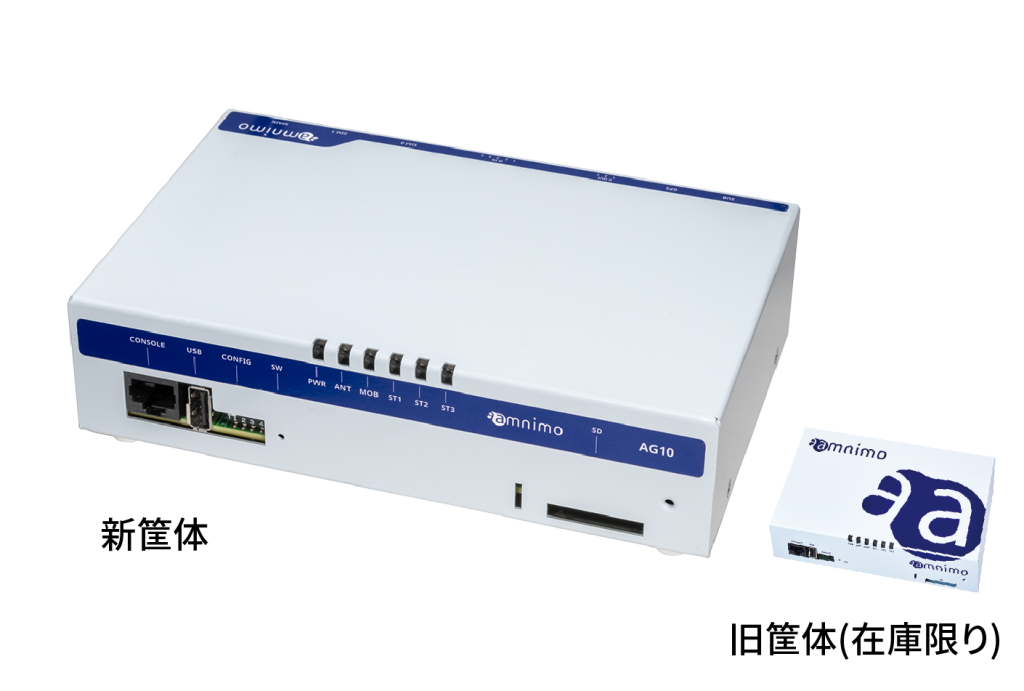
- Edge Gateway (Indoor) AG10
Stable operation in harsh environments, supporting safe railroad crossing operation
Overview
Railroad crossings have many kinds of devices and equipment. When they detect abnormal operation or a problem, they automatically notify the operations control center, main station offices, signal maintenance offices, and similar locations. In recent years, more advanced remote monitoring of crossing equipment has been introduced. Railways are installing cameras to check conditions on site and retrieving fault data remotely over the internet to make recovery work more efficient.

Challenge: Site visits and a harsh installation environment
When a fault occurs at a railroad crossing, it takes time to find the cause. In addition, noise and unstable power around the crossing keep remote monitoring systems from running reliably.
1. Staff must go to the site to retrieve the history when a fault occurs
When abnormal operation or a problem is detected in crossing equipment, the first alert arrives, but in many cases the situation and cause of failure cannot be determined without going to the site. Staff must inspect the equipment in person, and time is wasted arranging tools and repair parts, which lowers work efficiency. Also, because the situation is completely unknown, it is hard to set priorities. Sometimes staff rush to the site only to find on closer inspection that no urgent action was needed.
2. Noise and unstable power make equipment unreliable
Around railroad crossings, passing trains generate noise, and large load changes frequently cause the supply voltage to fluctuate, making the power supply unstable. As a result, momentary power interruptions (Japanese) can temporarily stop the system.
3. Fault and problem alerts can be checked only at certain locations
When abnormal operation or a problem is detected in crossing equipment, an alert goes to the control center, main station offices, and signal maintenance offices. However, locations that are not registered and the devices of field workers do not receive the alert, so sharing information can take time.
4. Real-time video of crossings is not easy to view
Because of the harsh installation environment, cameras for video monitoring of railroad crossings have been slow to spread. Especially for cost reasons, cameras are sometimes not installed at all at crossings with little traffic.
5. Maintenance costs
Many railroad crossings are in remote locations, so maintenance visits take time and money. In some cases, data can only be retrieved by going to the site. In addition, when data is stored on SD cards, the risk of data (SD card) corruption is higher because SD cards have a limited number of write cycles.
amnimo’s solution: Stable operation in harsh environments, supporting safe railroad crossing operation

1. Retrieve relay operation history before and after a fault remotely*
Because detailed information about a fault can be retrieved remotely, maintenance depots, control centers, and similar locations can collect and analyze information in advance and get a good idea of the cause. Staff can prepare the tools and parts they need before going to the site, making recovery more efficient. Because the situation is clearer, staff can correctly judge urgency and priority, which makes maintenance and operation more efficient.
*Information from existing railroad crossing safety equipment can be retrieved over RS-232, so the system can be added to existing equipment.
2. Stable operation with rugged devices
Even if noise makes communication unstable, functions such as storing data on the device and fast SIM switching keep the networked system running reliably. A built-in power backup mechanism (Japanese Patent No. 6954423) also keeps the device running reliably during momentary power interruptions (Japanese), which are common where power is unstable.
3. Check alerts on a smartphone
Over the network, alerts can reach not only designated facilities but also the devices of field staff. By sharing fault information on workers’ devices, field staff can work with the information already gathered at the operations control center and other locations.
4. Check camera video during faults and in real time remotely
An application lets you check crossing video from the time of a fault, or real-time video, remotely with simple operations. You can also view video from multiple crossings at once. The system is easy to operate and easy to see, for efficient operational monitoring. In addition, amnimo products combine the many functions needed for using video in one device. This keeps initial costs lower than combining multiple devices, and using a private network* keeps running costs down. As a result, the budget allows installation at more locations.
*A network configuration using mobile networks is also possible.
5. Minimal maintenance work
Data is stored not on SD cards but on an SSD, a high-capacity storage device well suited to recording video. This minimizes the work of retrieving data and replacing memory. SSDs are also better suited than SD cards to storing large amounts of data, which reduces the risk of data corruption and makes the system highly reliable.

Railway standards met by the amnimo Edge Gateway (Indoor) AG10
The amnimo Edge Gateway AG10 conforms to the following railway standards.
- Railway signal safety components: Vibration test methods, JIS E 3014 Class 2
- Rolling stock parts: Vibration and shock test methods, JIS E 4031
These Japanese Industrial Standards (JIS) are intended to verify that equipment can withstand the vibration and shock conditions that normally occur in railway vehicles and railway signal safety equipment.


Products used in this case study





Contact usProduct inquiries and documents
We can help you choose products and put together a package for your application. Consultations are free.