
Camera monitoring along railway lines

- Products used
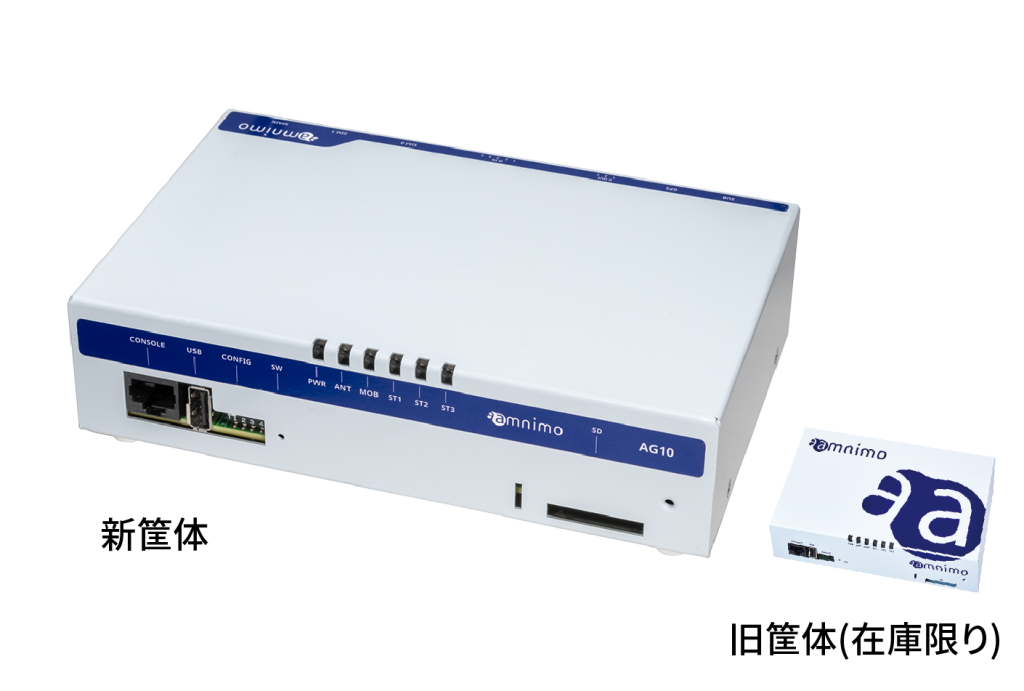
- Edge Gateway (Indoor) AG10
Monitor video from cameras spread over a wide area, all in one place
Overview
Along railway lines, surveillance cameras are often installed over a wide area: at railroad crossings, stations, depots, switches, and tunnel entrances. At railroad crossings, for example, camera video is used to check that crossing equipment is working and to prevent crossing accidents. At stations, cameras are installed for crime prevention, for example so staff can respond quickly to suspicious persons. At tunnel entrances, cameras are sometimes installed for disaster preparedness, for example to check during heavy rain whether the tracks are buried by mud or water. Surveillance cameras are installed in many places for many purposes. However, with conventional systems and equipment, it is often hard to manage camera video in one place. There are also operational problems: replacing SD cards and extracting data take effort, and noise from passing trains frequently causes equipment failures. This article shows how to operate and monitor surveillance cameras spread over a wide area efficiently.

Challenge: Maintaining cameras spread over a wide area
From checking video to maintenance and handling failures, surveillance cameras spread along railway lines require many site visits.
1. Data from widely spread cameras can only be checked on site
Surveillance camera data is stored in equipment installed near the camera, and in many cases it can only be extracted on site. Because the cameras are spread along railway lines over a wide area, just collecting the video data from each location is a lot of work.
2. Installation in a harsh environment with railway noise
Along railway lines, passing trains generate power noise, and large load changes make the supply voltage unstable. This can cause momentary power interruptions (Japanese). Rugged devices that can withstand this noise and unstable power are needed.
3. Maintenance costs such as SD card replacement
Surveillance camera data is often stored on SD cards. But SD cards need regular replacement, and the cost is a bigger burden than you might expect. Because the cameras are spread widely across railroad crossings, stations, depots, switches, tunnel entrances, and other locations, maintenance visits to these sites increase operating costs.
4. Failures go unnoticed, and needed footage is not recorded
Without a remote monitoring system, nobody notices that the system has stopped until maintenance is done on site. By the time someone notices, recording may already have stopped.
amnimo’s solution: Manage surveillance cameras in one place for efficient operation
With rugged products, you can remotely monitor video from cameras spread over a wide area in one place. This cuts the cost of site visits and makes operation more efficient.

1. Monitor video from a wide area on one switchable screen
You can easily view images from cameras spread across railroad crossings, stations, depots, switches, tunnel entrances, and other locations remotely. For example, from a central control room, you can switch one screen between locations and retrieve video data for the time periods you need. amnimo also provides applications that display and manage this video data. Using a system from the same manufacturer as the hardware helps keep operation stable.
2. Reliable hardware that withstands noise and momentary power interruptions
amnimo products are industrial LTE gateways with high environmental durability, so you can use them with confidence. For example, a built-in power backup mechanism*1 keeps the device running reliably even during a momentary power interruption (Japanese). The outdoor models, which include an SPD*2, also protect against lightning.
*1 Patented (Japanese Patent No. 6954423)
*2 SPD (surge protective device): a protective device that safely discharges lightning surges and prevents overvoltage and overcurrent from damaging equipment. It is also called a lightning arrester.
3. Maintenance-free recording with SSDs
Using a high-capacity SSD instead of SD cards eliminates SD card replacement and reduces maintenance costs.
4. Stable operation with device health monitoring and automatic recovery
The system continuously performs device health monitoring (Japanese) to check that each surveillance camera is still running. If a camera stops abnormally, the system reboots it automatically to recover it. You can also perform recovery work remotely over the internet and retrieve data from the time of a fault remotely, which minimizes on-site recovery work and makes it more efficient.

Railway standards met by the amnimo Edge Gateway (Indoor) AG10
The amnimo Edge Gateway AG10 conforms to the following railway standards.
| Railway signal safety components: Vibration test methods, JIS E 3014 Class 2 Rolling stock parts: Vibration and shock test methods, JIS E 4031 These Japanese Industrial Standards (JIS) are intended to verify that equipment can withstand the vibration and shock conditions that normally occur in railway vehicles and railway signal safety equipment. |  |

Products used in this case study





Contact usProduct inquiries and documents
We can help you choose products and put together a package for your application. Consultations are free.