
What is PoE? An easy guide to how it works, its pros and cons, and where it is used
Jan 23, 2025

Have you heard the term PoE? PoE stands for “Power over Ethernet” and is pronounced “P-O-E.” With PoE, an Ethernet cable (LAN cable) carries power along with data, so you can run connected network devices without a power outlet or adapter. This article explains what PoE is, how it basically works, and the benefits of using it.
How PoE works (PSE and PD)
With PoE, devices do not need to be plugged into an outlet like ordinary electronic devices. You can use them simply by connecting compatible devices with a LAN cable.
PoE requires power sourcing equipment (PSE) and a powered device (PD). Power sourcing equipment includes PoE switching hubs and PoE injectors. Powered devices include network cameras, wireless LAN equipment, and IP phones. The PSE first checks whether the connected PD is a device that requests power, and then supplies power.
What are the advantages of PoE?
PoE has the following three advantages.
1. A single cable reduces installation costs
The power cable and the communication cable are combined into one, which reduces the number of parts and lowers costs. For installation work, running a power cable in addition to the LAN cable for data adds the cost of that wiring work. With PoE, you only need to install a LAN cable, which also reduces installation costs.
2. Power supplies can be consolidated
Many electronic devices are designed to run on DC power. When several such devices are installed, each needs its own power supply, such as an AC adapter. With PoE, one power sourcing device can supply DC power to multiple devices, so you can reduce the number of power supplies and their cost.
3. PoE reset can restart other devices
PoE power sourcing equipment both supplies power and controls communication. It can therefore check whether a powered device is alive, for example with ping, and if the device appears to have frozen, restart it by cutting and restoring PoE power. This makes it possible to restart frozen devices automatically.
PoE standards: “Three standards” and “power classes”
PoE has three standards and four levels of power classes.
To use power sourcing equipment suited to your powered devices, check what the standards and power classes are.
What are the three PoE standards, “IEEE 802.3af,” “IEEE 802.3at,” and “IEEE 802.3bt”?
The IEEE (Institute of Electrical and Electronics Engineers) is a U.S.-based association that sets standards for electrical and electronic technology. Its standards carry the “IEEE” name.
The current PoE standards defined by the IEEE are these three:
“IEEE 802.3af,” standardized in 2003
“IEEE 802.3at,” an extended standard from 2009
“IEEE 802.3bt,” a further extension from 2018
The difference between them is how much power they can supply.
“IEEE 802.3af”: up to 15.4 W
“IEEE 802.3at”: up to 30 W
“IEEE 802.3bt”: up to 90 W
“IEEE 802.3af” is sometimes called PoE,
“IEEE 802.3at” PoE+,
and “IEEE 802.3bt” PoE++.
Note that “IEEE 802.3af” works with Category 3 or higher LAN cables, while “IEEE 802.3at” requires Category 5e or higher LAN cables.
What are PoE power classes?
Power classes define how much power PoE power sourcing equipment can supply to a powered device. They are divided into classes 0 to 4 according to power. When you connect a powered device to power sourcing equipment, the device sends its class information to the power sourcing side, which automatically adjusts the power it supplies to match the class.
The higher the class, the more power is required. Only PoE+ devices can use Class 4. Class 0 is the default: if the power sourcing equipment does not support power classes, it does not know how much power the powered device needs, so it supplies Class 0 power.
| Class | Classification current | PD received power | PSE supplied power | Standard |
| 0 | 0-5 mA | 0.44-13.0 W | 15.4 W | af, at, bt (default) |
| 1 | 8-13 mA | 0.44-3.84 W | 4.0 W | af, at, bt (Type 1) |
| 2 | 16-21 mA | 3.84-6.49 W | 7.0 W | af, at, bt (Type 1) |
| 3 | 25-31 mA | 6.49-12.95 W | 15.4 W | af, at, bt (Type 1) |
| 4 | 35-45 mA | 12.95-25.50 W | 30.0 W | at, bt (Type 2) |
| 5 | 36-44 mA, 1-4 mA | 40 W | 45.0 W | bt (Type 3) |
| 6 | 36-44 mA, 9-12 mA | 51 W | 60.0 W | bt (Type 3) |
| 7 | 36-44 mA, 14-20 mA | 62 W | 75.0 W | bt (Type 4) |
| 8 | 36-44 mA, 26-30 mA | 71.3 W | 99 W | bt (Type 4) |
Class 0 is the default power class used when the power sourcing equipment does not support power classes. In this case, the power needed to run the powered device is unknown, so the equipment first supplies the power for Class 0.
Be careful with combinations
IEEE 802.3af and IEEE 802.3at supply different amounts of power. When you connect power sourcing equipment and powered devices of different standards, refer to this list.
If the power sourcing equipment is IEEE 802.3af, IEEE 802.3af powered devices work, but IEEE 802.3at powered devices do not.
If the power sourcing equipment is IEEE 802.3at, both IEEE 802.3af and IEEE 802.3at powered devices work.
How far can PoE deliver power?
There is a limit to the distance PoE can deliver power, that is, the length of the LAN cable between the power sourcing equipment and the powered device. The distance depends on the cable you use, so it is important to check the standard. For example, under the Ethernet standard, LAN cables can be up to 100 m long, so power can be delivered up to 100 m.
The usable distance of a LAN cable also depends on its quality. Cable quality has two separate aspects to consider.
(1) Transmission bandwidth (analog transmission bandwidth)
(2) DC resistance
For (2) DC resistance, when copper wire is used, thicker wire basically has lower DC resistance, and the lower the DC resistance, the better the quality.
Thin LAN cables and flat LAN cables designed for convenience are also sold, but products that do not meet the two points above may not be suitable for long-distance power delivery. However, if you check the standard carefully before using them, there is basically no problem.
Choosing a suitable switching hub for PoE
A PoE switching hub, also called a PoE switch, is a switching hub (PSE) that supplies power directly to PoE devices. On a network, it can supply power over PoE to run the connected devices. The number of powered devices you can connect and the power you can supply differ for each switching hub, but one hub can supply power to multiple powered devices. It can also be used on its own and consolidates power cables into one, so the network stays simple without complicated wiring, and the installation site stays tidy.
A switching hub that meets the following conditions is suitable for PoE.
1. The switching hub has more PoE ports than the number of PDs you will connect
2. The power one port can supply exceeds the maximum power consumption of one powered device
3. The power one PoE switching hub can supply exceeds the total maximum power consumption of all powered devices
4. As described above, a PoE switching hub is a device that can supply power to multiple powered devices on its own.
A PoE injector, on the other hand, adds PoE to a switching hub that does not support PoE. It is usually installed between the non-PoE switching hub and the powered device, relays the network connection, and supplies power. By supplying power over the LAN cable, it lets you connect PoE devices to a non-PoE switch. It is used when you already have a non-PoE switching hub, or when you want to use a connected device some distance away.
Where PoE is used
Where is PoE used? Here are examples of electronic devices that support PoE.
1. IP cameras and network cameras
Most IP cameras and network cameras designed for surveillance run on PoE power. Surveillance cameras are often installed outdoors or in high places where getting power is a problem . PoE is therefore very often used so that data communication and power supply share a single cable.
2. Wireless transmission equipment and Wi-Fi routers
Wireless transmission equipment, such as Wi-Fi access points and Wi-Fi routers, connects to an external network over Ethernet and communicates data wirelessly. Wi-Fi access points and Wi-Fi routers are also electronic devices, so they need an external power supply. PoE, which combines the external network connection and the power supply in one cable, is therefore very useful for them. In particular, many Wi-Fi access points and Wi-Fi routers designed for industrial use run on PoE power.
3. Optical transmission equipment and fiber media converters
A fiber media converter transmits data between different types of communication media, such as Ethernet over copper cables and fiber optic cables. It is mainly used to connect networks over distances longer than 100 m, the maximum reach of Ethernet, by transmitting over optical fiber. Powering fiber media converters over PoE lets you build systems with lower power supply and wiring costs.
4. IP phones
An IP phone needs both a power supply and a LAN connection to carry call data. PoE provides both over a single cable, so PoE-compatible IP phones are widely used. Besides easier wiring, PoE gives you more freedom in where you place IP phones.
Main future uses of PoE
1. Smart lighting
A single LAN cable handles everything for LED lighting, from dimming and color tuning to power. This makes it easy to save power automatically with motion sensors and to adjust lighting to circadian rhythms.
2. IoT sensors
Environmental monitoring: Temperature, humidity, and CO2 sensors placed throughout a building work with its HVAC system in real time to improve energy efficiency.
Even on walls and glass surfaces where outlet installation is difficult, high-power displays and touch panels can be installed with LAN wiring alone.
These uses go beyond simply reducing wiring. They turn the whole building into a “networked intelligent space” and help speed up decarbonization (GX, green transformation) and digital transformation (DX).
PoE FAQ
Here are some frequently asked questions about PoE. This section answers three questions to help you use PoE.
Is it OK to connect non-PoE products to a PoE hub?
A PoE switching hub works normally even if you connect products that do not support PoE. Even when PoE and non-PoE products are connected at the same time, the PoE products receive power without problems. Connecting power sourcing equipment (PSE) units to each other also causes no problems.
However, non-standard PoE devices are not compatible and can be dangerous to use in some cases. See “Is it safe to use non-standard PoE devices?” for details.
What are the main reasons a PoE device does not work?
If a PoE device does not work properly, check that the power sourcing equipment, the powered device, and the LAN cable all meet suitable standards.
For example, suppose the power sourcing equipment uses “IEEE 802.3af” and the powered device uses “IEEE 802.3at.”
Power sourcing equipment that uses “IEEE 802.3af” can supply up to 15.4 W. If the powered device needs more than 15.4 W, it cannot operate properly.
If a device still does not work even though you are using PoE devices of suitable standards, the cable may be damaged or wired incorrectly. If the power sourcing equipment also has ports that do not support PoE, a device connected to one of those ports does not receive power.
Is it safe to use non-standard PoE devices?
Be careful with so-called non-standard PoE devices, which are built to proprietary specifications instead of the IEEE standards. They are not compatible and can be dangerous to use in some cases.
Many products labeled as PoE-compatible are built to proprietary specifications, not the standards defined by the IEEE.
For example, some devices are designed to run at a voltage very different from the IEEE-specified voltage (48 V), such as 24 V. The IEEE specifies that PoE power is supplied only after negotiation between the PSE and the PD succeeds. However, products that always supply power as soon as a cable is connected, without negotiation (so-called passive PoE), are also sold as “PoE-compatible.”
When connected to equipment built to IEEE standards, these devices may not work properly and can cause failures, and in some cases they could create a dangerous situation. When choosing devices, first make sure they comply with the IEEE or other standards.
amnimo’s PoE-capable video recorders and IoT devices
amnimo sells LTE routers with PoE power output. With these devices, you can easily connect cameras and other PDs (powered devices) to IoT while taking advantage of PoE. They are rugged devices that meet the standards and are used in outdoor surveillance camera systems and other applications. We design the power conversion circuits ourselves and achieve high power conversion efficiency, so the devices also generate little heat.
– Outdoor devices need to keep heat from internal components as low as possible. amnimo’s outdoor devices convert 100 V to 240 V AC power to PoE power with high efficiency, which keeps heat down and allows stable operation outdoors. All four of these models support IEEE 802.3at.
Recommended products
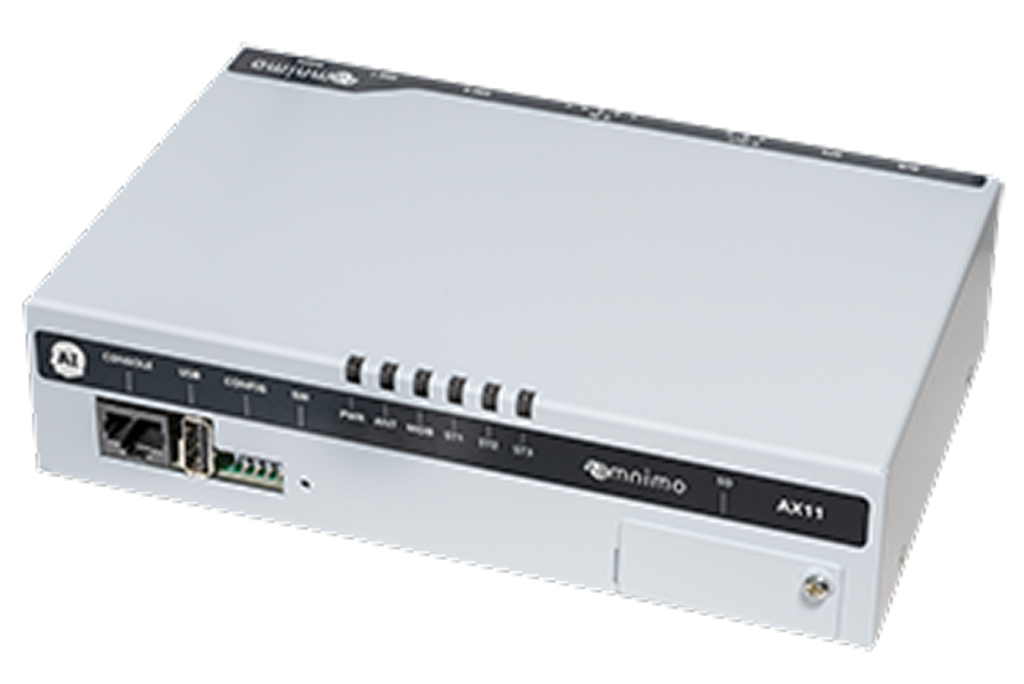
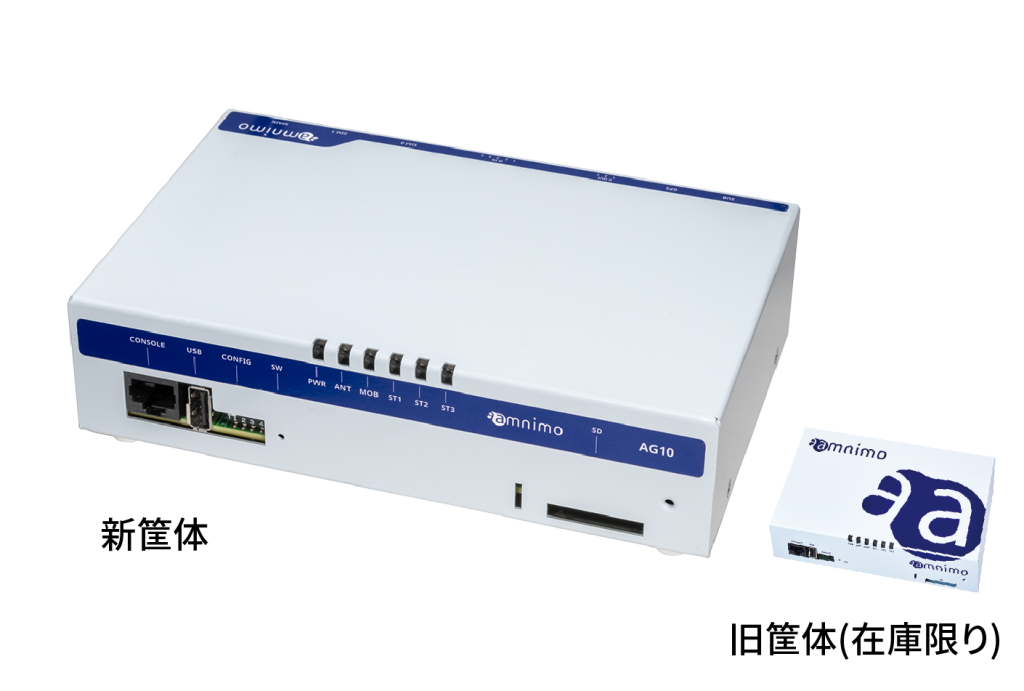
– Indoor devices accept a wide input voltage range of 10.8 V to 32 V DC, and supply PoE power at a voltage higher than the input voltage with high conversion efficiency. Both of these models support IEEE 802.3at.
Recommended products
Summary
This article covered PoE from the basics to how it is actually used.
PoE has the advantage of supplying power through an Ethernet cable even where there are no power outlets nearby. For surveillance cameras, PoE is useful for installations outdoors or in high places where power is hard to get. To connect PoE products without problems, it is important to combine cables and products that match the standards.
Contact usProduct inquiries and documents
We can help you choose products and put together a package for your application. Consultations are free.