What is edge AI, now drawing attention? How it differs from cloud AI, with examples
Mar 25, 2023

Edge AI has drawn attention in recent years. It is expected to play a major role especially in fields such as autonomous vehicles and industrial robots.
What is edge AI? This article explains how it differs from cloud AI, which is now widely used, the advantages unique to edge AI, and how it is used.
How do edge AI and cloud AI differ?
First, let’s look at the differences between edge AI and cloud AI and the functions and advantages unique to edge AI.
AI that works on edge devices alone
“Edge” means the outer end. Edge AI refers to equipment in which the terminal itself, called an edge device, has artificial intelligence (AI) that can make decisions. It can be described as applying edge computing (Japanese) to AI. A trained model is implemented on a device close to where AI decisions are needed, such as a car or an IoT device, and that device alone analyzes whether things are normal or abnormal, makes decisions, and carries out predictive maintenance.
AI used through the cloud
Unlike edge AI, cloud AI communicates with the cloud and makes predictions and decisions from data there. The cloud is a system that can manage huge amounts of data on the internet.
Data collected by edge devices is sent to the cloud over the network, and the CPUs and GPUs in data centers process it at high speed for training and inference. Edge devices do not need to make decisions from the data, so relatively inexpensive chips on the edge device side are enough.
Why edge AI, with active chip development, is drawing attention
So why is edge AI drawing attention now, with chip development advancing? Because edge AI is better than cloud AI in some respects. Here is how.
Faster response
Cloud AI is a system that sends large amounts of data from edge devices to the cloud. The data flows from the edge device to the cloud, a decision is made in the cloud, and the result is sent back to the edge device, so some delay occurs.
Sending a lot of information also strains the network, so the connection may slow down at critical moments and delay decisions.
Another disadvantage of cloud AI is that data communication costs rise as the system is used more. Cloud AI also struggles to run AI where the internet connection is interrupted or hard to get.
Edge AI, which can make decisions directly on the edge device, can solve these problems. First, streaming data is analyzed as close to the device (the edge) as possible and decisions are made in real time, so time lags are less likely.
It does not rely on communication, so it reduces data communication costs and works even where the internet connection is hard to get.
In addition, only necessary information is sent to the cloud, so security is higher than with cloud AI.
Protecting confidential information
Edge AI is also better for protecting confidential information. Because cloud AI sends data to the cloud, it cannot be used for highly confidential information that you do not want to send (for example, video of a shopping mall showing people). Edge AI can analyze such data only on the edge device (on-premises) without sending it to the cloud, which helps protect confidential information.
Examples of edge AI and cloud AI
Markets where edge AI is especially expected to be used include autonomous driving systems, industrial robots, and the security industry. However, what is widely used today is cloud AI, which works with inexpensive chips.
The current standard way to use edge AI is therefore to use both: collect data and decision criteria with cloud AI, send the criteria to the edge AI, and make instant decisions at the edge based on them. Let’s look at some examples.
AI makes decisions from camera images in autonomous vehicles
Autonomous driving is a field where edge AI is especially expected to be used. AI makes decisions based on camera images, but even a small time lag can delay stopping the car and lead to a collision.
Edge AI removes the time lag so that driving decisions can be made more safely.
Understanding and controlling situations with industrial robots
Edge AI is also expected to be introduced in industrial robots. With edge AI, sensors capture the state of the target as data, and robots can be controlled in real time while continuously understanding the situation through inference.
As a result, factories and other production sites can not only make the same products as always but also more easily make custom products, enabling mass production of custom products.
Demand for AI in the security industry
In the security industry, remote alarm security with alarm devices such as intrusion detection sensors is the mainstream today. In addition, there is a growing need to view surveillance camera video remotely and then decide whether guards need to be sent. In this direction, interest in edge AI is rising sharply. Since deep learning methods appeared in 2006, AI technology has advanced remarkably, especially in image analysis. As video monitoring becomes central to the security industry, face authentication and license plate recognition have first begun to be used to manage the entry of people and vehicles into companies, public institutions, and other places. In the future, systems will be needed in which AI analyzes video to judge whether what is happening on site is normal or abnormal, and guards are sent only when an abnormal situation is detected. With Japan’s declining birthrate and aging population, labor shortages are expected to become the norm, so the security industry needs to send as few guards as possible to places where nothing is happening, and AI is expected to make this judgment. What AI needs to recognize is very diverse: telling people who are allowed to be there (for example, the residents of a house) from those who are not (including suspicious persons) through authentication, detecting weapons and dangerous objects through object identification, and detecting attempts at violence or illegal entry by analyzing people’s movements. Combining these analyses to detect anomalies and prevent incidents and accidents before they happen is the final goal of the security industry.
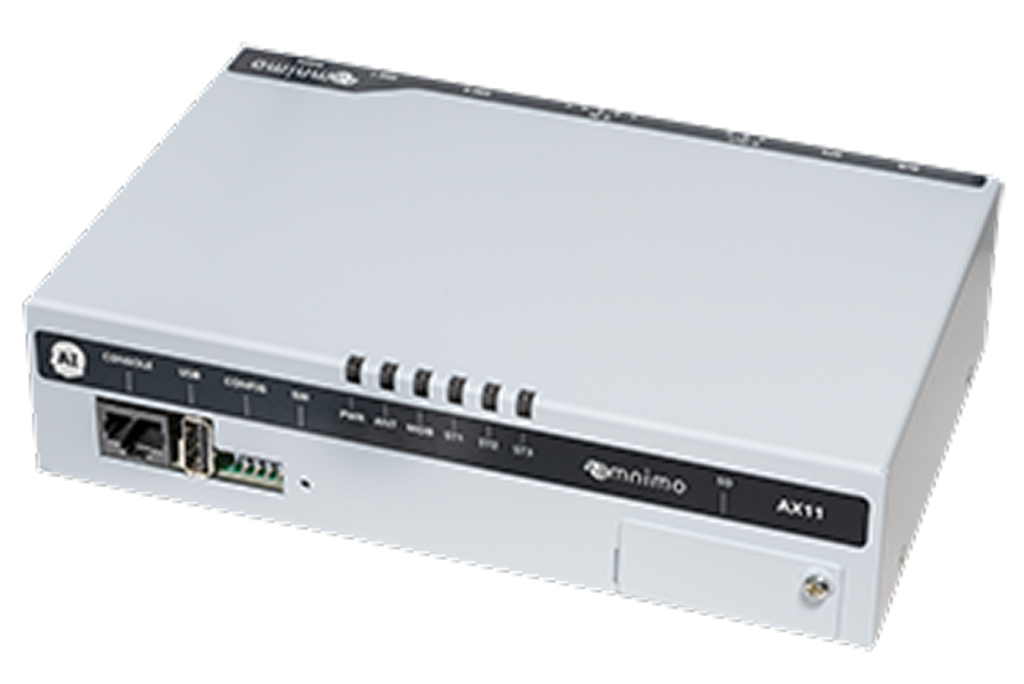
The AI-equipped gateway amnimo is prototyping
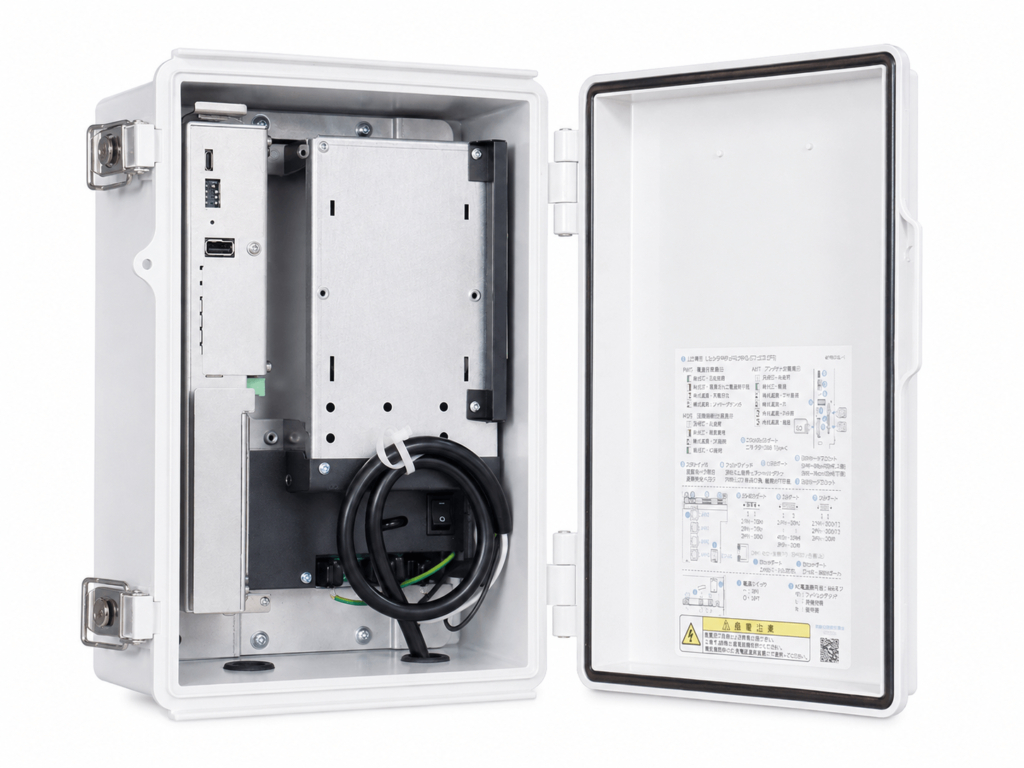
amnimo, which began offering its LTE-enabled edge gateway (Japanese) in October 2020, is now developing a model based on it with an added AI accelerator chip. This model supports the ONNX framework for AI analysis logic, so the prototype can also run AI analysis logic created in common external deep learning environments. We are also developing a platform that can download and distribute AI analysis logic to AI devices actually installed in the field. Aiming for practical use from 2021 onward, we are developing cloud applications that work with devices equipped with AI accelerators.
Summary
Edge AI can make decisions on edge devices alone, without conventional cloud servers. Its advantages and uses are drawing attention. Compared with cloud AI, which is widespread today, it requires parallel processing on the edge device and therefore high-performance chips, so many companies are developing suitable chips.
Make use of edge AI in various ways, for example by combining cloud AI and edge AI well.
The following white paper explains the edge gateway with AI image processing, if you are interested.

Contact usProduct inquiries and documents
We can help you choose products and put together a package for your application. Consultations are free.