What is a gateway device? Examples and how to connect it
Mar 23, 2023

IoT (Internet of Things), which connects things to the internet, is used in a wide range of fields, from general use by individuals at home to industrial use in factories and facilities. IoT consists of several elements, and one of them is the gateway. A gateway is a device that sends data obtained from things to the cloud or servers over an internet connection. This lets you manage and control things remotely from a PC, smartphone, or other device.
This article gives an overview of what a gateway is and explains how it differs from a router, examples of its use, and how to connect it.
What is a gateway?
IoT has three typical elements. The first is devices, which collect data and provide feedback. The second is the cloud environment, which stores and analyzes data. The third is the gateway, which sends and receives data and manages and controls devices.
Devices come in many kinds: sensors mounted on machine tools, conveyors, and robots, as well as surveillance cameras attached to equipment and control panels for entering information. Devices usually cannot connect to the internet on their own. As they are, they cannot send collected data to the cloud or receive feedback from it. Also, there are many devices, so if every device communicated directly with the cloud, it would put a heavy load on the network and servers.
A gateway collects data obtained by the connected devices, sorts it by destination, and sends it to the cloud over the internet. In the other direction, data and commands sent from the cloud are relayed through the gateway to each device. If the devices and the cloud use different communication protocols, the gateway converts them as it relays the data. By relaying through a gateway, devices can exchange data with the cloud even without their own connection functions. Not all device data is sent to the cloud as is, which also reduces the load.
A gateway not only exchanges data between devices and the cloud but also manages and controls devices. This lets you check whether data is arriving correctly, check device operating status, and make devices perform actions. In addition, a gateway may supply power through PoE (Power over Ethernet) (Japanese) to devices such as surveillance cameras installed where power is hard to obtain, or store data temporarily on the gateway itself to do some data processing and give feedback to devices.
Like a gateway, a router also connects devices to the internet. A router is a device that determines where data is sent, by IP address, and routes it there. Gateways have similar functions but also others, and in a broader sense, devices that relay networks are called gateways.
Examples of gateway use
As IoT has spread, gateways have come to be used in many places.
At home
IoT is increasingly used at home. Many companies offer consumer IoT services that create smart homes by connecting not only TVs and audio equipment but also appliances such as air conditioners and refrigerators, and lighting, to the internet. Gateways are used to connect these home devices to the internet. Because they are used in ordinary homes, small, lightweight, relatively low-cost gateways are typical.
On the factory floor
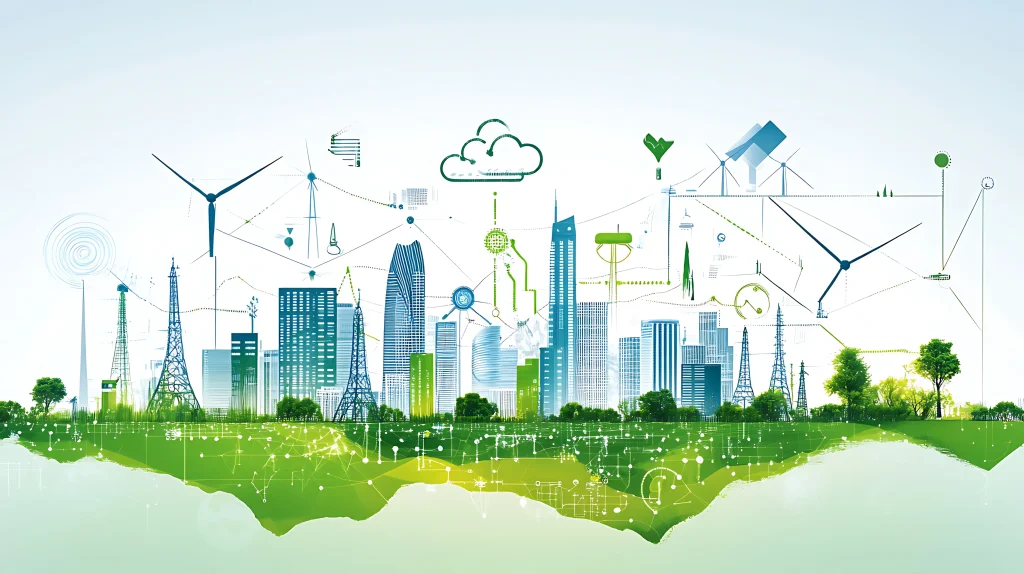
On the factory floor, smart factories are spreading, where production equipment is connected to the internet for data collection and remote management. Visualizing machine operating status and detecting failures and problems quickly can improve productivity. Smart factories use industrial gateways to connect to the internet.
Industrial gateways are often installed in harsher environments than home gateways, such as near running equipment or inside control panels. They therefore need the high ruggedness specific to industrial use, such as good heat resistance, impact resistance, and electrical resistance, and treatment against water and moisture.
Remote monitoring of equipment and facilities
Many systems that manage and monitor equipment and facilities with surveillance cameras connect the cameras to the internet. This lets you check images and operate the cameras remotely. Gateways are also used to connect surveillance cameras to the internet.
Surveillance cameras are often installed out of reach, so frequent inspection can be difficult. Gateways used for remote monitoring therefore not only collect image data but also check and manage the operating status of the cameras. If a camera needs to restart for some reason, the gateway can reboot it remotely, and firmware and software updates and configuration changes can also be done remotely. These functions are especially needed by people responsible for maintenance, operation, and support.
How to connect a gateway
Gateway connections fall into two types: wired and wireless.
Wired connections
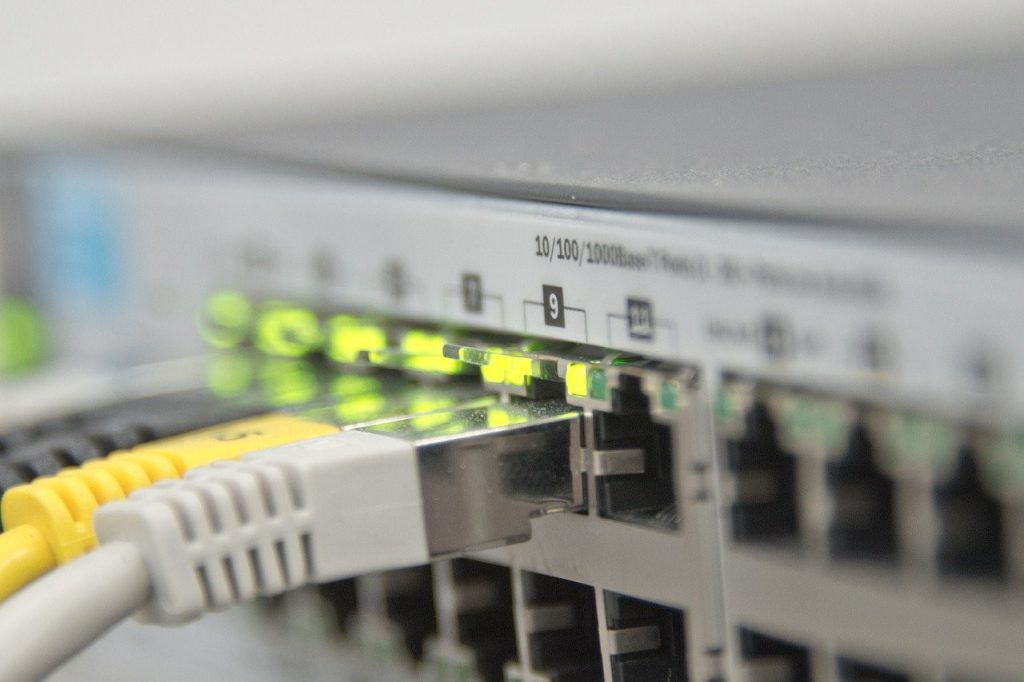
The gateway is connected to the internet or to devices by cable. The typical example is Ethernet, mainly used in LANs and WANs. Others include DIO, RS-232C, and USB. Cables are less affected by noise and give a reliable connection, but routing them takes effort. Wired connections suit stable connections over relatively short distances and cases where the gateway also supplies power to devices.
Wireless connections
For wireless connections to devices, the gateway and devices are connected by wireless communication instead of cables. Technologies used include Wi-Fi, Bluetooth, and ZigBee, which communicate over relatively short distances of about 10 m to 100 m, and Wi-SUN (920 MHz band wireless), which can communicate over long distances of up to just under 1 km. When devices and gateways are connected by cable, the cost of laying cables is often a heavy burden, so wireless connections have an advantage there. However, communication can be affected by obstacles and noise.
LTE and 5G are often used to connect gateways to the cloud. Satellite communication is sometimes used to connect gateways installed in remote locations where no network connection is available.
Whether to connect by wire or wirelessly depends on the environment and the level of connection stability required. In either case, the gateway also needs solid security measures so that the interfaces connected to the internet cannot be breached from outside.
Summary
Gateways are essential for building smart homes and smart factories. Choose one that suits your environment. For industrial use in particular, gateways affect the operation of the whole factory and the prevention of accidents that can endanger lives, so you need a gateway that fully meets the required performance. It is also important not to forget security measures.
Contact usProduct inquiries and documents
We can help you choose products and put together a package for your application. Consultations are free.