
Ubuntu in IoT devices: a Linux distribution for efficient custom application development and operation
Jun 5, 2025

What is a Linux distribution?
The Linux kernel is core software that sits between a computer’s hardware and its application software. Applications also need libraries and other software besides the kernel. A Linux distribution combines the Linux kernel with this software and delivers it as a complete operating system.
Using a specific distribution has these benefits:
– Compatibility: Each distribution uses a consistent set of software versions, so applications run in a stable environment.
– Easy installation and management: A package management system makes it easy to install and update the software you need.
– Support and community: Many distributions have active user communities, so help is easy to find when problems occur.
– Better security: Distributions provide regular security updates that keep your system secure.
The main advantage of a distribution is that you can develop applications without worrying about which software or versions you need.
Major distributions in use
Linux runs on everything from server machines with high-performance CPUs to embedded devices with limited capabilities. In embedded devices, widely used distributions include Ubuntu (the subject of this article), Debian (on which Ubuntu is based), and Fedora from the Red Hat family.
Overview of the major distributions
| Distribution | Overview |
| Ubuntu | User-friendly design suited to both beginners and advanced users. Many drivers and applications are supported out of the box, so it is ready to use right after installation. LTS releases receive security updates and bug fixes for five years ( |
| Debian | Known for stability and robustness. Built entirely from open source software, with an emphasis on the principles of free software. Offers a large number of packages and efficient management with APT. |
| Red Hat Enterprise Linux (RHEL) | An enterprise Linux distribution with commercial support and high stability. Strong in security, performance, and reliability. Suited to large-scale environments and widely used for corporate servers and business systems. |
| Fedora | A community-driven Linux distribution sponsored by Red Hat. Adopts the latest technologies and advanced features. Its fast release cycle suits developers and technically minded users. |
Ubuntu’s features and benefits
Ubuntu is designed to be user-friendly and works well for beginners and advanced users alike. Its graphical user interface (GUI) is intuitive, so moving from Windows or macOS is straightforward. Many drivers and applications are supported out of the box, so it is ready to use right after installation. Installing and updating software is easy: the “Ubuntu Software” app installs software with one click. LTS (long-term support) releases receive security updates for up to five years, so you can rely on them for business use and server operation. Ubuntu is free, yet it offers commercial-grade stability, and it is backed by a large, active community.
Ubuntu also supports multiple architectures, including x86 CPUs (Intel and AMD) and ARM, with the same features and usability on each. This lets it serve a wide range of uses, from PCs and servers to embedded devices and IoT devices.
For application development, Ubuntu is used by many developers around the world and has an active developer community. It offers a wide range of development tools and libraries, along with extensive official and unofficial documentation and support information. As a result, setting up a development environment is easy, and troubleshooting and finding information go smoothly.
Linux in embedded devices
How Linux is implemented in embedded devices
Besides Ubuntu, several other distributions are commonly used in embedded devices. Their features are described below.
1. Yocto Project
The Yocto Project is an open source project for creating embedded Linux distributions. Its features include:
– Customizability: Yocto lets you customize a Linux distribution for specific hardware and software requirements.
– Recipe-based: “Recipes” define the build process for software packages and manage package dependencies and build steps.
– Metadata management: Metadata manages the build process efficiently and makes builds reproducible.
2. OpenWrt
OpenWrt is an embedded Linux distribution mainly for network equipment. Its features include:
– Package management: The opkg package management system makes it easy to install and update software.
– Networking features: It provides advanced networking features and is well suited to network equipment such as routers and access points.
– Community support: An active community develops it, and extensive documentation and support are available.
Each of these Linux environments has different uses and features, and the choice depends on the requirements of the embedded device. Which environment is most suitable depends on the needs of the project and the characteristics of the hardware. With either of these embedded Linux distributions, however, it is harder than with commonly used distributions for end users to develop applications or manage their own applications as packages.
Benefits of using Ubuntu in embedded devices
So what are the benefits of using Ubuntu in embedded devices? This section introduces the expected benefits.
1. Extensive packages and software support
– Ubuntu has extensive packages and software repositories. This makes it easy to install the software you need.
2. User-friendly environment
– Ubuntu is widely used and offers a user-friendly interface and extensive documentation. This makes the system easier for developers and end users to work with.
3. Community and support
– Ubuntu has a large user community, and you can get support through forums and online resources.
4. Long-term support (LTS) releases
– Ubuntu offers long-term support (LTS) releases that provide five years of security updates and maintenance. This lets embedded systems keep a stable environment for a long time.
Rugged edge devices that run custom applications built for Ubuntu
amnimo Inc. uses Ubuntu as the operating system of the gateway devices it has released. You can run custom applications on Ubuntu and build a wide variety of IoT systems while running your own applications on the device as an edge computer.
amnimo devices have a wide operating temperature range and strong environmental durability. If external power is cut, they keep running for a while on power stored in the device and shut down functions in stages, which reduces the risk of failure. A watchdog function also monitors the operation of key components and the OS. When it detects a problem, the device reboots automatically, so it can run for long periods without human intervention.
The following amnimo gateway devices use Ubuntu.
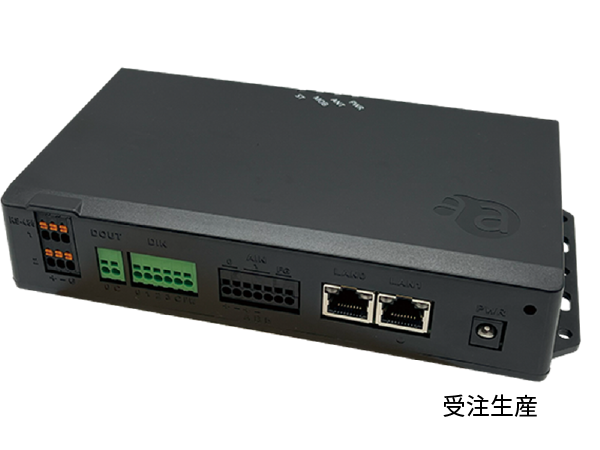
– Sensor Gateway AX30
The AX30 has interfaces for connecting a wide range of sensors, including analog input (4-20 mA) and pulse input. You can implement custom applications on Ubuntu to process sensor input and more. It also has an AI accelerator that runs AI processing on images at high speed. With these functions, the AX30 is a gateway device for remote operation of facilities and equipment.
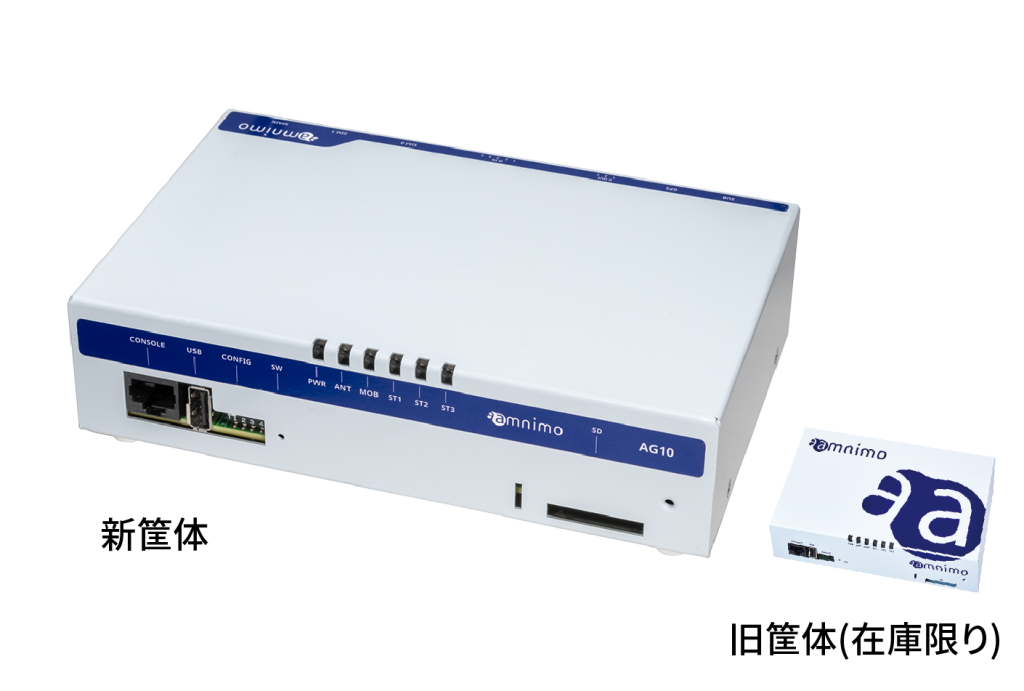
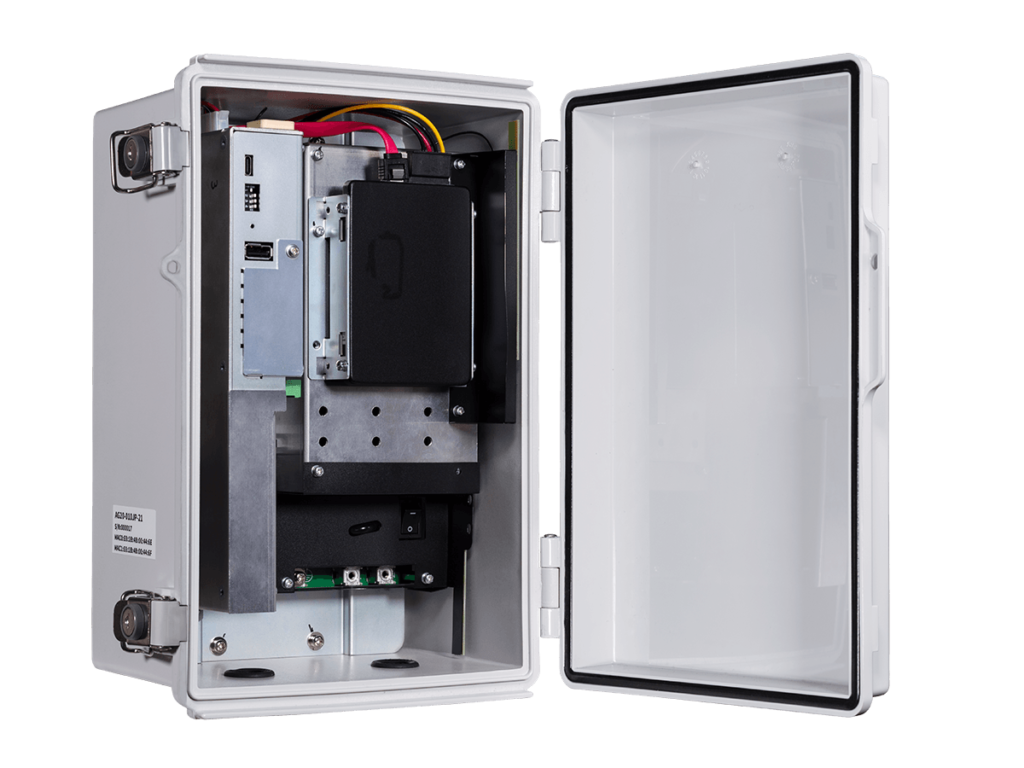
– Edge Gateway (Indoor) AG10 and Edge Gateway (Outdoor) AG20
The AG10 and AG20 have four ports that can supply PoE power and an SSD for storing recordings. This makes them well suited to building video solutions with IP cameras. You can also implement custom applications on Ubuntu, so they work as edge computing devices that run reliably across a wide temperature range. The AG20 is dust- and water-resistant, has lightning protection, and can be installed outdoors.
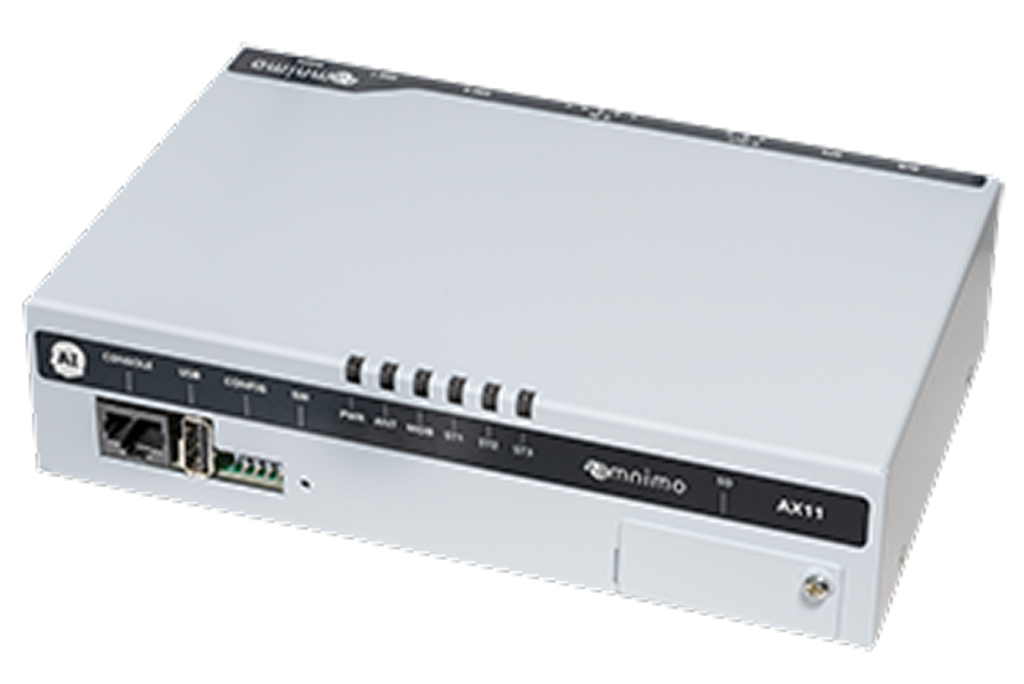
– AI Edge Gateway (Indoor) AX11 and AI Edge Gateway (Outdoor) AX21
The AX11 and AX21 have an AI accelerator that runs AI processing on images at high speed, and custom applications developed on Ubuntu can run this AI processing. They also provide PoE power and have an SSD for storing video data, which makes them well suited to building solutions that combine AI and video. The AX21 is dust- and water-resistant, has lightning protection, and can be installed outdoors.
Products related to this article
Contact usProduct inquiries and documents
We can help you choose products and put together a package for your application. Consultations are free.