How to use AI for people counting with camera video
Jan 17, 2024

Advances in AI image analysis are spreading the use of AI to count people from camera video. This technology counts people accurately even in crowds and helps with traffic forecasting and sharing crowd information. This article explains use cases for AI people counting, what to look for when using it, and real case studies.
Recommended products
Challenges in people counting
People counting tells you how many visitors come to a facility or store. It helps with operations, for example by adjusting the number of employees, security guards, and other staff as visitor numbers rise and fall.
The quickest way to count people is by hand, but the wider the area you count, the more work hours and labor costs it takes. Other problems are that people cannot be counted accurately in crowded places, and that crowding is hard to notice when it occurs somewhere other than the entrance of the facility or store being measured.
An older technology is the infrared people counter. However, when it is installed at an entrance, it cannot count accurately if people pass through overlapping each other.
This is why AI people counting has been attracting attention recently.
Solving the challenges of people counting
As mentioned above, conventional counting methods cannot measure the number of people accurately in crowded conditions. With AI people counting, advances in AI image analysis and deep learning inference engines make it possible to count people from camera video and visualize how crowded an area is.
For example, a taxi company could visualize conditions at taxi stands and share the information on its website to make things more convenient for passengers. Sharing the information with taxi drivers could also improve the balance between supply and demand.
People counting is useful in many other situations too. For example, local governments and shopping streets can measure and analyze foot traffic and use the results to revitalize their areas.
How AI people counting works and its challenges
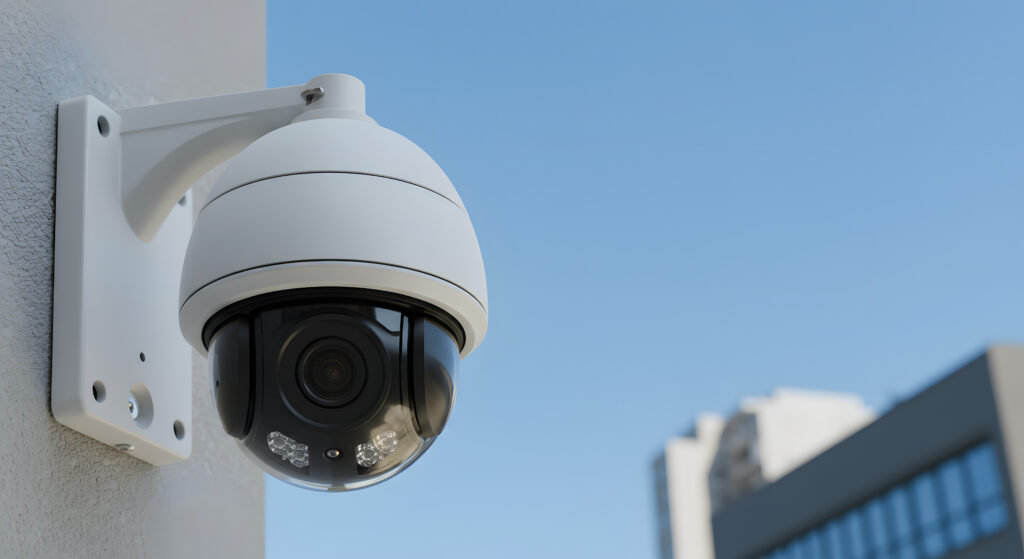
AI people counting uses AI to analyze video and images from network cameras and easily measure the number of people in a given area.
AI for image analysis detects people’s whole bodies or heads in network camera video. This makes it possible to count the number of people in the camera’s view and the number of people who cross a line within the field of view.
There are still challenges. People cannot be counted accurately when they overlap in the video. People who appear too small in the image cannot be recognized and counted. When a very large number of people are in the camera’s field of view, processing limits can prevent accurate counts. Even so, the technology has clearly reached a level that is practical enough for real use.
“AI video analysis” involves several elements in an actual system: the cameras that capture video, the computing resources that record and process it, the AI models that analyze images, and the communication environment. With this in mind, “edge AI,” which runs AI processing on equipment installed in the field instead of on cloud computing resources, has been attracting attention in recent years.
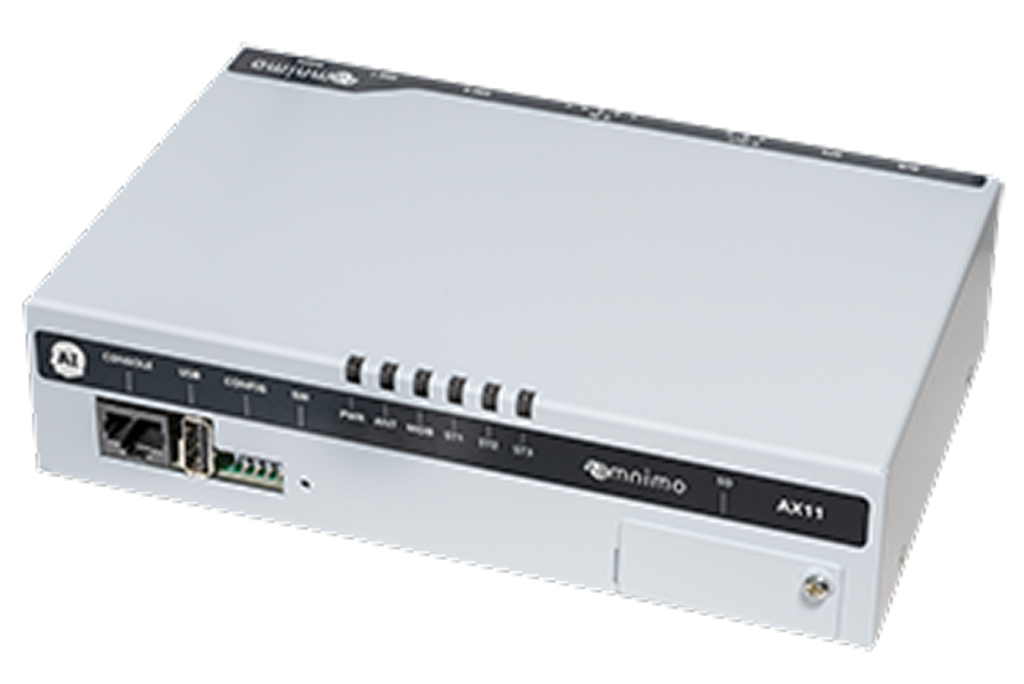
amnimo offers AI solutions based on the AI Edge Gateway (Indoor) AX11, an IoT gateway well suited to edge AI. The page below explains amnimo’s AI solutions and the benefits and challenges of edge AI.
▶ AI Edge Gateway: Records video and runs AI image analysis at the edge, at the same time (Japanese)
Use cases for AI people counting
There are four main use cases for AI people counting.
Transportation infrastructure (stations, airports, buses, taxis, and more)
Many people pass through transportation hubs such as stations and airports, so knowing how crowded they are is important for maintaining service levels.
AI people counting can visualize conditions in station concourses and platforms, airport terminals, and bus and taxi stands. By alerting security guards or staff when needed, for example to restrict entry, it helps ensure safety and maintain or improve service levels. Sharing the information with train drivers, ground staff, bus and taxi drivers, and other staff also supports efficient operations.
Streets
Counting pedestrians on the street with AI and combining the results with event schedules and weather information lets you forecast how much foot traffic there will be on the day of an event. It can also be used to measure the effect of events.
Event venues
Visualizing crowding inside event venues, not just on the street, lets you limit the number of people to ensure safety and keep the environment comfortable. You can also find out how many people are waiting in crowded spots, such as popular areas of an event, and share information about crowd levels.
Restaurants and retail
As at event venues, visualizing crowding can support measures such as automatically sending requests to open more registers, or playing announcements that a register is opening, based on the number of people waiting at checkout.
What to look for when using AI people counting in your business or services
Depending on where you plan to introduce AI people counting, your industry, and the services you provide, check whether the system has the following functions.
Can it estimate age and gender?
When people wear masks or glasses (sunglasses), it is harder to tell their age and gender from camera video alone. What matters is whether the system can still estimate age and gender as accurately as a person could. For stores and facilities, estimating visitor attributes is useful for store operations.
Can you check and analyze video for a specified period?
If you can check the site in real time whenever you want and freely specify the period for analysis results, it becomes easier to check and analyze the video.
Can you download analysis and summary data, and integrate with other systems?
If you can provide analysis data and summary data to other systems, it becomes easier to run detailed, advanced analysis. This kind of integration is an important function.
Can it count vehicle traffic?
You have probably seen pedestrian surveys (people counting) and traffic surveys (vehicle counting) being carried out on the street.
The national government and local governments carry out traffic surveys to obtain basic data for planning, building, repairing, and maintaining roads. Retailers and restaurants also run them to collect reference data when planning new stores. In these cases, some introduce vehicle counting and people counting together to collect more detailed data.
Case studies of AI people counting
Below are real case studies of AI people counting with amnimo products.
J. F. Oberlin University
The College of Business Management at J. F. Oberlin University is conducting research that benefits the local community, with the cooperation of the Shin-Okubo Shopping Street Promotion Association. As part of this research, the college used amnimo’s IoT gateway and AI cameras to measure foot traffic and visitor demographics on the shopping street, and successfully collected a substantial amount of valuable data.
Going forward, the college plans to combine this data with other data, such as weather data, station ridership, and event information, to produce useful analysis and help revitalize the shopping street.
See the article below for details of this case study.
Takayama City
Takayama City, in northern Gifu Prefecture, uses cameras and AI for foot traffic measurement to evaluate and improve its tourism measures.
The city originally measured foot traffic by hand (visual counts). However, the measurement periods were limited and the data was not enough for comparison and analysis, so the city decided to use cameras and AI for foot traffic measurement as well.
The city wanted to “attract” visitors from the historic district, which draws many tourists, to surrounding areas such as the morning markets and shopping streets, have them “stay,” and “guide” those who stay further into the surrounding areas. For this purpose, it opened the Gyojinhashi Bridge and the Hida Takayama Nigiwai Koryukan Daimasa community center. To evaluate their effect, it adopted a camera system that measures foot traffic using amnimo’s IoT gateway. Going forward, the city plans to analyze and use the collected data, such as changes in foot traffic and visitor demographics, turn it into concrete measures, and use it for effective community development.
See the article below for details of this case study.
▶ Read the case study “Revitalizing the whole town with AI foot traffic measurement” (Japanese)
amnimo’s video solutions for AI people counting
The foot traffic measurement systems in the case studies above use amnimo’s video solutions.
In particular, the AI Edge Gateway (Indoor) AX11, well suited to edge AI image analysis, is an all-in-one device that handles edge recording and AI image analysis at the same time. It has a low-power image AI function for edge AI processing. It keeps the ruggedness and ease of operation of the Edge Gateway series already on the market, and can also run various AI models for image analysis.
When you connect cameras to the AI Edge Gateway, AI processing runs on the gateway, and only the AI results are uploaded to the cloud. Unlike so-called cloud AI, this lets AI image analysis run fast. The gateway also provides PoE power to cameras and records video to an SSD, so you can easily introduce an advanced surveillance camera solution with built-in AI image analysis using just two devices: an IP camera and this gateway.
The AX11’s AI chip generates little heat, so it is unlikely to stop because of high temperatures during operation, and it has a low failure rate over long-term use. This makes it easier to install even in remote locations where maintenance is not easy.
The page below explains the AX11 in detail, with a demonstration video.
▶ AI Edge Gateway: Records video and runs AI image analysis at the edge, at the same time (Japanese)
amnimo also works with AI partners that develop and provide a range of AI models to offer advanced surveillance camera solutions. If you are interested in our video solutions or AI solutions, contact us below.
Recommended products
Products related to this article
Contact usProduct inquiries and documents
We can help you choose products and put together a package for your application. Consultations are free.