Theft prevention at solar power facilities: Challenges, solutions, and key points for introducing surveillance cameras
Nov 28, 2023
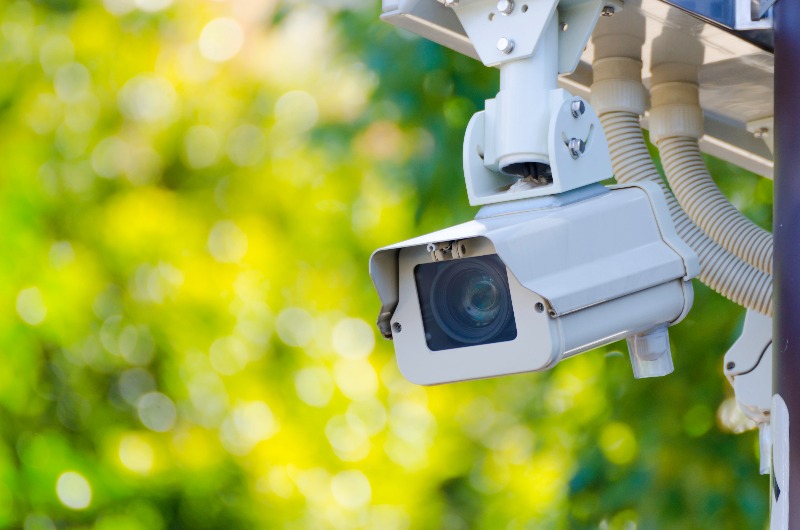
Large-scale solar power facilities are increasing across Japan, and with them comes a need to protect solar panels and copper power cables against theft. A surveillance camera system helps, but the cost and effort of installing and maintaining cameras over a wide area are a challenge. This article explains what you should know about introducing surveillance cameras to prevent theft at solar power facilities.
Recommended products
Background to the spread of solar power
In recent years, solar power facilities have become common, and solar panels are increasingly seen not only at industrial sites but also on private homes. The main reason is growing awareness of environmental issues. Behind this awareness are international commitments. For example, under the Glasgow Climate Pact at COP26, Japan declared “carbon neutrality by 2050” and announced a 46% reduction in greenhouse gas emissions by 2030 compared with FY2013. As of June 2023, just under 1,000 local governments have made a “2050 Zero Carbon City declaration,” committing to net-zero carbon dioxide emissions by 2050. This kind of social transformation toward a decarbonized society is called “GX” (green transformation).
Many nations are focusing on renewable energy to achieve SDG 7, “Affordable and clean energy,” and solar power, which emits no CO₂, is attracting attention.
One advantage of solar power is that the sun constantly supplies energy, so it never runs out. Most other power generation methods need fuel, but solar power needs none because energy is collected while the sun is shining.
Thermal power and other methods also produce pollutants that affect the environment, while solar power is clean energy and emits no harmful substances when generating electricity. In addition, Japan has many locations with enough sunlight for solar power, so there are far fewer restrictions on where it can be built than for other methods. In short, it is a power generation system that is easy to introduce in terms of energy source, environment, and land.
At the same time, laws are being developed as solar power spreads. For example, the revised FIT Act, in effect from April 2017, made maintenance mandatory for solar power facilities under the FIT scheme (feed-in tariff scheme) and for power generation equipment of 50 kW or more.
For solar power maintenance under the revised FIT Act, see the article below.
Solar power is spreading amid calls for carbon neutrality, the SDGs, and GX, and in recent years more surveillance cameras are being installed to prevent theft. The next section explains the role of surveillance cameras at solar power facilities.
The role of surveillance cameras at solar power facilities
At solar power facilities, solar panels and power cables are at risk of theft. In particular, the copper wire used in cables is high quality and easy to sell, so many thefts occur. A measure attracting attention is installing surveillance cameras at the solar power facility.
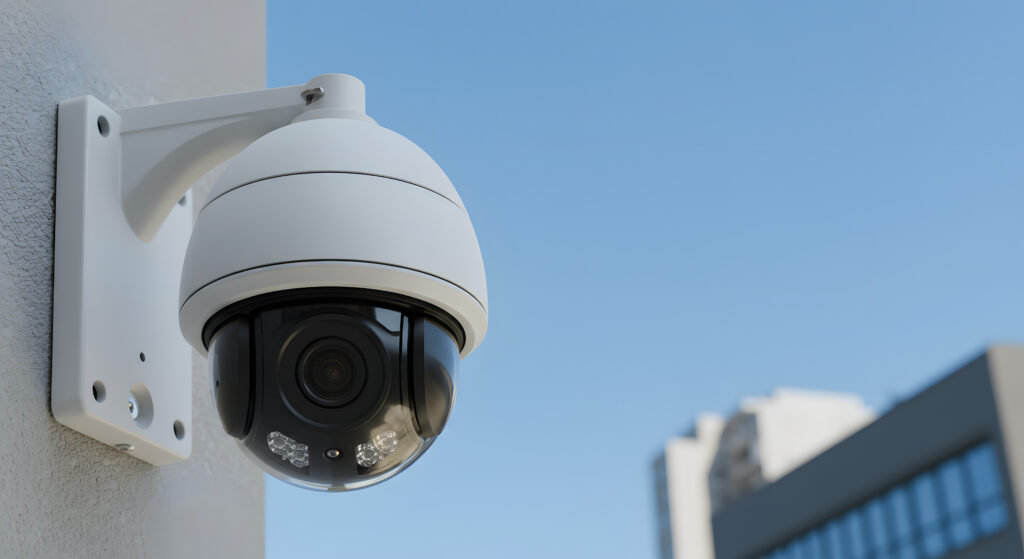
Surveillance cameras deter theft and help identify the culprit if a theft does occur. They also help find failures in solar power equipment early and minimize damage. After a theft, recorded video may be needed as evidence when asking the police to investigate or when filing an insurance claim. Surveillance cameras play many important roles.
So what should you keep in mind when you actually introduce surveillance cameras?
Challenges in preventing theft at solar power facilities
The challenges in preventing theft at solar power facilities are described below.
1. Cameras are installed outdoors or in places with outdoor-level temperatures
Surveillance cameras are often installed to prevent theft. However, when cameras are installed outdoors and the cameras and peripheral equipment are not durable enough, sunlight can heat them up so much that devices fail to start properly or stop frequently.
The same failures can occur in places where temperatures are similar to those outdoors.
2. Poor communication conditions
Solar power facilities are mainly built on large plots of land away from residential areas or in mountainous areas. As a result, even where mobile signals barely reach, the connection can be unstable, and some sites are out of coverage altogether with poor communication quality.
3. Facilities are in dark places with few houses or other buildings nearby
As mentioned above, solar power facilities are often on large plots of land in mountainous areas away from residential areas, with few streetlights nearby. Capturing wide-area video in places with no light sources that become pitch dark at night requires very high camera performance, which makes choosing a camera difficult.
The next section explains how to address these challenges.
How to address the challenges of preventing theft at solar power facilities
The previous section described the challenges in preventing theft at solar power facilities. This section explains how to address them, along with what amnimo services can do.
1. Use devices with high environmental durability
The first solution is to use a device with high environmental durability that combines the PoE power, recording, and communication functions needed to operate surveillance cameras. With such a device, surveillance cameras keep running without stopping over a wide operating temperature range, even in harsh environments.
2. Use networks from multiple mobile carriers
The second solution is to use a communication device that can use the networks of multiple mobile carriers, so that you can stay connected as much as possible even where signal strength is poor. Where mobile communication is not available at all, satellite communication is sometimes used to send recorded video.
3. Use thermal cameras or night vision cameras to capture video in the dark
The third solution is to use thermal cameras or night vision cameras. With them, you can capture intruders even in outdoor locations with almost no lighting.
The next section introduces video solutions suited to solar power plants.
Video solutions suited to solar power facilities
amnimo’s video solutions provide remote monitoring that runs 24 hours a day, 365 days a year without stopping, even where people cannot easily enter and the voltage is unstable.
By monitoring equipment and devices spread over a wide area with surveillance cameras, you can use them not only for crime prevention such as the theft prevention described in this article, but also for daily regular inspections, equipment maintenance, and patrols. You can also integrate PLC and sensor data with video data from different locations and monitor them together. These functions make monitoring work at solar power facilities much more efficient and raise the level of security.
Security and surveillance cameras: from “installing and recording” to “putting video data to use”
Security and surveillance cameras are used in many places in our daily lives, and their role is shifting from being installed as a deterrent to having their video data put to use.
Behind this are major advances in camera performance (the eyes), internet, cloud, and wireless communication technologies (the nerves), and AI image analysis technologies (the brain).
amnimo provides video solutions that combine IoT gateways and routers built for harsh environments with cloud services well suited to IoT and camera operation. We provide them to sites in many industries where camera operation must not stop, 24 hours a day, 365 days a year.
If you are considering “a camera system that lets the right people see the video they need, when they need it, in real time” or “a camera system that supports AI image analysis and integration with other systems,” amnimo is well suited to your needs.
If you are interested in amnimo’s video solutions, see below. For inquiries or consultations about our services, contact us using the inquiry form.
Recommended products
Contact usProduct inquiries and documents
We can help you choose products and put together a package for your application. Consultations are free.