What is an LTE router? Starting from the basics of networks and communication
Mar 23, 2023
An LTE router is a network relay device that can use LTE, today’s main mobile standard. It is essential in IoT and other industrial fields. This article explains the basics of communication and networks, what LTE and routers are, how LTE routers differ from Wi-Fi routers, and what LTE routers are used for.
Network structure: WAN, LAN, and the internet
Put simply, a network is a structure that connects computers, servers, and other devices. Here we divide networks into three broad types.
LAN: local area network
A network that connects devices within a limited area. It is mainly used for networks on a company floor or in a home. Unlike the internet, it is a closed network.
WAN: wide area network
A network that connects distant areas rather than a limited area. A closed network within a company, such as one linking the head office and branches, may be called a WAN. The internet (described below), which can connect you with anyone anywhere, is also a type of WAN.
The internet
A network that connects people everywhere. It is a type of WAN (wide area network). Internet service providers* (ISPs) connect with each other to form a mesh-like network. Through ISPs, we can communicate with devices connected to various ISPs and access information on servers.
*Internet service provider (ISP): A company that provides internet connection services, sometimes described as the gateway to the internet.
Connecting to the internet
To connect to the internet, a client, that is, a PC, smartphone, or other device for viewing information on the LAN (local area network), goes through the WAN (wide area network) and an internet service provider. Only then can it reach the internet and exchange information. Let’s look at some familiar examples.

Company networks
When you connect to the internet at work, each employee’s PC first connects to the LAN (local area network) of the branch, office, or floor. You can assume that the PCs of other employees on the same floor are connected to the same LAN.
For example, when you send an email to a colleague at the Osaka branch from the Tokyo branch, the message travels from the Tokyo LAN over the WAN (wide area network) that links the branches. In this way, you can email people in the same company over the WAN.
When you email someone outside the company, the message goes from the LAN to the WAN in the same way. From there, it passes through an ISP to the internet and reaches devices on outside networks. This is how you can send email to people outside the company.
Home networks
At home, many people have a contract with an internet service provider and use a Wi-Fi router. In this case, your smartphone, tablet, PC, and other devices first connect to the home LAN (local area network) created by the Wi-Fi router. The router acts as a relay and connects to the internet over the WAN line and through the ISP you have a contract with, so you can view websites and use apps.
What is a router?
A router is a device that connects multiple different networks. When it sends information to a different network, it selects and controls the route for the data. In terms of the WAN (wide area network) and LAN (local area network) explained above, a router is a relay device that connects the WAN and the LAN. To compare it with a telephone system, the LAN is the internal extension line, the WAN is the outside line, and the router is the telephone exchange. For now, remember that a router is a network relay device.

What is LTE?
The LTE routers in this article use mobile networks. LTE is a type of mobile network. Thanks to mobile networks, you can use the internet in a wide range of places across Japan, not just in fixed locations as with fixed lines.
Besides LTE, mobile networks include other standards such as 3G and 5G. New standards have appeared as traffic and data volumes have grown. LTE came after 3G as a faster, newer standard, and it means almost the same as 4G. The newest standard, 5G, has also appeared recently, but LTE (4G) is still the main standard today.
To use LTE or another mobile network, you need a SIM contract with a carrier. Each carrier offers various plans, so check speed, stability, data allowance, and cost, and choose the carrier and plan that suit your situation.
The history of LTE and how to choose a SIM are explained in detail in our article on unlocked LTE routers (Japanese).
Why unlocked (SIM-free) LTE routers are drawing attention (Japanese)
Types of communication (routers)
There are many types of routers, such as Wi-Fi routers, LTE routers, and LTE routers with Wi-Fi, and they are sometimes classified by communication method. If the differences confuse you, it helps to look at the communication method on the WAN side and on the LAN side separately.
| WAN | LAN | |
| Wireless | Mobile: LTE or 3G | Wi-Fi (wireless LAN) |
| Wired | Fixed line | Wired LAN |
LTE and 3G are communication methods used mainly on the WAN side. They are types of mobile networks. Mobile networks are also called cell phone networks or cellular networks. In Japan, carriers such as NTT DOCOMO, au, and SoftBank provide them.
Wi-Fi, on the other hand, is a wireless method used on the LAN side. It is a technology for accessing a LAN wirelessly and means almost the same as wireless LAN.
Routers are often classified by their wireless method, so here are the common names. Use them as a reference when you consider buying a router.
Wi-Fi router (wireless LAN router)
Builds a wireless LAN using Wi-Fi.
Mobile router
Uses a mobile network (LTE or 3G) on the WAN side.
LTE router
Uses an LTE connection, one type of mobile network, on the WAN side.
LTE router with Wi-Fi
Uses an LTE connection on the WAN side and wireless communication on the LAN side.
Mobile Wi-Fi router
Uses wireless communication on the LAN side and mobile communication (LTE or 3G) on the WAN side. Because it uses a mobile network and is easy to carry, it is also called a “pocket Wi-Fi.”
Uses of LTE routers
LTE routers need no fixed line, so they are valued for making it relatively easy to build networked systems. Internet access is standard in offices, but LTE routers are convenient when you want to use the internet freely at remote or unmanned sites.
Outdoor systems such as security camera systems and railroad crossing management systems often have no fixed line, and LTE routers are useful there. LTE routers also help in situations with a limited period of use, such as monitoring construction sites, where the cost of installing a fixed line is rarely worth it.
Places without fixed lines are often remote, such as deep in the mountains, so LTE routers are naturally used more in such places.
Specifically, LTE routers are being adopted in situations such as the following.
Security cameras in town
You need a router to build a surveillance camera system with network cameras.
Railways
Managing data from remote railroad crossings and unmanned stations centrally makes maintenance more efficient.
Greenhouse farming
Sensor data on temperature and humidity inside the greenhouse is sent to headquarters for remote monitoring.
Vending machines
A router is needed to manage inventory data and support various payment methods.
Unmanned parking lots
Installed with network cameras, it lets headquarters monitor the site when there is a problem.
Solar panels
Power generation control can be automated based on video data and sensor data such as generation output and illuminance.
Temporary offices at construction sites
For communication over a limited period, you can use the internet at a lower cost than installing a fixed line.
Security systems
Connected to security alarm devices and security cameras, it enables remote monitoring even at remote sites without a fixed line.
Some of these use cases are described in more detail in our use cases (Japanese).
View LTE router use cases (Japanese)
Summary
This article explained how communication works, the role of routers, and where LTE routers are used. Picture how you will actually use one, choose a suitable router, and operate it with confidence.
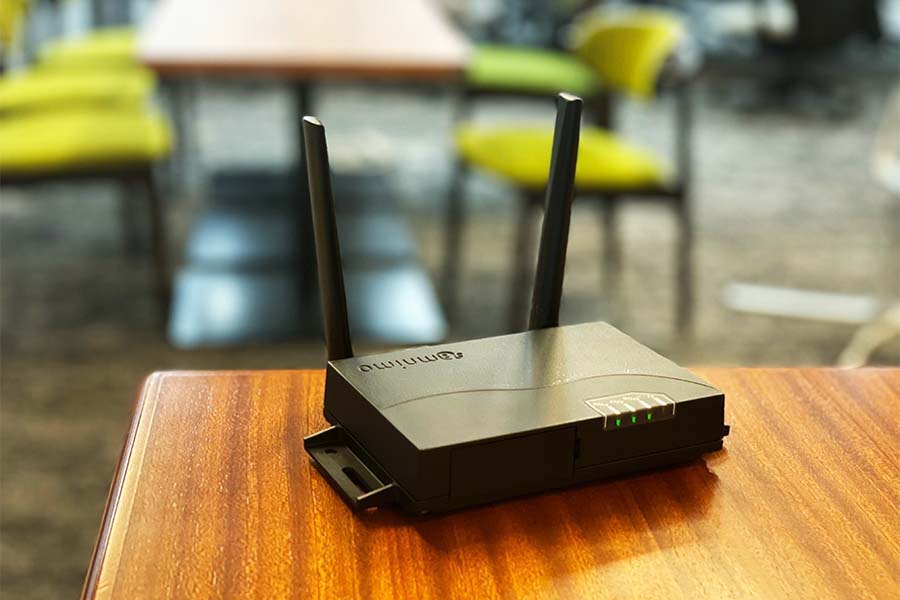
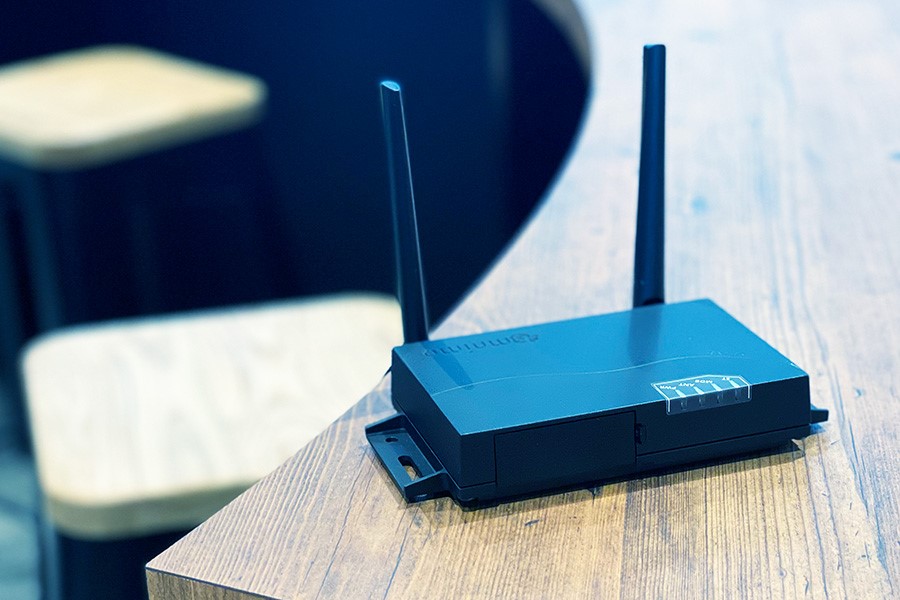
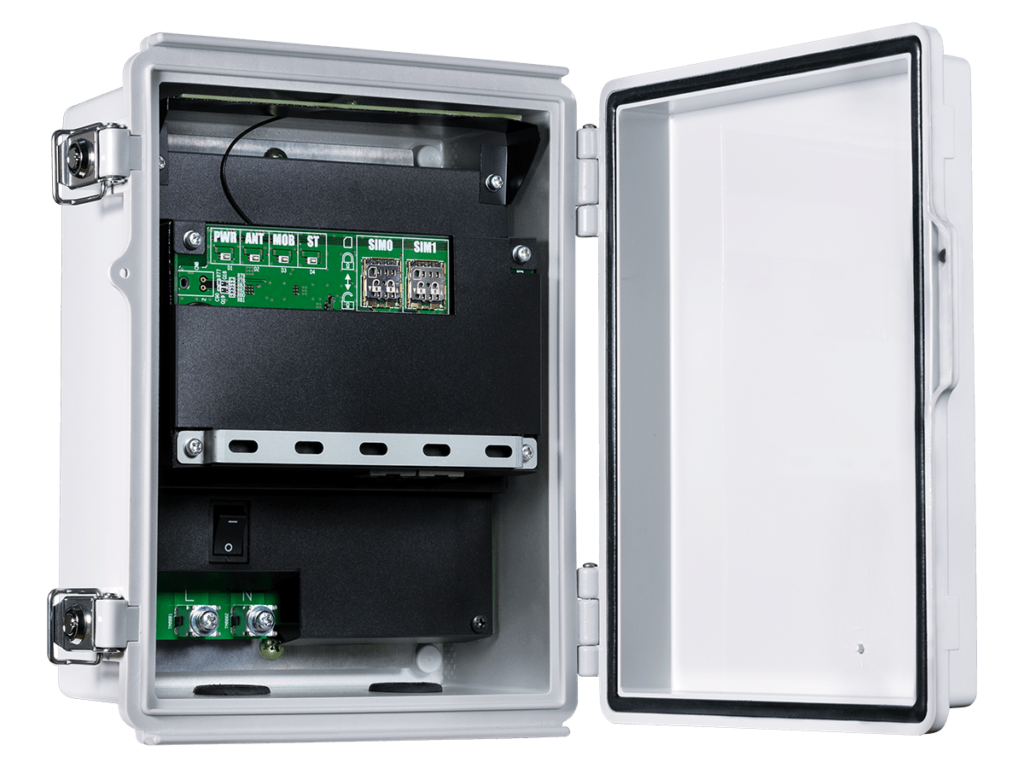
amnimo sells LTE routers and gateways. They are high-quality routers for industrial use, with a Linux OS that lets you run custom applications. If you are interested, see the product details and brochure below.
Recommended products

Contact usProduct inquiries and documents
We can help you choose products and put together a package for your application. Consultations are free.