
Solar power management system

A simple equipment configuration for stable system operation
Overview
Operating a solar power plant produces many kinds of data, such as daily power generation, solar irradiance, and remaining battery charge. To check this information anytime, anywhere on a PC, smartphone, or tablet, and to display power sales by plant or by power conditioner (PCS), the system must work with the cloud and a network. It also needs to let you check alert messages from power conditioners by email or on the web. If a problem occurs at the generation equipment, a quick response limits the losses. This article presents a use case of a system that manages solar power remotely.

Rows of solar panels
Challenge: Complex equipment and environmental durability
To collect data such as daily generation, solar irradiance, and remaining battery charge, and to operate a solar plant while minimizing lost power sales, you need a monitoring system that manages everything in one place, even remotely. However, there are several challenges.
1. Complex equipment configuration
Collecting the various data requires data storage, an LTE router, a hub, a communication converter, a server, and more, which makes the system complex. Because many devices must be purchased and combined, costs also tend to rise.
2. Long-term operation in a harsh environment
The equipment is outdoors in direct sunlight, so a delicate remote monitoring system needs high environmental durability. Power at these plants is also often unstable, and protection against momentary power interruptions (Japanese) may be needed.
3. The effort of equipment maintenance and recovery
Many generation facilities are in hard-to-reach places such as the mountains, so maintenance visits take time and money. Systems installed in harsh outdoor environments must also be expected to fail at times. But without going to the site to check, the cause cannot be found, and recovery can take a long time.
4. Changes in the balance of power supply and demand
Solar power output varies greatly with solar irradiance. When demand is low, or when the grid is full and cannot accept more power, generated power is wasted, so output must be controlled.
5. Handling energy storage equipment
Solar power generates most efficiently when irradiance is high. But if demand falls and the grid is full at that time, the power generated is wasted. It is therefore important to store generated power in batteries and sell it when demand rises. However, these batteries store a large amount of energy, so they must be handled with care.
amnimo’s solution: A simple equipment configuration for stable system operation

1. Replace multiple devices with one edge gateway
The edge gateway combines the devices needed for solar power monitoring in one compact unit: storage for data at the edge, a server function (Linux computer) to process the data, an LTE router, a hub, a communication converter, and more. This makes deployment, operation, and maintenance easier. There are no duplicate units, so it costs less than buying each device separately and combining them. You can also use it within the operating conditions specified for a single product. And because the functions work together, it provides features that are hard to achieve by simply combining devices, such as rebooting through the PoE (Japanese) switch.
2. Stable operation with rugged products
High environmental durability keeps the system running reliably even in harsh environments. In particular, a built-in power backup mechanism (Japanese Patent No. 6954423) keeps the device running reliably during momentary power interruptions (Japanese), which are common where power is unstable.
3. Fewer site visits and efficient maintenance
Rugged products keep running for a long time, which keeps maintenance to a minimum. With remote device health monitoring (Japanese), the device can in some cases restart automatically when it detects a failure, which minimizes trips to the site. By retrieving operation logs remotely, you can sometimes find the cause before going to the site. You can then send only the people and parts needed for recovery, for efficient, lower-cost operation.
4. Control of power output
Compared with sources such as nuclear power plants, solar power makes it easier to fine-tune supply, so controlling output to match demand is key to profitability. Besides monitoring generation, you can control output to match demand remotely and centrally, for example from a management center.
5. Monitoring of energy storage equipment
Energy storage equipment helps respond to changes in the balance of supply and demand, but it often holds stored energy and can be hazardous. Monitoring these storage batteries as well makes the system safer.
6. Easy to customize
amnimo products are Linux gateways, so you can install custom applications on Ubuntu. This lets you build a system tailored to your needs.
Related case studies
-
 Field trial report: counting visitors at a trade show booth with the amnimo Portable AB11
AB11
-
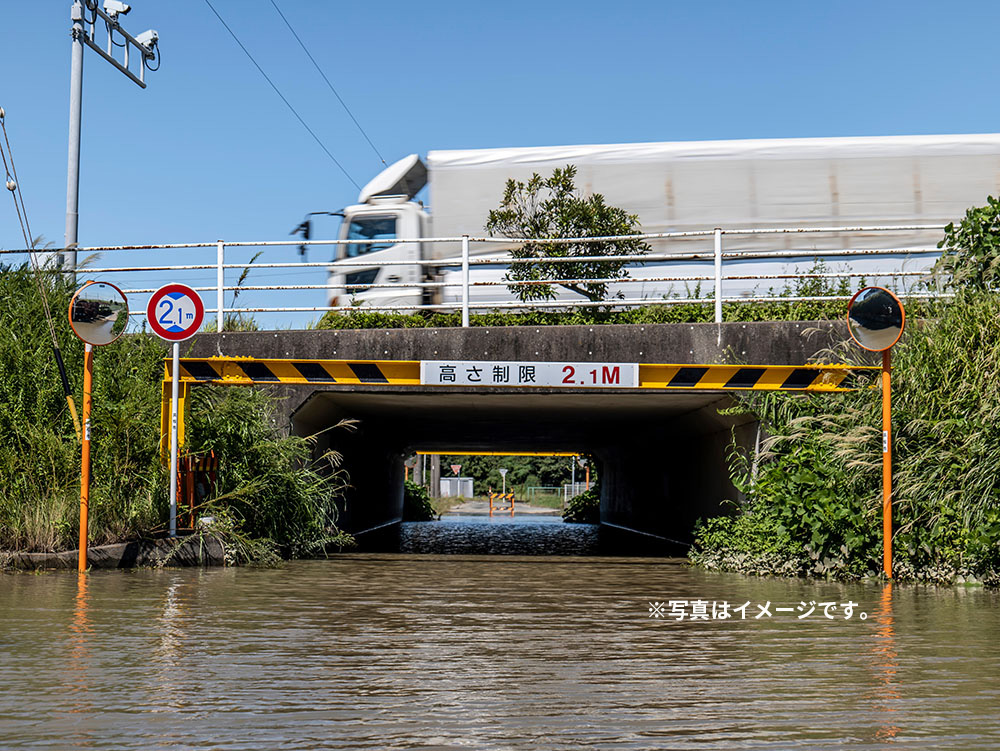 Takaoka City: Underpass flooding monitoring solution
Road Maintenance Division, Urban Development Department, Takaoka City; TAKAOKA CABLE NETWORK CO., LTD.; and SANGIKYO CORPORATION Enhanced Video Management SystemAG20
-
 Toshima City: Disaster preparedness and crisis management camera solution
Disaster Prevention Crisis Management Section, General Affairs Department, Toshima City Enhanced Video Management SystemAG20










Contact usProduct inquiries and documents
We can help you choose products and put together a package for your application. Consultations are free.