The shortage of chief electrical engineers and key points of the system review: The future of safety work and concerns, as seen from smart safety cubicles
Jul 31, 2023

Chief electrical engineers are essential for the safety management and supervision of electrical facilities for business use, such as power plants, substations, and factories. In recent years, however, labor shortages have become a challenge, and it is getting hard to maintain long-standing rules such as the two-hour rule. This article explains why the shortage is happening and the various reviews under way to address it.
Recommended documents

50+ related documents
Free download (Japanese)
The shortage of chief electrical engineers
Chief electrical engineers are the people responsible for the safety management and supervision of electrical facilities for business use installed at power plants such as solar and wind power plants, substations, and factories in the manufacturing industry. The number of chief electrical engineers is declining. According to materials published by the Ministry of Economy, Trade and Industry (METI), a shortage of more than 2,000 Class 2 and Class 3 chief electrical engineers combined is expected by 2030.
There are three main reasons for the shortage of chief electrical engineers.
– Chief electrical engineers are getting older
According to METI materials, 60% of chief electrical engineers are aged 50 or older. For holders of the Class 3 license, new demand from the growing number of renewable energy facilities and power-consuming facilities has made a future shortage a real possibility.
– The chief electrical engineer license is difficult to obtain
Managing electrical equipment is an “exclusive task” that only holders of the chief electrical engineer license can perform. The exams differ depending on the electrical facilities handled, which makes the license itself hard to obtain. Even the pass rate for Class 3, which is considered the first class to take, is low.
– Few people know about the chief electrical engineer profession
According to METI materials, in a survey of schools accredited for the chief electrical engineer license, about half of the respondents said they did not know much about the qualification. In other words, awareness of the profession is low, and it needs to become more attractive, including its work and its value to society.
Source: METI, “Current status and challenges of the electrical safety system” (PDF, Japanese)
To address these challenges, the focus is not on increasing the number of people but on making effective use of the limited people available. Examples include smart safety using advanced technologies such as IoT, and new forms of supervision that can make up for the shortage.
The article below explains smart safety.
Related article: What is “smart safety,” which METI also promotes? (Japanese)
The next section explains the specific reviews being made to the chief electrical engineer system.
Key points of the “review of the chief electrical engineer system” for making effective use of personnel
The chief electrical engineer system is being reviewed to make better use of personnel.
The details of the review are explained below.
Point 1: Review of the “two-hour rule”
One of the requirements for a supervising chief electrical engineer is being able to reach the electrical facilities within two hours. This is so that the engineer can rush to the site if a problem occurs. However, with the current labor shortage, this requirement is hard to maintain, so the two-hour rule is being reviewed.
Point 2: Review of monthly and annual outsourced inspections
Currently, outsourced inspections are handled by Class 3 chief electrical engineers, who visit the site, perform external inspections, and check each piece of equipment for abnormalities. However, as labor shortages become more apparent, it may become impossible to maintain the level of safety, so this approach is being reviewed.
Beyond this review, another solution being promoted is smart safety, in which cameras, sensors, and other devices are installed on equipment to collect and store data for the items needed in inspections. Smart safety is an initiative and concept promoted by the Ministry of Economy, Trade and Industry (METI) that uses advanced technologies such as AI and IoT to make industrial safety safer and more efficient. The next section explains how smart safety is being applied to cubicle-type high-voltage receiving equipment, commonly called “cubicles”: power receiving equipment that converts high-voltage power from power plants into voltages a facility can use.
Using smart safety cubicles
Under the traditional setup, the supervising chief electrical engineer gave instructions directly to each technician at the supervised business sites, and the two-hour rule was centered on the chief engineer. However, with smart safety cubicles (smart cubicles), which can be fitted with cameras and gas and temperature sensors, chief engineers can manage remotely and give precise instructions. For this reason, a setup is under consideration in which the two-hour rule is centered on the newly designated regular workplace of the technician.
Smart safety cubicle technologies, such as installing cameras and sensors in equipment to collect data, are also expected to streamline and improve safety management work. This makes it possible to maintain the level of safety while making up for the labor shortage.
However, some inspection items cannot be covered by smart safety cubicle technologies alone.
The next section explains the concerns in this area.
Concerns about smart safety cubicles
Until now, Class 3 chief electrical engineers have visited electrical facilities for outsourced inspections and used their own senses to check for abnormalities such as unusual noises, unusual odors, failures, and contamination. At present, it is difficult to do all of this with sensors alone.
To make it possible, you need to install cameras and carry out centralized monitoring that combines video data with sensor data, raising the level of safety of remote monitoring. On the other hand, centralized monitoring requires a lot of equipment and costly system development. Even after introducing and building such a system, you must also properly judge whether cameras and sensors can reliably maintain the same level of safety as before.
So what kind of setup will be needed to introduce smart safety cubicles? The next section introduces amnimo services suited to companies that want to address the points of the chief electrical engineer system review by introducing smart safety cubicles.
amnimo services suited to introducing smart safety cubicles
amnimo provides a video solution suited to introducing smart safety cubicles.
As described in the previous section, centralized monitoring requires a lot of equipment and costly system development.
With amnimo’s video solution, however, you can use smart safety cubicles simply by adding equipment to your existing facilities, without buying new smart safety cubicles, which keeps costs down.
Because electrical facilities tend to give off heat when something goes wrong, amnimo provides a video solution that uses thermal cameras.
amnimo’s video solution is rugged enough for both indoor and outdoor use and can scale from a few units to tens of thousands. It is also flexible to operate, with a hybrid of on-site recording and cloud video management, and can be extended to AI video analysis in the future. It is already in use at wind power facilities, where it has made management work more efficient.
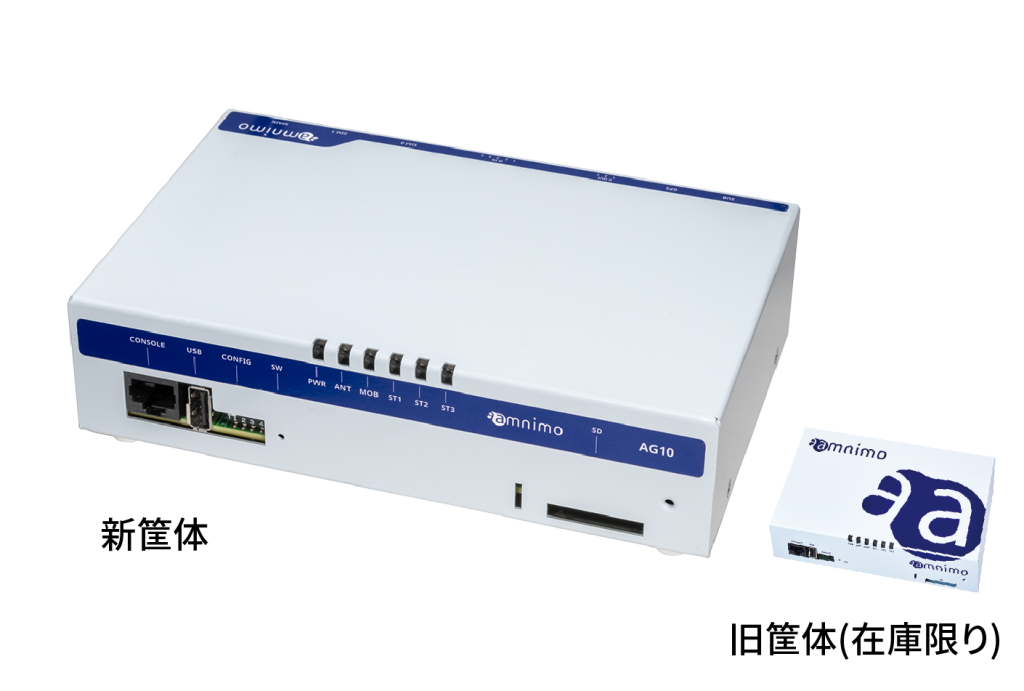
amnimo’s Edge Gateway (Indoor) AG10 is an LTE gateway that takes in surveillance camera video and records it to an SSD. You can also run your own applications on Ubuntu to collect information from and control on-site equipment through Ethernet, serial, and DI/DO ports, so this one device lets you monitor facilities remotely with video. Because data is collected in the cloud, you can monitor from many locations, which makes the management work of supervising chief electrical engineers more efficient.
For video monitoring and AI in smart safety, see the documents below.
Recommended documents
50+ related documents
Free download (Japanese)
Products related to this article
Contact usProduct inquiries and documents
We can help you choose products and put together a package for your application. Consultations are free.