Why face authentication systems are drawing attention: how they differ from face recognition, their benefits, and challenges
Jan 30, 2024
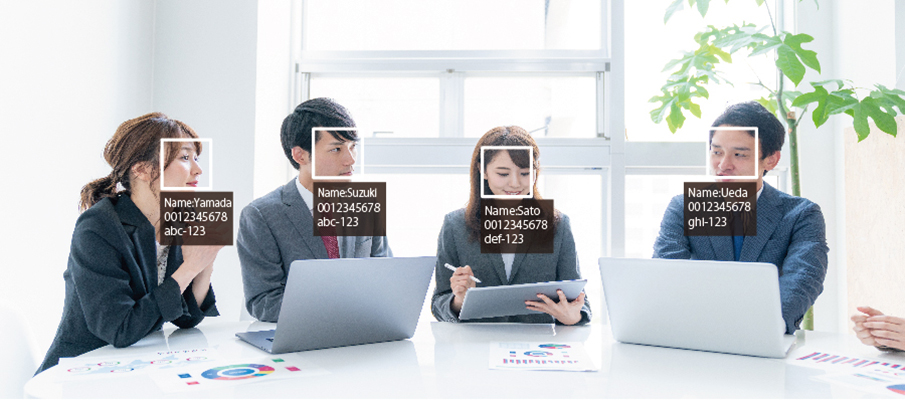
Rapid progress in deep learning has brought practical identification of people through image recognition within reach. In China, public security authorities are reportedly already using it to find criminals. Besides crime prevention and counterterrorism, it can also be used in ordinary business. For example, a department store or bank could have a system that notifies a customer’s sales representative as soon as the customer walks in, which would greatly improve customer satisfaction. Recently, it is also increasingly used to control entry to companies and facilities that need high security.
How does face authentication, a technology now drawing attention, work? This article explains face authentication systems in detail: an overview, how they work, their features, points to watch, and use cases.
What is a face authentication system?
A face authentication system detects faces in images or video from a camera and authenticates them to verify a person’s identity. It was developed as a type of biometric authentication and uses artificial intelligence (AI) trained with deep learning. Biometric information is unique to each person, so it is said to be hard to forge and to provide a high level of security.
The system reads a person’s face from video or images and compares it with registered information based on the positions of distinctive features such as the eyes, nose, and mouth, and the size of the face area. With the latest face authentication engines, some systems can also verify identity accurately even when the person is wearing a mask.
How face authentication systems work
How a face authentication system works differs by developer, but here is the general mechanism.
The system reads a person’s face from video or images and analyzes the positions of distinctive features such as the eyes, nose, and mouth, and the size of the face area. Later, when the person faces the camera for authentication, the system compares the actual face with the stored data to verify identity.
Face authentication technology comes in two types: the edge type (Japanese), which builds the system into an edge device using an SDK library, and the cloud type, which uses cloud-based external API solutions from Microsoft, Amazon, and others. Each has the features described below, but edge-based face authentication can be said to be better in processing speed, security, and operating costs.
Edge-based face authentication
With the edge type (Japanese), where the face authentication system runs on an edge device, there is no delay from cloud processing or data transmission, so accurate face authentication runs in real time. Even when it accesses an external database, the edge device sends small, encrypted image data and compares it with templates in the database, so face authentication is fast. Only the necessary image data goes to the cloud, which also keeps communication costs down.
Cloud-based face authentication
This type sends camera video directly to the cloud for face authentication. It needs a lot of network bandwidth, so data communication costs rise. In addition, face photo data is sent over the internet, so a weak network system carries security risks of data leaks and hacking. However, it does not require large-scale deployment of edge devices, so a cloud-based face authentication system suits businesses that already run fully online.
Why face authentication systems are drawing attention
One major reason is the growing importance of security measures.
In Japan, reported information security incidents numbered 769 in 2021, up more than 40% from 537 in 2020. There have also been many cases of personal and customer information leaking through stolen or misused PCs, so companies need to take security measures.
Against this background, face authentication systems, with their high level of security, have come into wide use for access control in office buildings and elsewhere.
*Source: Information-technology Promotion Agency, Japan (IPA), “Information Security White Paper 2022”
Face authentication technology has also advanced greatly and is expected to be adopted in many situations. Functions such as better authentication accuracy with AI, spoofing prevention through liveness detection, and temperature screening have been added, widening the range of uses. Face authentication systems that can verify identity while the person wears a mask have also been developed.
The article below introduces how AI image analysis works, with examples.
What is the difference between face authentication and face recognition?
Face recognition, which is easily confused with face authentication, is a technology that detects people’s faces in images and identifies attributes such as gender, age, and facial expression. Face recognition is mainly used in situations like the following.
In-store marketing
Face recognition can tell the age group, gender, and expressions of visitors. It can turn in-store buying behavior into data, such as what types of customers visit, what expressions they show when they see products, the characteristics of visitors who did not buy, the number of visitors, and how long they stay. This helps run the store more efficiently. Based on the analysis of personal features and behavior history, you can also deliver suitable advertising content to each customer on digital signage.
Staff deployment and flow planning at events and facilities
By detecting and analyzing the flow of people and places where they gather, you can plan efficient staff deployment and visitor flow at events and facilities.
Benefits of face authentication systems
Next, here are five key benefits of introducing a face authentication system.
1. High-security authentication that prevents spoofing
Unlike IC cards, face authentication systems are hard to spoof, so they maintain a high level of security. With liveness detection technology*, you can also prevent spoofing with someone else’s photo.
*A technology that uses a camera to capture a person’s blinking, gaze, and lip movements to determine whether the person in front of the camera is a live person.
2. Contactless and hygienic
There is no need to touch anything, as with fingerprint authentication, and identity can be verified without contact or face-to-face interaction. This makes it an authentication method that also helps prevent COVID-19 infection. People can also enter and exit even when both hands are full.
3. No forgotten passwords or lost cards
With face authentication, your face itself is the password. Unlike PIN codes or entry cards, there is nothing to remember or keep.
4. Little psychological resistance from users
Recognizing faces is the most common way people identify each other, so users are said to feel little psychological resistance.
5. Helps deter misconduct
Face authentication keeps records of who entered and exited and when. If an incident or accident occurs in a company or facility, you can search for suspicious persons and find the cause. This helps deter not only intrusions from outside but also misconduct by employees.
Challenges and points to watch
Face authentication systems are safe and convenient, but there are some points to watch when introducing them.
1. Accuracy varies
Authentication accuracy depends on the system. For example, some systems cannot handle faces that have changed with age or faces at an angle, or cannot cope with changes in hairstyle or with glasses or masks. It is also important to check in advance how many faces can be registered.
2. Accuracy may drop depending on the environment
Some systems are not suited to outdoor use. Some products also lose accuracy in places that are too dark or too bright. Check in advance how well the system withstands dirt, water droplets, and other environmental conditions.
3. Respect privacy (personal information protection)
Under the Act on the Protection of Personal Information, face data is defined as personal information. To prevent problems after introduction, set rules in advance in line with the guidelines, such as “notify or publish the purpose of use before operating the system” and “do not misuse data beyond the stated purpose,” and make sure everyone knows them.
Use cases for face authentication systems
Here are some examples where face authentication has been introduced. Use them as a reference if you are considering a system.
Boarding by face at airports
Since July 2021 at Narita International Airport, when passengers take a face photo at an automated check-in kiosk, it is linked to their passport and boarding pass information. They can then check baggage and pass through the security checkpoint entrance just by facing a camera. Because passports are handed over less often, it is also expected to help with COVID-19 measures.
Access control in offices and other buildings
When a person enters, a camera at the gate or door takes a photo, which is checked against registered face images on a face authentication server, and the gate unlocks. Administrators can manage entry and exit, so it can also serve as a time and attendance system. During the COVID-19 pandemic, temperature checks became essential at entry and exit. Face authentication works well with forehead temperature measurement, so combining it with temperature checks also helps manage employees’ health.
Boarding rides at theme parks
Since 2018, Fuji-Q Highland has used a face authentication system for boarding rides. Visitors can board rides smoothly. Park operators can prevent crowding at entrances and quickly know how many people are in the park, which helps avoid crowded conditions.
Walk-through authentication at factories
Workers no longer need to take out an IC card to open doors, so they can enter and exit safely and easily, hands-free. Linking with an attendance management system also reduces the workload of administrative departments.
Preventing shoplifting in stores
Since plastic shopping bags started to be charged for in 2020, more shoppers carry their own bags, and shoplifting using these bags has recently become common. Shoplifters are said to have a high rate of reoffending. You can register face images of repeat offenders and suspicious persons in the system in advance. When they visit again, the system notifies the smartphones of store staff and guards to alert them.
AI-powered unmanned stores (smart stores)
Smart stores have opened where cameras in the store and advanced image recognition technology let customers pick up the products they want and simply walk out. Payment is made automatically without going through a checkout.
Unlocking and payments on smartphones
Smartphones such as the iPhone with Face ID have a face authentication system, so you can unlock the phone just by looking at the screen. You can also pay with electronic money without entering a passcode, which makes smartphones even more convenient.
Summary
This article explained face authentication systems: an overview, how they work, their features, points to watch, and use cases. With the spread of COVID-19, many companies are now considering hygienic entry and exit management systems with contactless identity verification. Many companies offer products and services that use face authentication, so compare them against your own requirements. However, photo data obtained through face authentication is personal information, so when you introduce a system, review your policies and operate it correctly. In recent years, the EU also announced a draft AI regulation that would in principle ban the use of face recognition in public spaces for law enforcement. In Japan, too, people have raised concerns about excessive surveillance, so it is important to watch future policy closely.
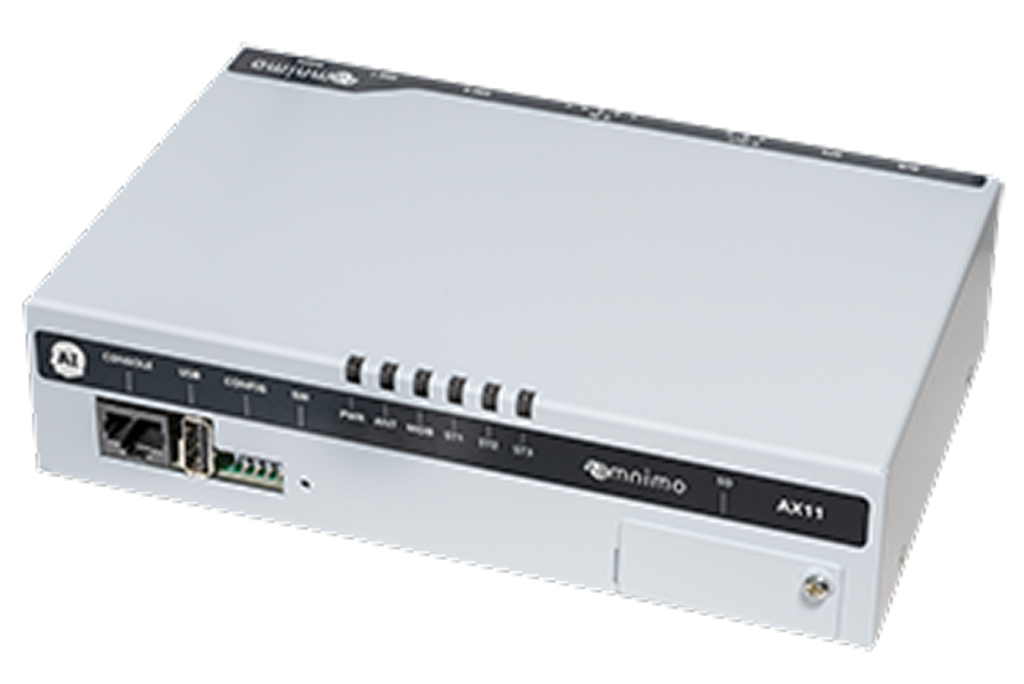
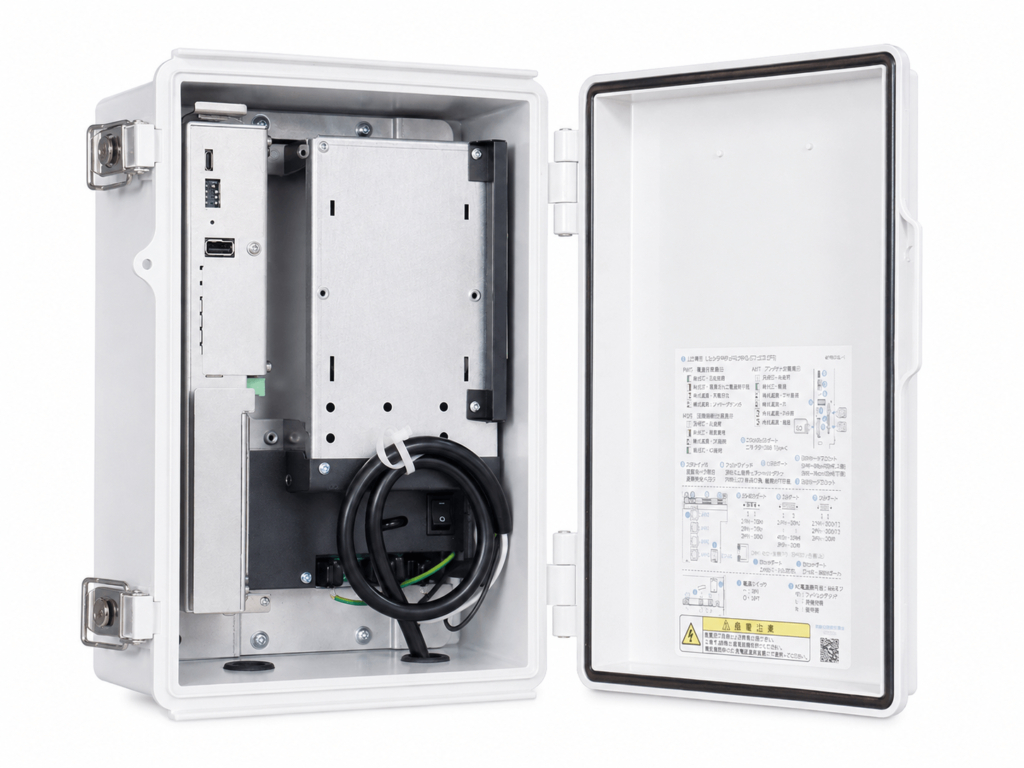
The following white paper explains the edge gateway with low-power AI image processing.
Contact usProduct inquiries and documents
We can help you choose products and put together a package for your application. Consultations are free.