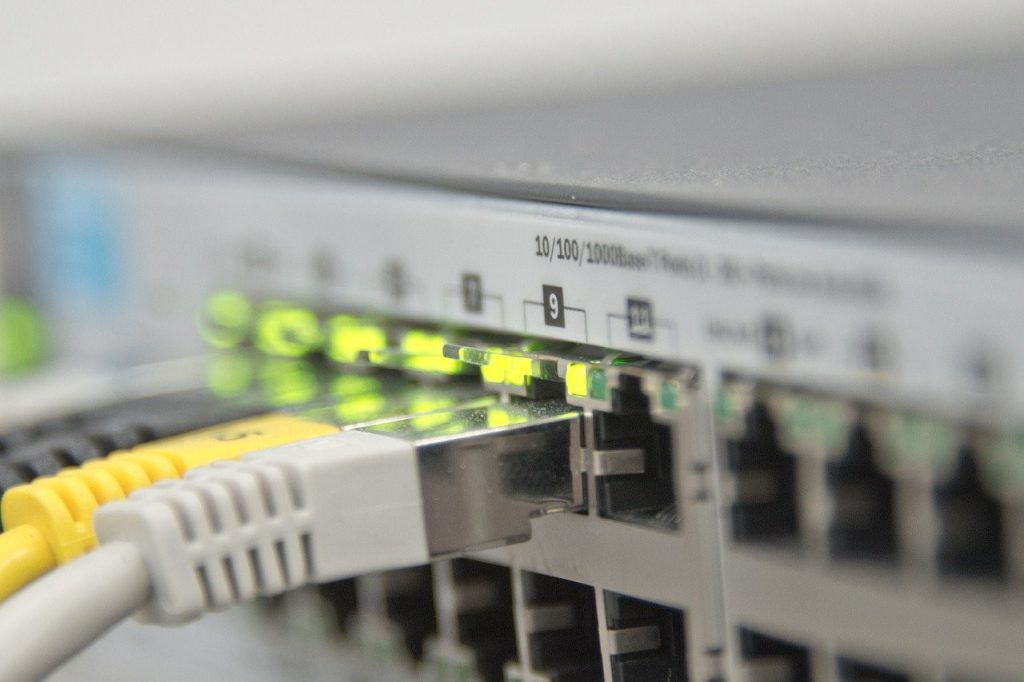
Network redundancy is the key to preparing for network outages
How to achieve it with automatic switching between multiple SIMs
Mar 22, 2023

Large-scale outages of cellular and mobile phone networks have become a social issue in recent years. Even the three major carriers have had repeated nationwide outages. A SoftBank outage in December 2018 affected about 20.6 million users, an NTT DOCOMO outage in October 2021 affected about 12.9 million, and an au (KDDI) outage in July 2022 affected about 30.9 million. Voice calls failed and data speeds slowed sharply, with a large impact on people’s daily lives.
As communication systems become more complex, more and more businesses are considering how to prepare for such outages. High-speed communication is now widespread, and IoT, which connects all kinds of equipment over networks, will spread further across many industries. This makes preparing for outages more and more important.
This article focuses on network redundancy, which is essential for dealing with large-scale outages. It covers the risks of network outages, the use of multiple SIMs as an effective countermeasure, outage detection, and automatic SIM switching.
Mobile networks as social infrastructure
In recent years, even major mobile carriers have had large-scale outages that became a social issue. These nationwide, long-lasting outages affected many users and companies. They were a reminder that mobile networks are now essential social infrastructure. Besides these large-scale outages, failures in switching equipment or base stations and natural disasters can also cause short outages in limited areas. Network outages are more common than you might think.
When an outage occurs, it causes problems for every kind of IoT service.
- Online payments cannot be completed
- Business systems cannot be accessed
- Measurement data is lost
- Equipment cannot be controlled or monitored remotely
- Services to customers stop
These are only a few examples, but they show that the effects of an outage spread across many industries.
It is hard to eliminate outages completely. However, cellular networks have become social infrastructure, and an outage now has wide-ranging effects. Businesses are therefore expected to take measures against outages.
Even so, relatively few systems seem to be designed with outages in mind. Many industries add redundancy to hardware, memory, and power supplies as backup, but adding redundancy to the network seems to lag behind. At many sites, mobile networks have become essential infrastructure, so it is time to review this.
When mobile network redundancy matters most
As IoT spreads, mobile network redundancy is becoming important in many industries. It is likely to be needed even more in situations like the following, where a system failure can have wide effects. Here are a few examples.
Monitoring infrastructure facilities
Carrier networks are often used to manage important infrastructure such as water facilities, power facilities, and railways. For critical facilities where monitoring must never stop, it is important to make the mobile network redundant as well, in case of network outages, radio interference, or other unexpected events.
Mobile networks as a replacement for ISDN
ISDN, used for bank ATMs and other systems, is a relatively stable line and is also used to back up corporate networks. However, the service is expected to end in January 2024. When replacing ISDN, which must be highly reliable, building in redundancy allows stable operation.
Network redundancy as a countermeasure against outages
The best countermeasure against outages is for businesses to use systems with network redundancy. For example, you can prepare a connection through another carrier as a backup to your main carrier. Smartphones such as the iPhone now come in dual SIM models, and we recommend devices like these that can use more than one carrier network. In recent years, low-cost SIMs (MVNO) also offer inexpensive monthly plans for small amounts of data, which makes it easier to contract with more than one provider. To prepare for outages, you need the following three things.
- Multi-carrier support
- Multiple SIMs
- Automatic carrier switching during outages
Multi-carrier support
Multi-carrier means using the wireless networks, communication methods, and frequency bands of more than one carrier. To make the network redundant with multiple networks, the communication device must support multiple carriers. Most IoT communication devices used in Japan are multi-carrier. However, IoT devices sold for a specific carrier may be SIM-locked, or may support only the frequency bands that carrier uses, which limits the usable frequencies on other carriers’ networks. Before you buy, confirm that your device is not one of these and that it supports enough frequency bands on more than one carrier.
Recently, convenient plans have also appeared in which the SIM card itself can connect to more than one carrier. However, most IoT SIM cards used in Japan today work with only one carrier. This article therefore explains how to make the network redundant using multiple SIM cards that each work with only one carrier.
The following article also explains multi-carrier.
What is multi-carrier? Terms and uses explained (Japanese)
Multiple SIMs
When each SIM card works with only one carrier, an effective way to build in redundancy is to use multiple SIM cards from different carriers. You contract with one carrier for the main line and with another carrier for a backup line to use when something goes wrong. Note that many MVNOs run their business on a major carrier’s network, so check which network is actually used when you choose a provider.
The device must not only support multiple carriers but also hold multiple SIMs. Some devices take two or more SIM cards. Others use eSIMs, where the SIM information is built into the device instead of on a physical card, to provide multiple SIMs.
Detecting outages and switching carriers automatically
Even with multiple SIM cards, a redundant setup needs a function that switches lines when necessary. Manual switching is possible, but for business use in particular, you only get the full benefit of multiple SIMs when the device detects an outage and automatically switches to a line that works.
The next section explains outage detection in detail.
Methods for detecting network outages
We mentioned above that you need a function that switches carriers automatically during an outage. There are several ways to detect an outage and decide what counts as one. Here are three of them. Compare them for your application, and choose one or set up a combination of conditions.
Based on packet communication
The first method decides based on whether packet communication is possible. For example, you set the device to switch to the backup SIM if it is disconnected from the internet, cannot communicate for a set number of seconds in a row, or stays out of range for a set number of seconds. However, this method cannot handle outages in which the packet connection stays up but data cannot be sent.
Based on signal strength (antenna level)
This method monitors the mobile signal strength (antenna level) and switches lines when the signal stays below a threshold for a set time.
Based on ping to a server
The device sends a command called ping to a server of your choice and checks whether the network works based on whether a reply comes back. You can send pings at regular intervals and set the device to switch SIMs when several pings in a row fail.
The ping destination varies. It may be a server the user operates, or a device management system provided by the device manufacturer.
How amnimo products deal with network outages
The main feature of amnimo products (Japanese) is a design that provides network redundancy through automatic switching between multiple SIMs while keeping costs as low as possible.
- Multi-carrier support: Certified for the LTE networks of the three major carriers
- Multiple SIMs: Up to four SIMs in total (two SIM cards and two eSIMs)
- Lower costs by using a common communication module and switching only the carrier
How automatic SIM switching works
When amnimo products (Japanese) detect that the main line is disconnected, they automatically switch to the SIM for the backup line in about 15 to 20 seconds and restore communication quickly. No reboot is needed, so downtime stays to a minimum. You can choose from the following methods to detect a disconnection of the main line.
Standard detection
- Disconnection detection: Detects failed attach requests and call requests
Optional detection
- Detection based on RSSI (signal strength)
- No-traffic detection: Detects when there has been no traffic for a set period
To avoid staying on a lower-priority line, the device can also switch back to the higher-priority SIM based on a timer or the RSSI value.
For details on automatic SIM switching and how to set it up, see the support article below.
About the SIM switching function (amnimo support article) (Japanese)
If you have other questions about our products, contact us below.
Contact usProduct inquiries and documents
We can help you choose products and put together a package for your application. Consultations are free.